
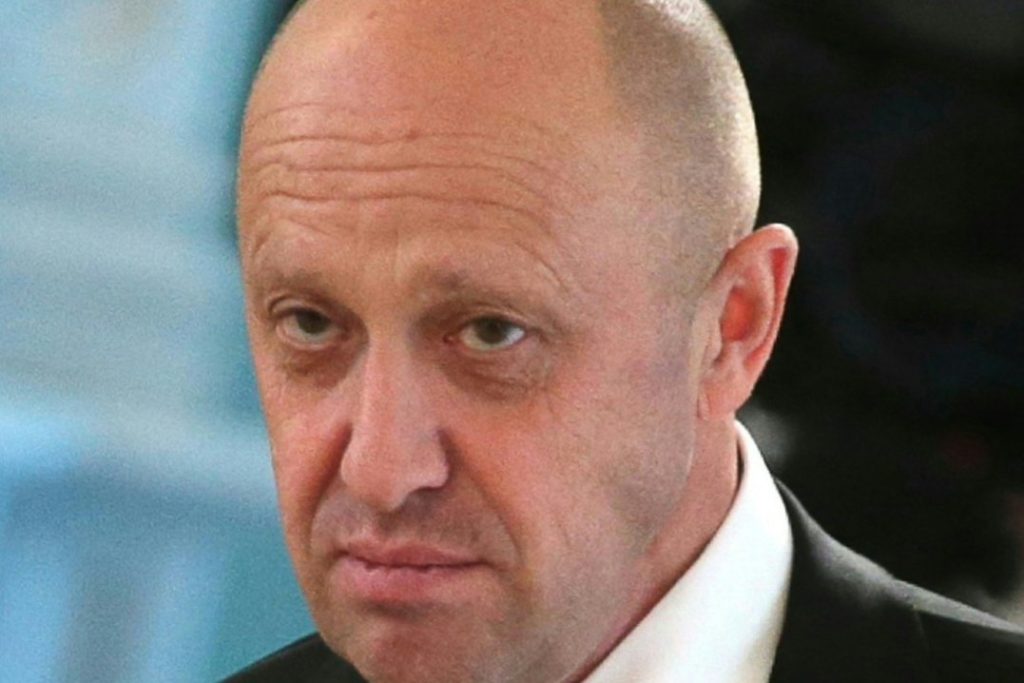
The simmering feud between Yevgeny Prigozhin and Russia’s military brass didn’t erupt from nowhere on June 23. It had been building for at least six months, ever since late 2022. The Wagner Group’s rebellion that day was the culmination of a conflict with the Ministry of Defense that had been playing out in public, in coded threats and angry social media posts.
Prigozhin, a Russian oligarch, had been running a private army that took heavy casualties in Ukraine, particularly at the battle of Bakhmut. That butcher’s bill appears to have been the breaking point.
Prigozhin blamed two men directly: Defence Minister Sergei Shoigu and Chief of the General Staff Valery Gerasimov. He accused them of handing over “Russian territories” to the Ukrainians. These were not offhand complaints.
They were repeated, deliberate attacks on the top of Russia’s military hierarchy. The oligarch demanded their removal.
When the Russian government denied his claim that the Armed Forces had attacked and killed hundreds of his mercenaries, Prigozhin escalated. He called his rebellion a “march of justice.” The Russian government’s denial is worth examining. They said they did not attack Wagner.
Prigozhin said they did. No independent verification of the attack exists in the public record as of the rebellion’s start. But Prigozhin’s decision to act on that claim — to launch a direct challenge to the state — suggests he believed it, or at least believed it was a usable pretext.
Either way, the rebellion was a fact. It was a direct challenge to Kremlin authority, something President Vladimir Putin has spent two decades ensuring does not happen.
This is where the analysis gets pointed. Prigozhin was not a random general. He was an oligarch, deeply embedded in the system.
He ran Wagner, which fought for Russia in Ukraine, Syria, and Africa. The state allowed him to exist, to profit, to build a parallel military force.
That arrangement worked until it didn’t. The rebellion exposed a fundamental weakness: the Russian state had outsourced violence to a man who then turned that violence inward. The conflict between Wagner and the Ministry of Defense was not a secret.
It was an open war of words for months. The government did nothing to stop it, or could not stop it. Prigozhin went further than just attacking Shoigu and Gerasimov.
He stated that Russia’s justification for attacking Ukraine was a lie. That is a remarkable thing for a Kremlin insider to say publicly.
It undercuts the entire official narrative of the war. It suggests that the divisions within the Russian military establishment are not just about tactics or budgets. They are about the fundamental purpose of the war itself.
If a man who led troops in the field says the reason for the war is false, what does that do to morale? To discipline?
To the chain of command? The rebellion was a significant escalation. It moved from words to action.
Prigozhin took his mercenaries and moved against the state. The outcome was not clear on June 23. But the implications were already stark.
If the Russian government could not control its own private military companies, it could not control the war. If an oligarch could openly defy the defense minister and the chief of the general staff, the chain of command was broken.
The Kremlin’s response would determine whether this was a temporary crisis or the beginning of a larger unraveling. For now, the rebellion is a symptom. The disease is the rot inside Russia’s military and political system.
Prigozhin was a product of that system. He was not an outsider.
He was a creature of the Kremlin, and he turned on his creators. The “march of justice” was his phrase. But justice for whom?
For the Wagner fighters who died at Bakhmut? For Prigozhin’s own ambition? The answer likely does not matter.
What matters is that the rebellion happened. And it cannot be undone.




