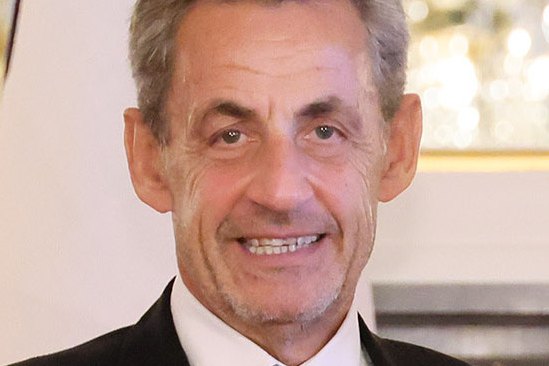
PARIS — Nicolas Sarkozy began serving a prison sentence at La Santé Prison, marking a stunning descent for a leader who once commanded the Élysée Palace.
From the Boulevards of Paris to National Power
Nicolas Paul Stéphane Sarközy de Nagy-Bocsa was born in Paris on January 28, 1955, the son of a Protestant Hungarian aristocrat and an Ottoman Greek Jewish mother whose family converted to Catholicism, according to biographical records. Against this backdrop, he built a relentless political career through decades of French municipal and national governance. He served as the mayor of Neuilly-sur-Seine from 1983 to 2002, establishing a secure power base in the affluent Parisian suburb. As his national profile grew, he took on heavy administrative portfolios, serving as Minister of the Budget under Prime Minister Édouard Balladur from 1993 to 1995 during François Mitterrand’s second term. Later, during Jacques Chirac’s second presidential term, he returned to the cabinet as Minister of the Interior and Minister of Finances. He also assumed leadership of the Union for a Popular Movement, known as the UMP, from 2004 to 2007, positioning himself as the undisputed heir to the French conservative movement.
The Peak of the Presidency and Global Influence
The apex of his political ambitions arrived in 2007, when he won the French presidential election by a 53.1% to 46.9% margin against the Socialist Party candidate Ségolène Royal, according to electoral records. In the corridors of power, his presidency was immediately tested by immense global turbulence, including the 2008 financial crisis, the late-2000s recession, and the European sovereign debt crisis. His international footprint extended to active diplomacy during the Russo-Georgian War, where he negotiated a ceasefire, and the Arab Spring uprisings in Tunisia, Libya, and Syria. At home, he married Italian-French singer-songwriter Carla Bruni in 2008 at the Élysée Palace and initiated sweeping domestic reforms of French universities in 2007 alongside pension reforms in 2010. What is at stake in evaluating his tenure remains a mix of ambitious structural changes and the relentless personal style that defined his years in office.
The 2012 Electoral Defeat and Attempted Comeback
The political tide turned decisively in 2012, when Sarkozy sought a second term but was defeated in the presidential election by Socialist candidate François Hollande by a 3.2% margin. After leaving office, he initially pledged to retire from public life entirely, but the pull of politics proved too strong. He returned to the arena in 2014 to reclaim leadership of the UMP party, which he subsequently renamed The Republicans in 2015. His attempted comeback stalled in 2016 when he suffered a defeat in the Republican presidential primary, leading to his definitive departure from elected office.
Legal Battles and the Corruption Pact Scandal
The retirement was rapidly overshadowed by a mounting wave of legal investigations led by French prosecutors, notably concerning alleged Libyan interference in the 2007 French elections. In 2021, Sarkozy was convicted of corruption in two separate trials, receiving initial sentences that included home confinement and appeals. In February 2024, his campaign finance sentence was revised to six months in prison and six months suspended. The legal architecture collapsed further in September 2025, when he was convicted of criminal conspiracy regarding a corruption pact with Muammar Gaddafi, resulting in a five-year prison sentence and a €100,000 fine, according to judicial records.
Imprisonment and Current Status
On October 21, 2025, Sarkozy commenced his sentence at La Santé Prison in Paris, where he was held in segregation while his lawyers pursued appeals. The imprisonment of a former head of state stunned the French political establishment and drew international attention to the fragility of political legacies. The wider picture shifted slightly on November 10, 2025, when he was released just three weeks into his five-year sentence. Under the conditions of his release, he faces strict limitations, including a total prohibition on contacting any employees of the justice ministry, leaving his political career permanently eclipsed by the shadow of the courts.
Global Economic Context and Diplomatic Friction
Nicolas Sarkozy’s tenure as President was not only defined by domestic reforms but also by his active role in international summits, where his leadership style often clashed with other European leaders. During the G20 summit in Cannes in 2011, tensions arose shortly after Greek Prime Minister George Papandreou announced plans to hold a referendum. It was reported that there was fury from the French president at the time because he thought his summit was being overshadowed by this drama.
This diplomatic friction extended beyond France’s borders, as American reactions also mirrored the European sentiment regarding the crisis. Barack Obama, then US President, reacted strongly to the situation. He noted that the Americans were asking why Europeans did not sort out their crisis because it was impacting on the global economy. George Osborne, Britain’s chancellor of the exchequer at the time, emphasized that Britain wanted the crisis resolved but did not always agree with Germany, the European Central Bank or the troika of foreign lenders.
The debate often centered on whether Greece should be made an example of, potentially even being expelled from the euro. This was a major concern in Britain, as Osborne stated they thought it was not really just a Greek crisis but actually a eurozone crisis. He acknowledged that Greece had problems with its public finances but argued that fundamentally there was a monetary union without the fiscal transfers that happen usually within monetary unions. Consequently, they believed it was also a design problem of the euro, which the eurozone itself had to take responsibility for. The irony, according to Osborne, is that Greece is doing well today, unlike some of the countries that lectured it a decade ago.
Sources
- Nicolas Sarkozy
- Ukraine NATO Membership: How America Changed Its Position
- Yanis, Brexit and AI | eKathimerini.com
Photo: 首相官邸 (CC BY 4.0)