
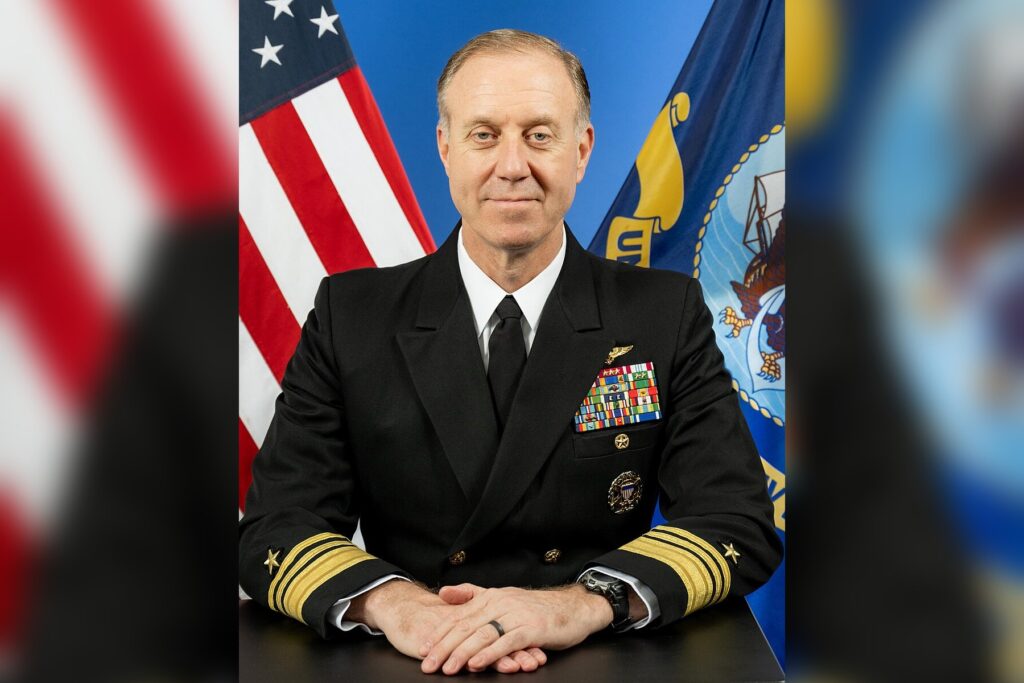
The bottom line: the admiral who ran America’s longest naval fight since World War II is headed to Europe. Vice Adm. George Wikoff, confirmed by the Senate for a fourth star and a double-hatted post covering Europe, Africa and the alliance’s Naples command, is trading the Bahrain flagship for the Atlantic side of the Navy’s map. The Middle East chapter he closes opened in February 2024, with commercial shipping under fire.
By the numbers, the fight he leaves behind: Houthi attacks on commercial ships began in October 2023 and never fully stopped; Operation Poseidon Archer ran from January 2024 to January 2025 and delivered “hundreds of airstrikes inside Yemen”; the two-month Operation Rough Rider closed with a May ceasefire, and the fleet stayed active in combat and force-projection work after it. Overseeing what one account called “the Navy’s longest fight since World War II”, Wikoff’s crews intercepted drones and missiles and struck targets inside Houthi-controlled territory.
The June strike set the tempo. Operation Midnight Hammer, “the June attack that damaged but failed to destroy three Iranian nuclear sites”, saw Navy ships fire Tomahawk Land Attack Missiles alongside B-2 Spirit bomber missions flown by the Air Force. The figure that matters here: three sites in the damage column of a single coordinated strike. For anyone pricing maritime risk, the lesson of those months was structural, since warships and merchant traffic shared one corridor and, at times, the same incoming fire.
The Bahrain portfolio ran wider than strike operations. Wikoff also led the multinational Combined Maritime Forces partnership, a drone-and-AI task force, and a Coast Guard unit seizing illegal drugs and weapons, most of it smuggled out of Iran. His route there: fighter pilot, TOPGUN instructor, carrier air wings; flew with fighter squadrons VF-102 and VF-154 off the carriers USS America and USS Kitty Hawk; a stint as acting commander of Naval Air Forces. The New Jersey native carries more than three decades in uniform.
The Europe desk is no quiet posting. Its area is “grappling with Russian actions ranging from the ongoing war in Ukraine to expansion of operations in the High North and Arctic,” and Adm. Stuart Munsch, who held the job since June 2022 and was honored by Norway for High North defense work, departs without a stated next assignment. Rear Adm. Curt Renshaw, now director of operations at U.S. Central Command in Florida, returns to Bahrain to take the fleet. Investors will note the wider reshuffle behind the move: Lisa Franchetti’s February ouster as chief of naval operations, Daryl Caudle’s confirmation in late July, and Brad Cooper’s rise from deputy to CENTCOM chief. The watch item now is whether the Red Sea calm holds while the Navy’s most battle-tested serving commander turns to the Atlantic file.
Sources
- Admiral who led Red Sea fight picked to lead US Navy in Europe
- Top Navy officer in Middle East picked for 4-star role heading Europe and Africa operations | Stars and Stripes




