
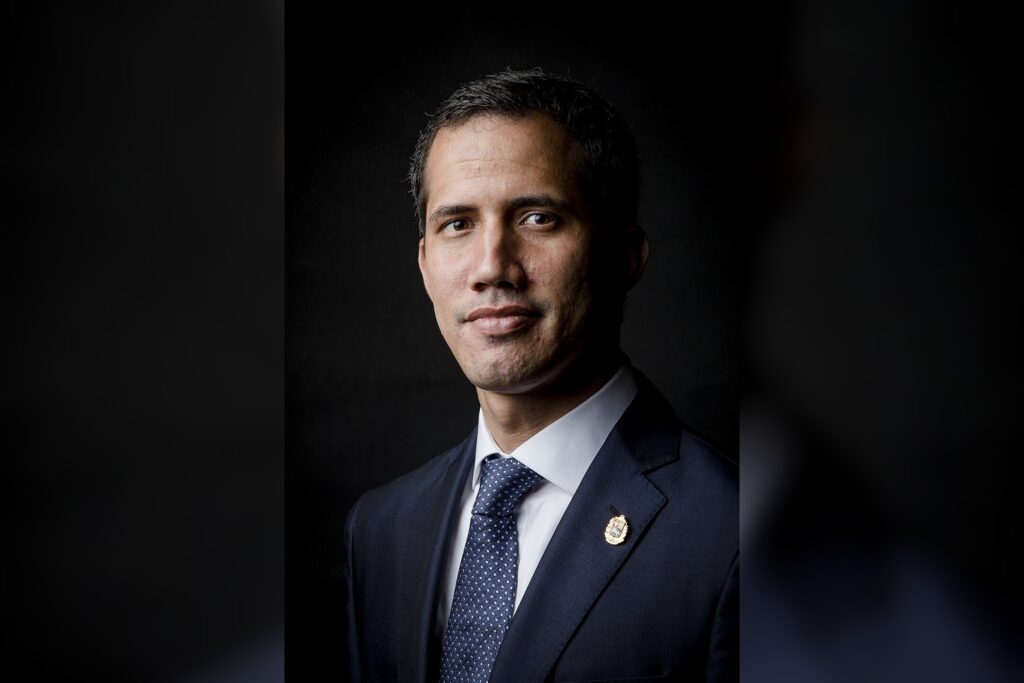
In January 2019 the speaker of Venezuela’s National Assembly, Juan Guaidó, declared himself acting president. For a while it looked as if Nicolás Maduro, in office since 2013, might actually be dislodged. He was not. Four years later Guaidó’s own side voted his “interim government” out of existence.
A claim built on a disputed election
The opposition-controlled legislature argued that Maduro’s 2018 win was unconstitutional, because his main rivals had been barred from the ballot. From that came the interim government, a stopgap that would govern until Maduro left and a fair vote became possible. The United States recognised Guaidó, and nearly 60 countries followed, according to the Center for Strategic and International Studies (CSIS). The AFP agency counted more than 50. Either way, he collected accredited ambassadors and a flood of sanctions and indictments fell on senior officials in Caracas.
The CSIS analysts, Ryan C. Berg and Alexandra Winkler, called 2019 a golden era for the opposition. At its peak Guaidó commanded over 60 percent support, and street marches across Caracas and elsewhere pulled in hundreds of thousands. The interim government also had money to draw on: frozen assets abroad, central bank funds, and gold worth billions held at the Bank of England. DW added that Citgo, the US refining company, was among the frozen assets entrusted to it.
Talks in Oslo and Barbados
Maduro still had Russia, China and Cuba behind him. Delegations from the two camps met face to face in Oslo in late May 2019, under Norwegian auspices. That round petered out. On July 8 the talks resumed in Barbados, with a five-hour first session. Maduro told state television he was “very optimistic” and spoke of “strategic patience”, while insisting there should be no American interventionism. Guaidó said he wanted the process to lead to Maduro leaving office, a transitional government, and “free elections with international observers”. Some in the opposition feared the talks would only strengthen Maduro.
Losing ground
Momentum drained away. The pandemic arrived in 2020, and CSIS argued that Maduro used public health measures to clamp down on society. Guaidó’s mandate was extended in 2021 and again in 2022, but he could not repeat the protests of 2019. Between 2015 and 2022 some 7.1 million Venezuelans emigrated.
DW reported that the opposition never won over the military or the judiciary, and that the interim government, with no control over local institutions, could not deliver basic services. Many Venezuelans came to see it as a “fake” government. A November survey by Andres Bello University found that only 6% would back Guaidó in a presidential primary.
On Friday, December 30, 2022, the vote came. Three of the four main opposition parties backed his removal; only his own refused. Lawmakers created a committee to supervise the coming primaries and another to oversee Venezuela’s overseas assets. “To annul this is to jump into the abyss,” the 39-year-old told the assembly.
Since 2020 the National Assembly had been largely symbolic, superseded by a pro-Maduro legislature after elections the opposition boycotted. CSIS warned in January 2023 that the dissolution was a blow to hopes of restoring democracy and risked giving Maduro further legitimacy.
Sources
- Venezuela: Juan Guaido-led 'interim government' dissolved (DW)
- The Interim Government of Venezuela Was Dissolved by Its Own Promoters (CSIS)
- Maduro 'optimistic' after opposition talks resume in Barbados (AFP via Mail & Guardian)




