
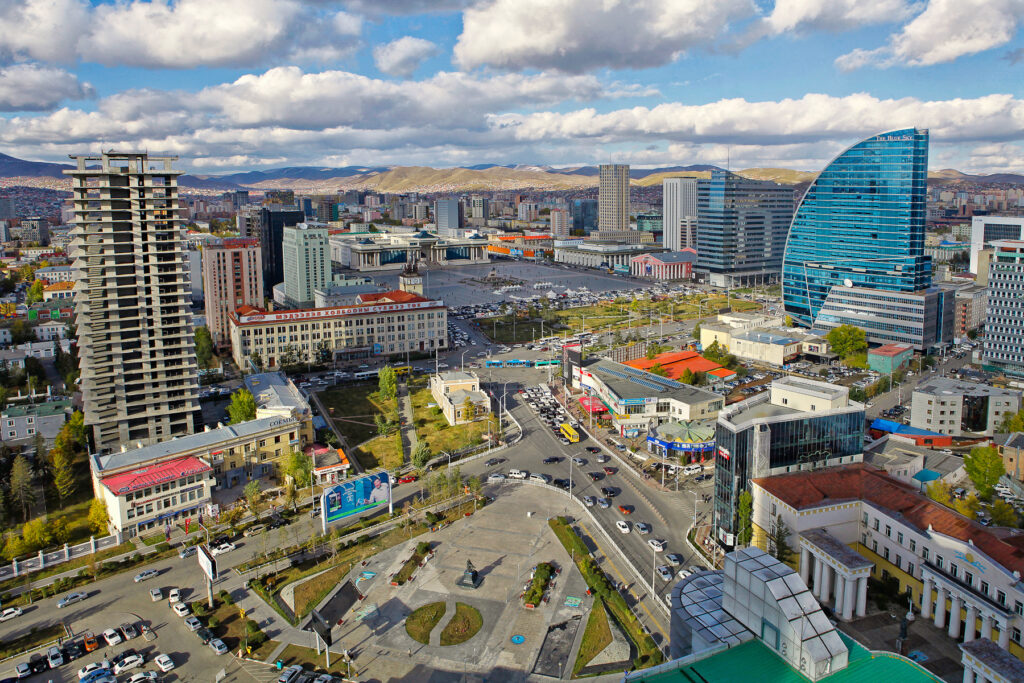
The money was easy. The words were not. At the UN desertification summit in Ulaanbaatar, governments, development banks, investment funds and companies put together a $1.3 billion financing package for land restoration and drought resilience projects in 23 countries. Yet delegates left Mongolia without the drought agreement many had come for, and with a new in-joke about the vocabulary Washington would not accept.
The talks, held under the UN Convention to Combat Desertification (UNCCD) as COP17, ran 11 days. The 196 countries and the European Union that must sign off on a global drought deal pushed the decision back again, this time to COP18 in Egypt in 2028. Negotiators kept one thing: drought stays on the agenda as a standalone item.
Who wanted what on drought
African countries, which produce 4% of the world’s carbon dioxide emissions but absorb some of the harshest climate damage, asked for a protocol under which other nations would help pay for drought management on their territory. The United States took the hardest line against it. Down To Earth reported that the US called any international drought instrument, binding or voluntary, a “red line” and argued drought is a domestic or regional matter. The European Union also would not accept funding obligations and floated alternatives that drew little discussion.
Wetlands International did not hide its frustration. “It is astonishing that governments have once again failed to reach this agreement,” the group said, pointing to Europe’s historic drought, record-low water levels on the Colorado River and an El Niño that could deepen dry spells from southern Africa to the Amazon.
The cost is not abstract. Droughts have increased by 29% since 2000 and cost at least €260 billion ($300 billion) annually, through weaker harvests, disrupted river transport, strained energy generation, migration, wildfires, floods and conflict.
The words that could not be said
The US also blocked agenda items that countries had already agreed on in the past: gender, civil society participation, and the links between the land, biodiversity and climate conventions born at the 1992 Rio Earth Summit. Those talks now wait for COP18. Down To Earth reported that references to Indigenous peoples and local communities were opposed as well, and Beth Roberts of the Landesa Center for Women’s Land Rights called the move a procedural attack.
The resolution that postponed the drought deal mentions none of the three. Elsewhere, delegates rewrote their own texts to get them through. Indigenous peoples and civil society groups became “all people.” In the land tenure agreement, “gender” turned into “women and girls.” Some attendees took to calling the banned terms the “Voldemort words,” after the Harry Potter villain nobody names. The choice, as El País described it, was to accept the condition or watch the talks collapse.
Indigenous leader Hindou Ibrahim led a protest inside the conference against the US veto. “We adopted these decisions to protect multilateralism and safeguard the convention,” she said, adding that she would work to stop it happening again. Spain’s biodiversity chief, María Jesús Rodríguez, called the lack of progress on gender, civil society and the Rio conventions especially disappointing.
Grasslands get their moment
Some texts did pass: agreements on sand and dust storms, private-sector engagement and grasslands. The last carries weight. Grasslands cover 54% of the Earth’s land surface and absorb about 30% of global carbon dioxide emissions, yet only 24 countries list them in national climate plans, against 181 that list forests.
The finance side moved faster than the diplomacy. Premium Times reported that $644.5 million of the $1.3 billion portfolio counts as new money, with $216.4 million confirmed and heading toward implementation. A Rangelands Flagship Initiative groups $1.2 billion across 45 projects, and a Drought Resilience Investment Facility aims to mobilise up to $400 million in public and private capital. The UNCCD estimates $355 billion a year is needed through 2030 to meet land restoration commitments, against about $77 billion invested now.
Sources
- United States hampers UN desertification summit with veto of 'Voldemort words' (EL PAIS English)
- Combat desertification COP17: US Draws red line against any drought instrument; says drought national, not global issue (Down To Earth)
- COP17: UN land summit ends in Mongolia with $1.3bn deal for restoration, drought resilience (Premium Times)




