
The United States said this week it would lean on economic pressure rather than military action to try to end its war with Iran. The announcement came as the conflict reached six months on Friday. It began on Feb. 28 as a US-Israel campaign.
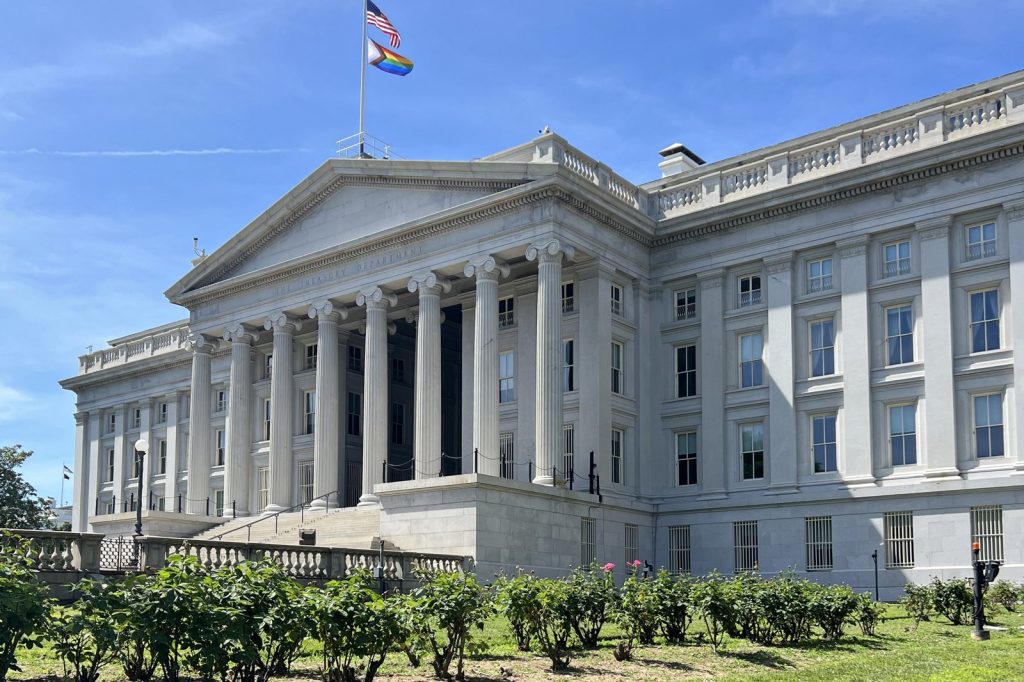
The new approach rests on threats to punish any country or entity that keeps doing business with Tehran. Treasury Secretary Scott Bessent unveiled what the White House calls “Operation Economic Outcast,” but so far he has issued only warnings and announced no secondary sanctions. Bessent told reporters that countries should get a chance to move away from Iran before it was too late, and he acknowledged the US faces economic risk too.
China, Iran’s biggest trade partner and oil buyer, said it opposes “illegal unilateral sanctions.” Asked Thursday why he was not already sanctioning Chinese banks, President Donald Trump answered, “Who said I’m not? You don’t know if I’m doing it. I don’t have to announce everything, do I?”
A war longer than promised
Trump had called the war a “little excursion” that would last weeks. It has cost the United States more than $37.5 billion, and the administration is weighing diminished munitions stockpiles. Trump says he is “not in a hurry” to return Iran to negotiations. He argues the blockade is working. “We have control and we have the blockade,” he said. “Iran is not getting anything.”
Iranian officials say the country has suffered $270 billion in direct and indirect damage. Israeli strikes in the first weeks wiped out much of the government’s leadership, including Supreme Leader Ayatollah Ali Khamenei.
Iran has its own leverage in the Strait of Hormuz. Trump says the strait is open and that 24 vessels passed through a day earlier. About 130 vessels crossed daily before the war. A preliminary deal reached in June to reopen the strait and start talks on Iran’s nuclear program fell apart within weeks after Iran began attacking ships.
Will pressure work?
Analysts disagree. Aarathi Krishnan of RAKSHA Intelligence Future said strikes and decades of sanctions have battered Iran, but she doubts more pressure will produce the political result Trump wants. Iran has sold discounted oil and built opaque shipping and financial networks. “This administration has completely underestimated the Iranian resolve,” she said. Before the war, according to the International Monetary Fund, Iran’s economy was already struggling with surging inflation, and World Bank data show income per person falling from about $8,000 in 2012 to $5,000 in 2024.
Richard Goldberg, a former National Security Council adviser on Iran now at the Foundation for Defence of Democracies, took the opposite view. He called for sealing “every escape hatch the regime has left” and hitting anyone who gives Tehran hard currency, “whether that’s in the Middle East, China or even Europe.”
Fighting resumes
On Sunday US forces struck Iranian rocket launchers on the Strait of Hormuz, the first military action in a month. Tim Hawkins, a Central Command spokesperson, said Revolutionary Guard forces were seen preparing to launch rockets carrying sea mines into the strait. The Guard said several of its fighters were killed or hurt, and Gen. Hossein Mohebi called the strike a “fatal mistake by the Trump regime during the economic war.”
Iran then fired ballistic missiles at US bases in Jordan, according to Iranian state television. Jordan’s armed forces said they intercepted eight missiles. US crude rose 1.8 percent to $84.94 a barrel, and Brent rose 1.9 percent to $89.79.
The last confirmed US strike before that came on July 29. On Aug. 1, Trump said he would hold off after appeals from Qatar, Saudi Arabia and the United Arab Emirates. As of Sunday, the US military said it had redirected 83 commercial vessels and disabled three under its blockade of Iranian ports.
Sources
- Six months on, Trump claims he’s in no hurry to end Iran war
- US forces strike Iranian rocket launchers on the Strait of Hormuz in first military action in weeks
- Containment, Resistance, and the MOU: The US–Iran Negotiations in Historical Context – Quincy Institute for Responsible Statecraft




