
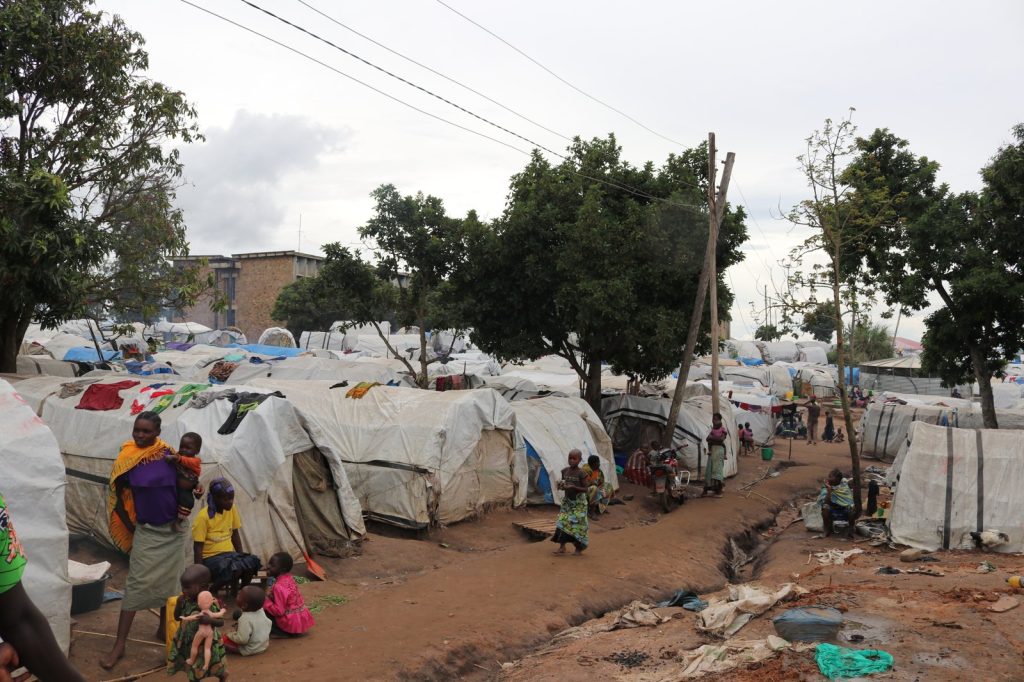
The technical reality of climate displacement has an awkward shape: those who did the least to cause the problem absorb the most of it, and a striking share of them are women and girls. The United Nations puts the ratio at four out of every five people displaced by climate impacts. A BBC News analysis from March 2018, citing UN figures, gave the same number as 80 percent, and added a harsher one: when disasters strike, women and children die at 14 times the rate of men.
Under the hood, the mechanism is economic. Women make up the majority of the world’s poor, and the poorest households depend most directly on local natural resources. In rural areas, women and girls are typically the ones securing food, water and firewood; when rainfall turns erratic, they walk farther and work longer, and the strain raises the risk of gender-based violence as existing conflicts and inequalities sharpen.
A Shrinking Lake, a Lengthening Walk
The Lake Chad basin is the standard illustration. Up to 90% of the lake has disappeared, and as the shoreline retreats, the walk to water grows. “In the dry season, men go to the towns… leaving women to look after the community,” says Hindou Oumarou Ibrahim, who coordinates the Chad-based Association of Indigenous Women and People. “They become more vulnerable… it’s very hard work,” she told the BBC’s 100 Women initiative. Longer dry seasons mean feeding families without support.
Disaster research points the same way. After the 2004 tsunami, an Oxfam report found surviving men outnumbered women by almost 3 to 1 in Sri Lanka, Indonesia and India; men were more likely to swim, and women lost evacuation time caring for children and relatives. In Louisiana after the 2005 Hurricane Katrina, some of the worst-hit residents were African American women. “In New Orleans, there was much higher poverty among the African American population before Katrina,” says Jacquelyn Litt, a Rutgers University professor who studies women and gender. “More than half the poor families in the city were headed by single mothers,” whose survival relied on community networks the flooding eroded. The Superdome that housed evacuees lacked enough sanitary products for the women inside it.
Excluded From the Table
As ever, the detail that matters is who decides. National and global climate negotiating bodies average less than 30% women. “Women are often not involved in the decisions made about the responses to climate change, so the money ends up going to the men rather than the women,” environmental scientist Diana Liverman told the BBC. Twenty-five percent of those nominated for the next IPCC report were women. “Women are half the world. It’s important they participate in all major decisions,” she said.
The UN’s own case for investment runs the other direction. Women produce up to 80 percent of food in developing countries; equal access to land, credit and technology could raise farm yields by 20 to 30 percent and feed another 100 to 150 million people. Women hold 40 percent of solar energy jobs, against 22 percent in oil and gas, and drive 70 to 80 percent of consumer purchasing decisions in wealthier societies. “Climate change is not a fight for power,” as Ibrahim puts it. The record suggests it is, above all, “it’s a fight for survival.”




