
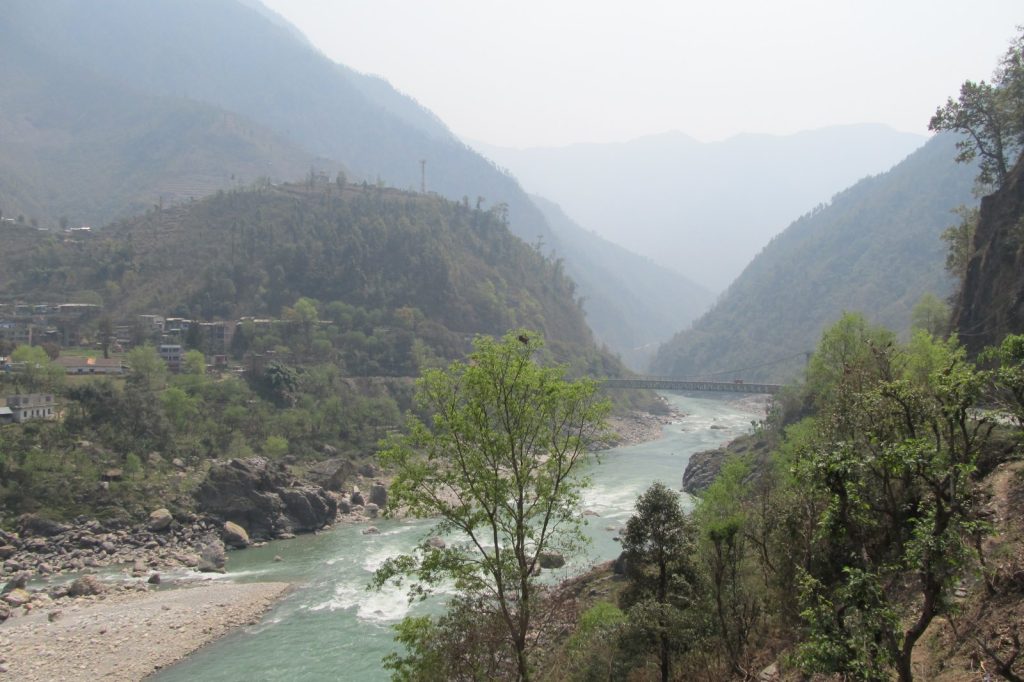
KATHMANDU, Sept. 4 — A week after flash floods tore through communities along Nepal’s Trishuli River corridor on August 26, the United Nations and its partners are backing government-led relief efforts, with a Flash Appeal expected shortly to scale up assistance. The flooding has forced many families into temporary community spaces, where they are coping with grief and uncertainty.
Government psychosocial counsellor Sushila Paneru has been holding mental health and psychosocial support sessions for affected families, including a mother pictured in a UNICEF photo taken on the day of the disaster. Relief convoys are moving food, clean water, hygiene kits and medical supplies into the affected corridor.
UNICEF has deployed therapeutic food and nutrition experts, while the UN Food and Agriculture Organization reports it has provided veterinary care for 300 injured animals and is assessing agricultural losses. The UN Office for Project Services is conducting rapid infrastructure assessments, mapping isolated communities, identifying logistics bottlenecks and sharing real-time data with coordination teams. The World Health Organization reports seven health facilities have been damaged, four of them completely destroyed, with two hospitals still difficult to reach.
Donations to UN Crisis Relief are helping UN agencies and humanitarian NGOs reach people in Nepal and beyond with urgent support. The floods come amid wider regional strain.
The UN Office for the Coordination of Humanitarian Affairs expressed deep concern over civilian casualties from strikes in Iran, with attacks also hitting countries in the Gulf and Jordan and disrupting airspace and critical shipping routes. OCHA said this escalation is adding pressure on humanitarian operations across the Middle East that are already stretched and underfunded.
In the Occupied Palestinian Territory, OCHA reported that in Gaza, three children aged three to 13 were reportedly killed in the preceding 24 hours, with at least five others injured, according to a UNICEF social media post. In Gaza City, three guards contracted by a humanitarian partner were slightly injured during armed clashes, and in Deir al Balah, the outer wall of two guesthouses used by the UN sustained minor damage after being struck by a projectile.
About 1 million people in Gaza who depend on the Israeli water grid were affected by reduced water supplies for a second day. In the West Bank, humanitarian partners are deeply concerned by reports that the entire community of Khirbet at Tabban in Masafer Yatta was destroyed by Israeli forces, one of 13 herding communities in the area.
For Nepal, the immediate test is reaching cut-off settlements before the next rains come. For the wider region, the concern is how overlapping crises stretch the same relief purse — and the same counsellors, veterinarians and logistics teams — ever thinner.




