
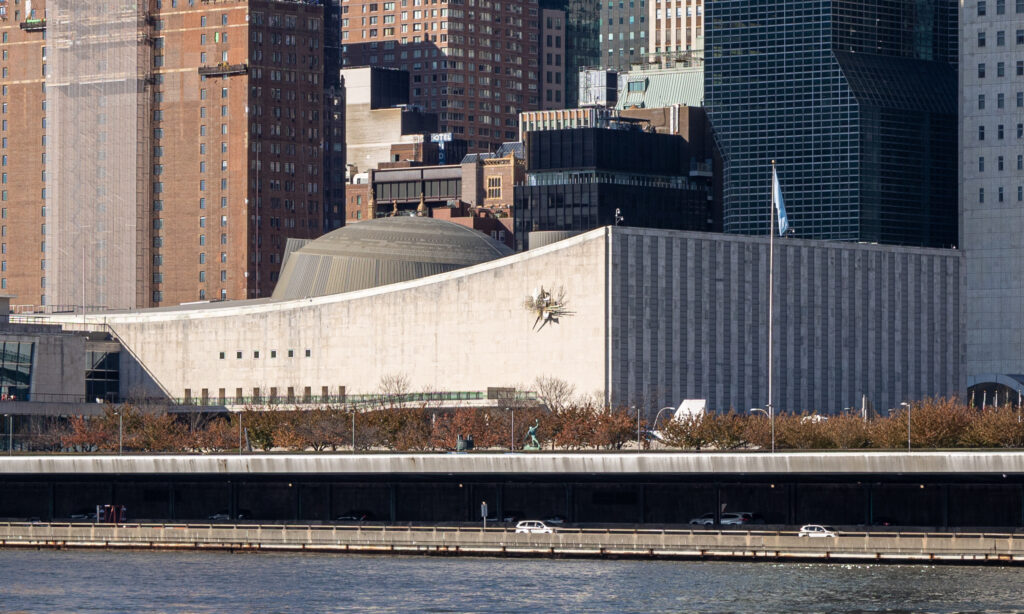
New York — By Monday morning the flags will be back up First Avenue, one for every member state, and the traffic barriers with them. On 8 September the United Nations General Assembly opens its 81st session, and this year the theater on the East River carries an unusually blunt theme: “Restoring Trust, Managing Transformation: A United Nations That Delivers for All”. The subtext is hardly subtle. With the 2030 deadline for the Sustainable Development Goals now under five years away, the institution arrives at its high season needing to prove it can still deliver anything.
The session’s new President, Khalilur Rahman — Bangladesh’s foreign minister, a diplomat of more than four decades — put the moment plainly when his election was announced. “The UN will commence its ninth decade at a time when trust in our organization is being tested on multiple fronts.” That warning will hang over the session. He presides over a body whose headline event, the General Debate, runs 22-26 September, with each leader allotted roughly 15 minutes at the famous green-marble podium.
The Numbers Hanging Over The Hall
What gives the 2030 agenda its urgency is the scorecard. When the Assembly adopted the 17 SDGs in September 2015, every country pledged shared work against poverty and hunger, for the planet, for peace and for gender equality. The UN’s 2026 assessment reads like a warning light: of 139 SDG-linked targets, only 36% qualify as on track or moderately progressing, while close to half — 49% — are advancing only marginally, and another 15% have slipped below where they stood in 2015.
The money is moving the wrong way too. Official development assistance dropped by 23.1% in real terms during 2025, the steepest one-year fall ever recorded, and the OECD expects further cuts through 2026. Leaders point to the Pact for the Future, agreed in 2024 with its 56 Actions meant to turbocharge the goals, as the instrument for reversing the slide.
A Calendar Built For Deadlines
The high-level programme reads like a tour of the world’s open wounds. It begins with the SDG Moment, the annual showcase the Secretary-General convenes on 18 September to spotlight solutions while most targets drift. On 23 September come two gatherings: one on climate action plus the just-transition agenda, the other marking four decades since the 1986 Declaration on the Right to Development established development as a human right.
A day later, on 24 September, a High-level Meeting takes on sea level rise — an existential question for small island states and low-lying coastlines, home to more than half a billion people living in the flood zones of a warming world. Pandemic prevention, preparedness and response follow on 25 September, building on the WHO Pandemic Agreement adopted in May 2025. And on 28 September the Assembly marks a quarter century since the 2001 Durban Declaration against racism set the global framework that members will pledge, again, to implement.
Around the official sessions, the World Economic Forum stages its Sustainable Development Impact Meetings, set for 21-24 September and pulling business, government and civil society leaders into the same city and, organizers hope, the same conversations.
A Changing Institution Watching Itself
All of it unfolds as the UN audits its own machinery. The UN80 Initiative, launched in 2025, is shifting from review into implementation, with reforms aimed at efficiency, mandate reviews and a leaner system. The search for a successor to Secretary-General Antonio Guterres is already underway; his second term runs out on 31 December 2026.
For delegates filing into the hall on Monday, the scene will look timeless: the emblems, the minute of prayer, the installation of the President. What has changed is the margin. Five years, 15 percent of targets in reverse, and aid shrinking at record speed — the final push toward 2030 starts now, or it does not start at all.




