
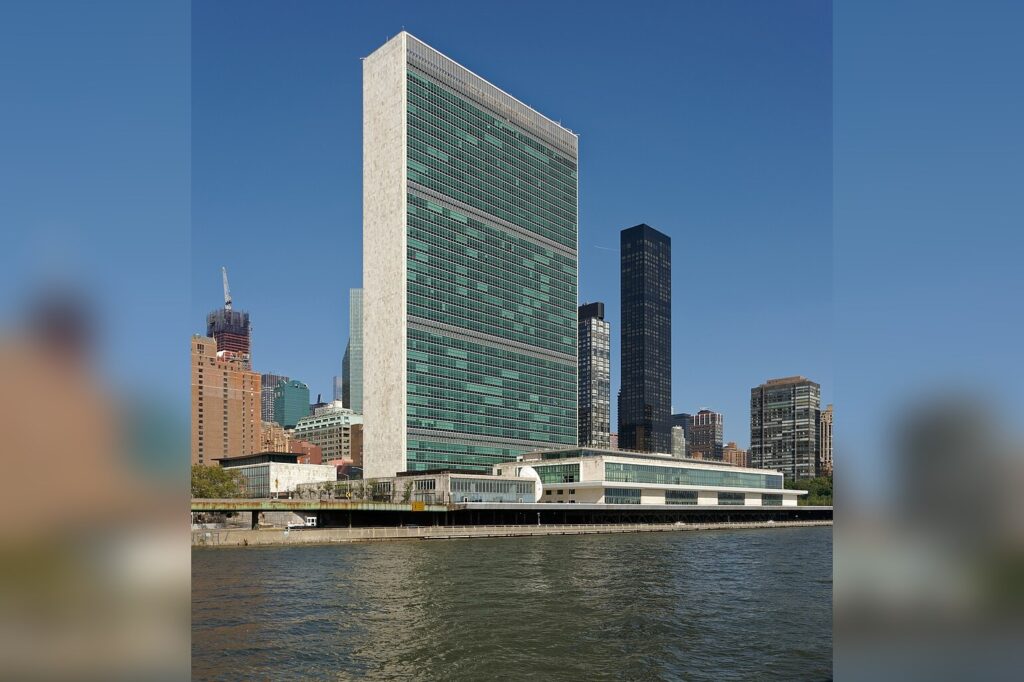
“Still every September we get record numbers of leaders coming to speak at the General Assembly.” So said Richard Gowan, who directs UN and multilateral diplomacy at the International Crisis Group in New York, in an interview with UN News published on 19 September 2026, ahead of the Assembly’s high-level week. His case is simple: whatever people say about the UN’s decline, the big hall still draws the crowds.
It was never meant to be the main event. The founders of 1945, Gowan said, assumed the Security Council would take most of the decisions. Then the big powers split almost at once, and political debate drifted to the General Assembly, where all 193 member states sit.
Korea, Suez and a new kind of peacekeeping
In the 1940s and early 1950s the Assembly drove decisions on the Palestinian question and on Korea, while a Cold War-paralyzed Council could not. Most members then were friends and allies of the United States, Gowan explained, so Washington often turned to the Assembly when the Council deadlocked with the Soviet Union. When the Korean War became impossible to discuss in the Council, the Assembly led.
The big test came in 1956. Two crises hit at once: Suez, where Britain and France had intervened, and the Soviet invasion of Hungary. “That was an incredibly dramatic time,” Gowan said, and the Assembly mandated the first military UN peacekeeping operation to help end the Suez crisis. He counts it among its biggest contributions to Cold War crisis management.
The Global South finds a stage
Then the room filled. The founders thought the Assembly might top out at 80 or 90 countries; newly independent states in the 1960s blew past that. It gave former colonies a place to be heard, and apartheid in South Africa became their cause. The Assembly passed resolution after resolution condemning it, and in the 1970s suspended South Africa’s membership. For Gowan, that showed what we now call the Global South emerging as a force.
Developing countries also raised the Portuguese empire in Africa and Palestine, and in 1974 won a resolution calling for a fairer new economic order. No such order arrived, and the argument ran through the 1970s and 1980s. Yet Gowan believes the anti-apartheid campaign in the Assembly helped bring the system down at the start of the 1990s. Without the Assembly, he said, many countries “would not really have had global voice at all”.
After the Cold War
The post-Cold War years brought a thaw. During the Cold War, diplomats from the communist bloc would not speak to Western counterparts unless they had to. That eased, and ambassadors worked with the UN Secretariat on ideas passed through the Assembly, including the Peacebuilding Commission, approved in 2005. Then came the financial crisis of 2008 and 2009. Many members felt the UN should respond, but the United States and other major economies worked through the G20 instead, which drew sharp criticism from the Global South. Around the same period, environmental questions began rising through the Assembly.
Asked what would surprise the founders most, Gowan said they believed the UN would sustain the old imperial order. Instead it gave countries a framework to leave colonization and challenge power. Winston Churchill, who was there at the creation, would have been very surprised, he said.
And why keep it in New York? Plenty of clubs exist now, the G7 and BRICS among them, but for small countries and middle powers the Assembly is still the main stage. It is also where the world goes to react to an urgent crisis. “There’s no alternative to that,” Gowan said. Leaders value having a platform at the centre of the global media and diplomatic scene.




