
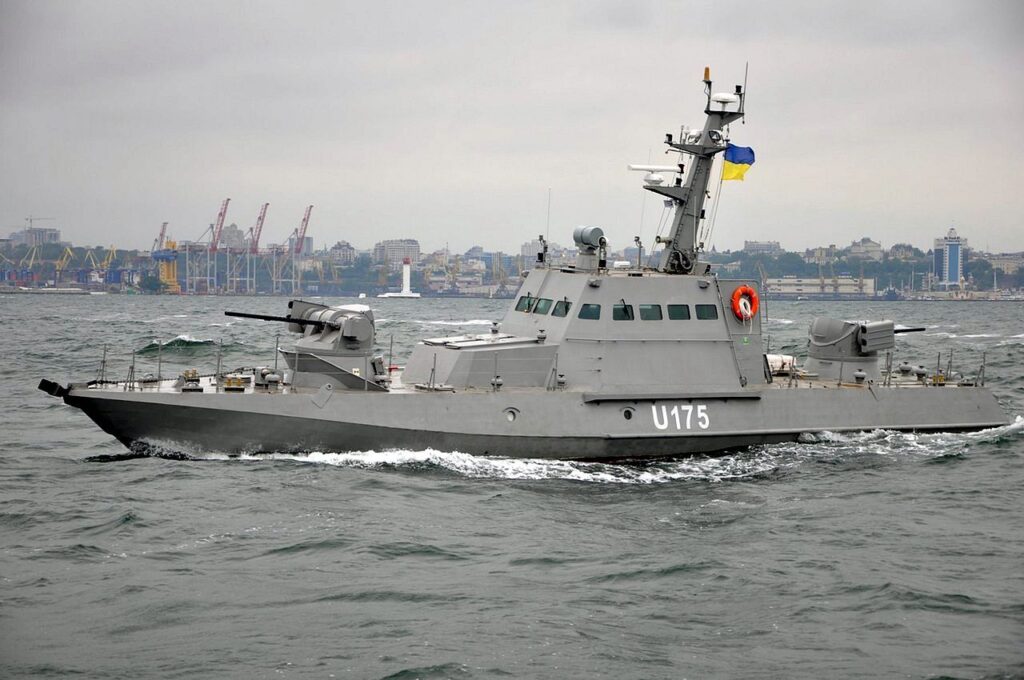
KYIV, July 9 — Against the backdrop of a war that has redefined modern naval warfare, the Ukrainian Navy stands as a case study in radical transformation and asymmetric resilience. The fleet was established in 1991, born from the wreckage of the Soviet Black Sea Fleet after the dissolution of the USSR. For more than two decades, its identity was tied to the Crimean port of Sevastopol, a strategic deep-water harbour that had served as the imperial and Soviet naval heartland for centuries.
When Russia annexed Crimea in 2014, that identity was shattered. In what remains one of the most devastating single losses of naval assets in modern European history, Moscow’s forces seized approximately 60 of Ukraine’s 67 naval vessels.
Among the captured ships was the frigate Hetman Sahaidachny, the flagship of the Ukrainian fleet. Ukraine was left with only a small rump fleet based in Odesa, a city whose own maritime history is inseparable from the grain trade and the Black Sea’s strategic chokepoints. For years, the conventional wisdom in European defence circles was that Ukraine’s navy had been effectively neutralised.
A navy without ships, the thinking went, was no navy at all.
The Asymmetric Turn
The 2022 full-scale invasion changed that calculation entirely. Rather than attempting to rebuild a conventional surface fleet — an expensive and time-consuming proposition for a country under bombardment — Ukraine invested heavily in unmanned systems and precision anti-ship missiles. The most dramatic demonstration of this new doctrine came with the sinking of the Russian cruiser Moskva.
The vessel, the flagship of Russia’s Black Sea Fleet, was struck by Ukrainian Neptune anti-ship missiles. For a navy that had lost its conventional fleet in 2014, sinking a guided-missile cruiser was a statement of intent.
In the corridors of NATO headquarters and European defence ministries, the Moskva sinking prompted a reassessment. Small, cheap, unmanned systems, paired with mobile missile launchers, had achieved what a conventional naval engagement could not.
The October Strikes
The October 2023 strikes on 21 Russian ships represent perhaps the most significant asymmetric success for a navy that, by any traditional measure, should not have been able to contest the Black Sea. The figure — 21 vessels struck in a single operation — is a reminder that the balance of naval power in the region has shifted in ways few predicted at the start of the war. What is at stake in this transformation extends beyond the immediate tactical picture.
The Black Sea is a vital artery for Ukrainian grain exports, and Russian naval dominance has been used to threaten commercial shipping and enforce a de facto blockade. A Ukrainian navy that can strike Russian warships at range changes the wider picture for global food security and maritime trade routes.
The wider picture also includes the future of European naval procurement. Several EU member states, watching Ukraine’s success with drones and missiles, have begun to rethink their own naval strategies. The era of the multi-billion-euro destroyer may not be over, but the age of the mass-produced naval drone has clearly begun.
For now, the Ukrainian Navy remains a force that exists more in the realm of innovation than in the traditional language of hull numbers and fleet tonnage. It is a navy that lost its ships but found a new way to fight.
What comes next — whether Russia can adapt to this threat, and whether Ukraine can sustain its production of unmanned systems — will shape the naval balance in the Black Sea for years to come.




