
Ukraine lost most of its conventional warships in 2022. What it built in their place costs about US$250,000-300,000 a piece, according to Ukraine War Analytics, and has forced the Russian Black Sea Fleet out of its historic home port.
Two programs, two services
Ukraine runs two separate naval drone families. Military intelligence, the GUR, developed the Magura V5. The domestic Security Service, the SBU, fields the Sea Baby. DeepLearning.AI reported that the SBU first assembled prototypes from off-the-shelf parts, then moved to more sophisticated designs as Ukraine’s aerial drone industry grew.
The Magura V5 is a small boat, 18 feet long and 5 feet wide, with a range of around 515 miles at a cruising speed of 25 miles per hour. Three to five of them can surround a target on their own, each with a warhead roughly as powerful as a torpedo. Operators trigger the blast from a laptop-size console. IEEE Spectrum put the warhead at 300 kilograms.
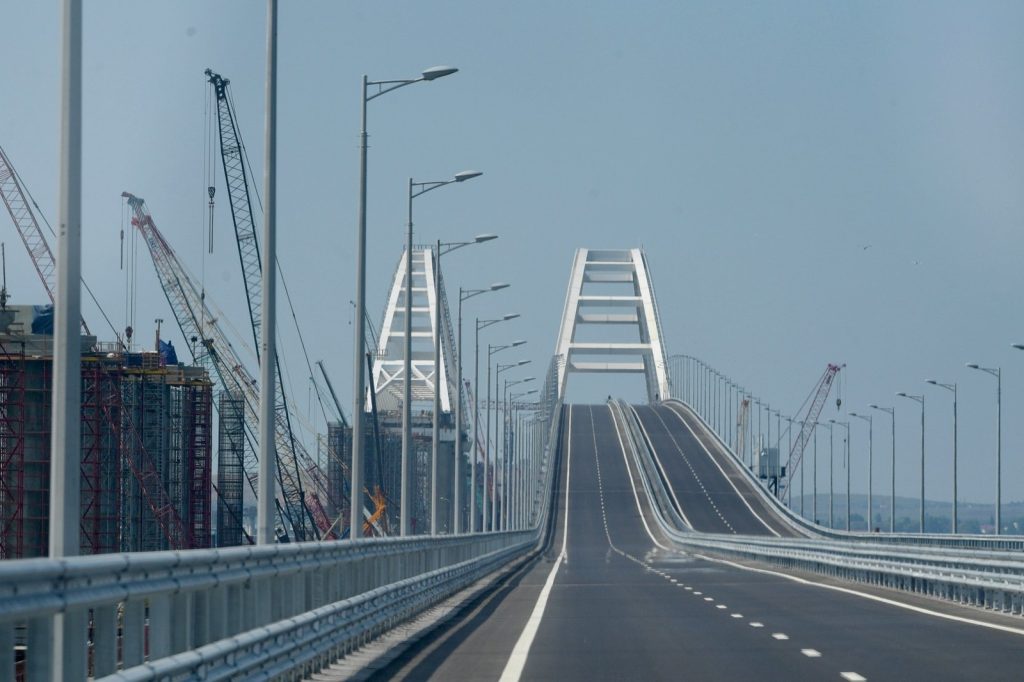
The Sea Baby is bigger: roughly 20 feet long and 6.5 feet wide, with a range of 60 miles and a top speed of 55 miles per hour. IEEE Spectrum credited it with about 800 kg of explosives. It first drew wide attention through attacks on the Kerch Bridge.
What they have done
Ukraine War Analytics says the Magura V5 became the first naval drone to sink an enemy warship in combat, in February 2024. It reportedly destroyed the Tarantul-III corvette Ivanovets and, days later, the roughly 4,000-ton landing ship Tsezar Kunikov. The SBU has cited attacks on around 11 Russian ships with the Sea Baby and its variants.
IEEE Spectrum wrote that the drones, fitted with Starlink terminals and GPS, have damaged or disabled roughly one-third of the Black Sea Fleet, the flagship Moskva among them. Much of the fleet has since relocated eastward to Novorossiysk, and Ukraine’s grain and shipping routes have reopened.
Russia has adapted. DeepLearning.AI noted that it now fortifies fixed targets such as bridges with guns and jams GPS and Starlink signals.
A caution on the numbers
Nearly all detailed performance data comes from the agencies that built the drones, and Russia rarely admits losses. Ukraine War Analytics says several of the biggest claims are backed by satellite and commercial imagery and ship-tracking data. Specific tallies, it adds, are still Ukrainian estimates.
Sources
- Ukraine's Naval Drones: Magura, Sea Baby & the Black Sea (Ukraine War Analytics)
- Sea Drones in the Russia-Ukraine War Inspire New Tactics (IEEE Spectrum, Bryan Clark)
- Ukraine Develops Aquatic Drones (DeepLearning.AI, The Batch)




