
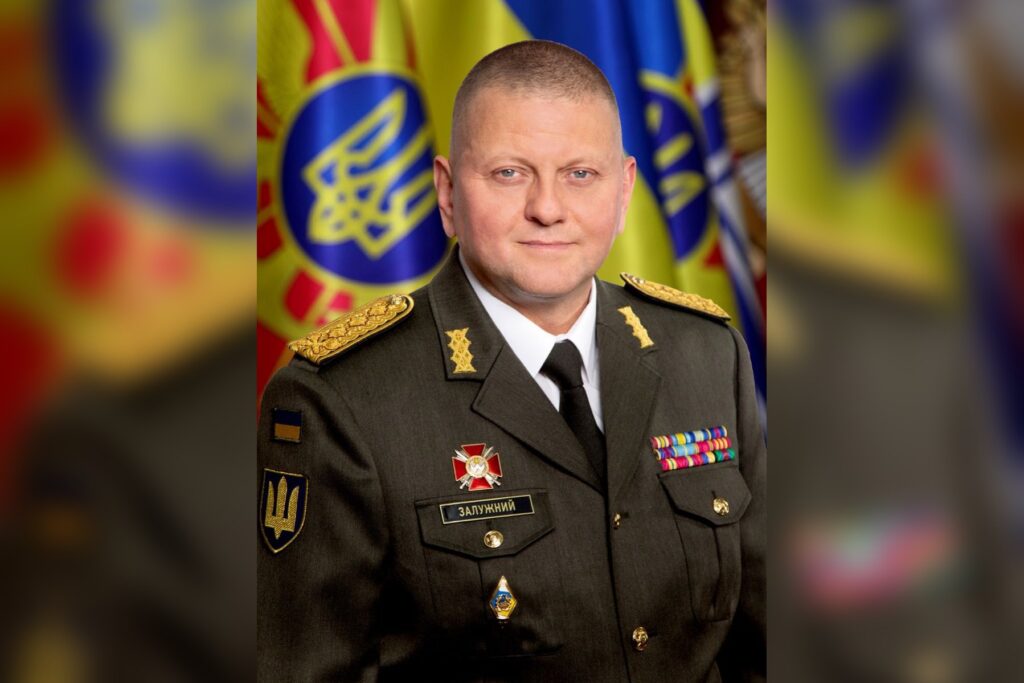
KYIV, July 13 — The corridors of Ukrainian military command have long been the quiet engine of a war that now reaches deep into Russian territory. Against this backdrop, the role of General Valerii Zaluzhnyi, who served as Commander-in-Chief of the Armed Forces of Ukraine from July 2021 until February 2024, remains a defining chapter in how Kyiv has prosecuted its strategic campaign. Zaluzhnyi oversaw major operations including the Kharkiv counteroffensive in September 2022 and the Kherson counteroffensive in November 2022.
These offensives recaptured territory and shifted the momentum of the conflict. What is at stake in understanding his tenure is not merely a record of battlefield victories, but the foundation for a broader strategy that has since evolved to include strikes on Russian infrastructure.
The Shift in Strategy
President Volodymyr Zelenskyy has publicly authorized strikes on Russian energy targets as part of a strategy to degrade Russian war capabilities. This decision marks a significant escalation from the earlier phases of the war, when Ukrainian operations were largely confined to defensive actions and counteroffensives on Ukrainian soil. The authorization reflects a calculation that the conflict will not be won by territorial recapture alone.
The wider picture, from a European perspective, is one of a grinding war of attrition where energy infrastructure has become a legitimate military target. For Italy and other EU nations watching from across the continent, the strikes represent a tactical shift that carries implications for global energy markets and the broader geopolitical balance.
The Command Structure
Zaluzhnyi was replaced in February 2024 by General Oleksandr Syrskyi, previously commander of the Ukrainian Ground Forces. Syrskyi led the defense of Kyiv in February-March 2022, a campaign that prevented Russian forces from capturing the capital in the war’s opening weeks. He also commanded the Bakhmut campaign in 2023, a brutal, months-long battle that drained Russian resources at a tremendous cost in Ukrainian lives.
Both generals, along with other key Ukrainian military leaders, have been involved in planning strikes on Russian infrastructure. The transition from Zaluzhnyi to Syrskyi did not signal a change in strategic doctrine; rather, it represented a continuity of approach under different operational leadership.
European Stakes
Against this backdrop, European capitals are watching the trajectory of the war with heightened concern. The targeting of Russian energy infrastructure risks further destabilizing an already volatile energy market, one that has seen prices spike and supply chains fracture since the full-scale invasion began in February 2022. For nations like Italy, heavily dependent on energy imports, the stakes are both strategic and economic.
The authorization from President Zelenskyy to strike energy targets is not a decision taken lightly. It reflects a recognition that Russia’s war machine is fueled by oil and gas revenues, and that degrading those resources is a direct path to limiting Moscow’s ability to sustain combat operations.
The question now is how far this strategy will extend, and what the Russian response will be.
What to Watch Next
The coming months will test whether the strikes on energy infrastructure achieve their intended effect. Analysts will be watching for signs of reduced Russian offensive capability, as well as any retaliatory strikes against Ukrainian energy systems. The role of Zaluzhnyi, now a former commander-in-chief but still a figure of immense influence within Ukrainian military circles, may also evolve as the conflict enters its next phase.
For the European audience, the wider picture remains one of uncertainty. The war in Ukraine has already reshaped the continent’s security architecture, and the decision to strike Russian energy targets represents another inflection point.
Whether this strategy shortens the conflict or escalates it is a question that will define the months ahead.




