
Four Russian warships were damaged overnight on August 12, among them the frigates Admiral Makarov and Admiral Essen. Ukraine’s General Staff said the attack on the naval base at Novorossiysk also hit an S-300 air defense radar, port infrastructure and the entrance to an oil depot.
Local authorities declared a state of emergency in the city and temporarily closed two major grain terminals at the port.
RBC-Ukraine reported the details of the weapons on August 13. This was the first time Ukrainian forces ran several hybrid missile classes together: Palianytsia, Peklo, Bars and Long Neptune systems, flown alongside naval and aerial drones. RBC-Ukraine places these ground-launched systems between suicide attack drones and conventional cruise missiles, a middle tier that lets Ukraine reach high-value targets deep behind enemy lines.
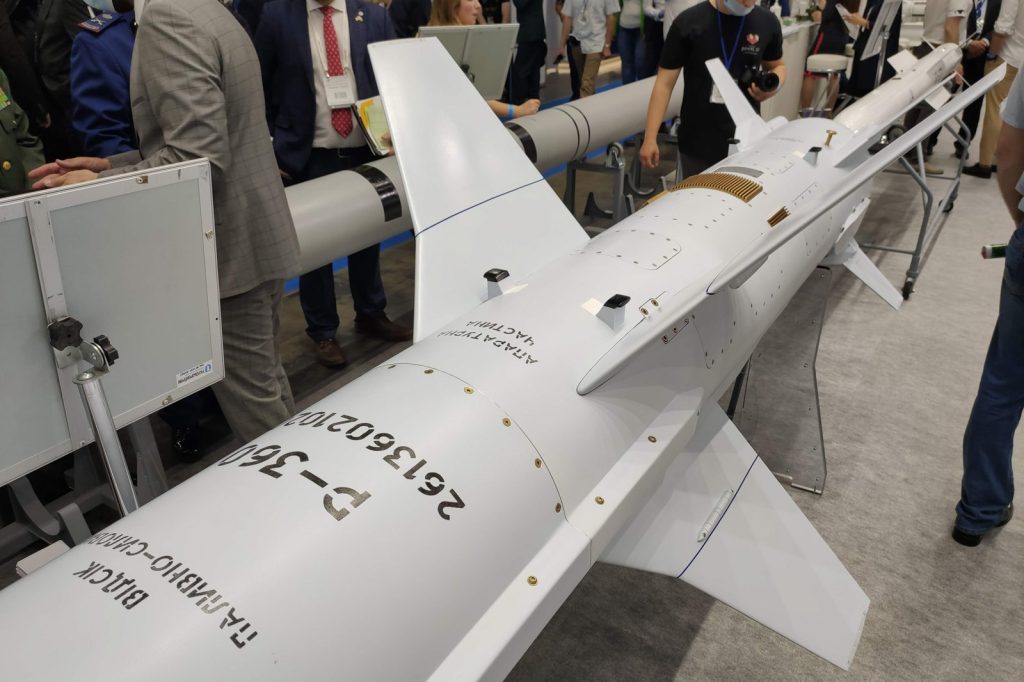
Palianytsia
The Palianytsia weighs 320 kilograms and measures 3.5 meters long, with a 1.7-meter wingspan and a warhead of up to 100 kilograms. A solid-fuel booster launches it, and a single-spool turbojet engine drives it to cruising speeds of up to 900 kilometers per hour. It flies low, between 15 and 500 meters, and steers by a combined INS/GPS system. Its operational range is 650 kilometers.
Ukraine built it in 1.5 years, in part to get around Western limits on how donated weapons can be used. It can independently hit up to 20 Russian airfields. Each missile costs well below $1 million. Its combat debut came in August 2024 in a complex operation against a Russian military target in occupied Crimea.
Peklo
Peklo is the newer design. Developers produced it from scratch in a single year, and the first units reached the military in December 2024. It flies at up to 700 kilometers per hour and has a range of 700 kilometers.
It went into mass production quickly: 100 units in three months after its introduction. About 70% of its components are locally sourced. The aim is to threaten distant air bases and push Moscow to move its combat aviation farther from the front.
Russia’s closest equivalent
Russia’s nearest counterpart is the S8000 Banderol cruise missile made by Kronstadt. Aviation expert Kostiantyn Kryvolap told RBC-Ukraine it comes with limits. Its warhead is smaller, it costs roughly three times as much as a standard Shahed drone, and it needs an aircraft to launch, which restricts mass deployment compared with Ukraine’s ground-launched fleet.
The wider maritime campaign
The Novorossiysk strike fits a broader effort against Russian shipping. Between August 1 and 8, Ukraine’s Unmanned Systems Forces hit 12 more Russian vessels in the Black Sea and Sea of Azov. That brought the number of Russian vessels targeted since Operation “MoLoChKa” began in early July to 218.




