
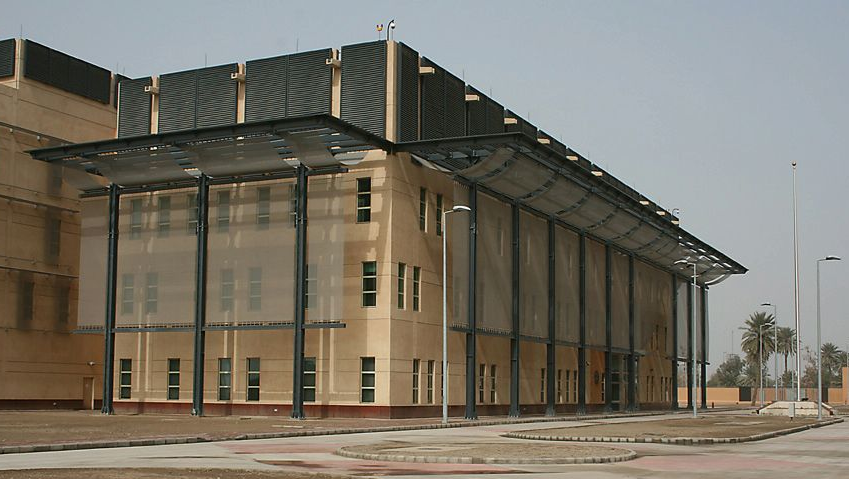
“Americans currently in the Middle East should exercise heightened vigilance and be aware of potential flight cancellations, airspace closures, and travel disruptions.” That was the line in security alerts that U.S. embassies in ten countries issued over a weekend in late September: Saudi Arabia, the United Arab Emirates, Qatar, Jordan, Bahrain, Kuwait, Oman, Lebanon, Iraq and Israel.
The alerts followed a new round of fighting between Saudi Arabia and Iran-backed Houthi rebels. Saudi Arabia said it intercepted a ballistic missile fired toward Riyadh, while the Houthis claimed missile and drone attacks on the capital and on the oil city of Yanbu, CBS News reported. Flights at Riyadh’s King Khalid International Airport were briefly disrupted. The alerts said the Houthis “have engaged in hostilities against Saudi Arabia, including civilian airports,” and that the conflict “has the potential to escalate rapidly.”
Alerts are not advisories
These alerts are separate from the State Department’s formal travel advisories, and no country’s classification changed. Saudi Arabia, the UAE, Qatar, Jordan, Bahrain, Kuwait, Oman and Israel were already at “Level 3: Reconsider Travel.” Iraq and Lebanon sit at the top tier, “Level 4: Do Not Travel.”
The reasons differ. For Saudi Arabia the department cites the risk of Iranian drone and missile targeting of American interests, armed conflict, terrorism, exit bans and local laws on social media activity. For the UAE it points to armed conflict and terrorism. Qatar’s advisory notes an ongoing threat of drone and missile attacks from Iran and significant disruption to commercial flights.
For people changing planes in the Gulf
The stakes reach well beyond the region. Dubai, Doha and Abu Dhabi are major connecting points for people flying between the United States and Asia, Africa, Australia and the Indian Ocean. A closure of airspace can scramble an itinerary even for a passenger who never leaves the terminal.
That does not mean every Gulf connection fails. On the Wednesday of that week, 20 percent of flights were delayed out of both Dubai International and Abu Dhabi’s Zayed International, according to FlightAware, and cancellations were nearly non-existent. Still, the war has reshaped air travel this year. When fighting with Iran broke out in February, airports including Dubai temporarily closed and thousands of flights were disrupted, Reuters reported, and airlines have restored service at different speeds since. In July the State Department issued a Worldwide Caution about airspace closures and cancellations, and a month later its Consular Affairs bureau urged people to “seriously reconsider travel to and through” the region.
A flight that looks fine days ahead can still be rerouted or cancelled on short notice. The State Department advises travelers to confirm with the operating airline that a flight is still scheduled, contact the carrier about rebooking if it is affected, and keep watching embassy alerts and local authorities. Americans abroad can also enroll in its free Smart Traveler Enrollment Program, which sends security updates and helps embassy officials reach travelers or their emergency contacts in a crisis.




