
Fifty-two Americans sat in the U.S. embassy in Tehran for 444 days. That siege, which began when radical Iranian students seized the compound, is where the modern U.S.-Iran quarrel starts, according to the Council on Foreign Relations. Everything since has built on it.
1979 to 1988: revolution, hostages, war
The shah fled Iran amid civil unrest in 1979, and Grand Ayatollah Ruhollah Khomeini came home from exile to set up an Islamic theocracy. Khomeini said Iran would try to “export” its revolution to its neighbors. A pro-Western monarchy had become a staunchly anti-Western state.
The students who took the embassy wanted the shah extradited. Washington cut diplomatic ties, put sanctions on Iranian oil and froze Iranian assets. The Algiers Accords finally freed the hostages, with the U.S. pledging not to intervene in Iranian affairs.
Then came war. Iraq invaded Iran in 1980 because Saddam Hussein feared a Shiite uprising, and the United States backed Baghdad with economic aid, training and technology, even with evidence that Iraqi forces used chemical weapons. The fighting lasted until 1988 and killed approximately one million Iranians and 250,000 to 500,000 Iraqis.
Two more blows landed in the 1980s. In 1983, two truck bombs hit barracks in Lebanon and killed 241 U.S. service members. The group Islamic Jihad, believed to represent Hezbollah, claimed it. The State Department named Iran a state sponsor of terrorism in 1984. In 1988, after an Iranian mine hit an American frigate, the U.S. Navy destroyed Iranian oil platforms and sank a frigate. That July it mistakenly shot down an Iranian passenger jet, killing all 290 aboard.
Sanctions and the axis of evil
The Clinton administration imposed a comprehensive oil and trade embargo in 1995. A year later, the Iran and Libya Sanctions Act went after non-American firms investing more than $20 million a year in Iran’s energy sector.
In 2002, President George W. Bush put Iran in an “axis of evil” with Iraq and North Korea. In 2003, U.S. forces invaded Iraq, and Iran backed Shiite militias there, some of which attacked American troops.
The nuclear deal and its collapse
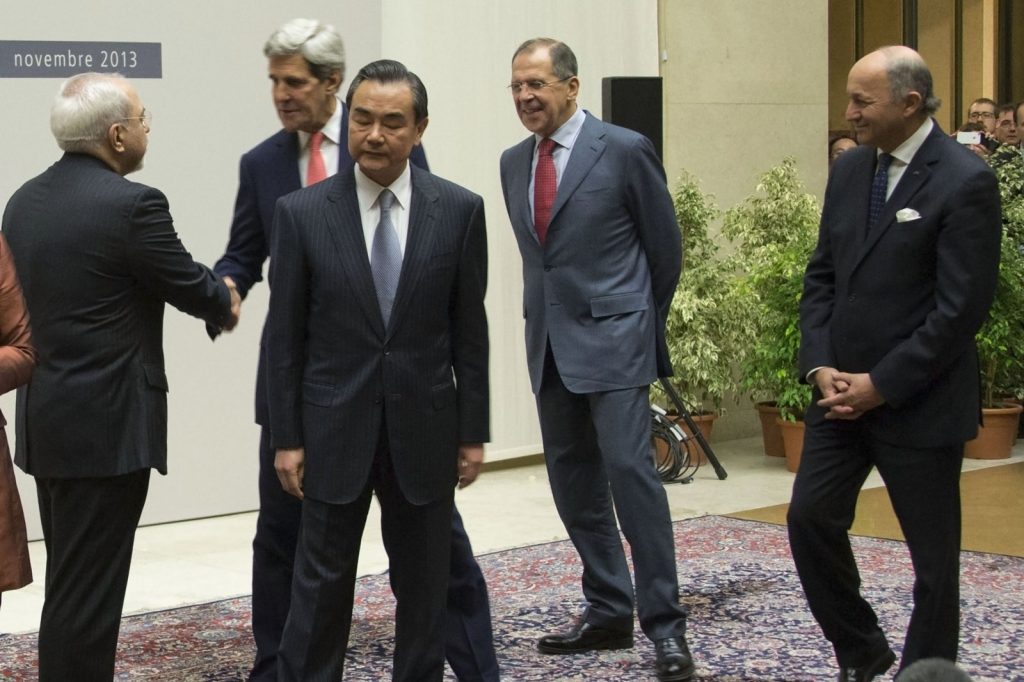
In September 2013, President Barack Obama spoke directly with Iran’s newly elected president, Hassan Rouhani, the most direct contact since 1979. Two months later Iran and the P5+1 signed an interim nuclear agreement.
The full deal came on July 14, 2015. The Joint Comprehensive Plan of Action, as Brookings recorded, was endorsed by Iran and the P5+1 and sent to the UN Security Council, which unanimously backed it on July 20, 2015. Iran agreed to dismantle its Arak reactor, accept intrusive inspections and limit uranium enrichment for fifteen years. The aim was to stretch Iran’s “breakout time” from weeks to at least one year. Once the International Atomic Energy Agency verified compliance in early 2016, the EU and the U.S. lifted a long list of sanctions.
It did not last. President Donald Trump announced the U.S. withdrawal in 2018 and launched a “maximum pressure” campaign. Iran responded by enriching more uranium.
2019 and 2020
Trump designated the Islamic Revolutionary Guard Corps a foreign terrorist organization, the first time the U.S. had applied that label to another nation’s government branch. The Guard seized British tankers, attacked Saudi oil facilities and threatened U.S. Navy vessels. In January 2020, the U.S. killed Qasem Soleimani, the Quds Force commander. Iran answered with ballistic missile attacks on American bases.




