
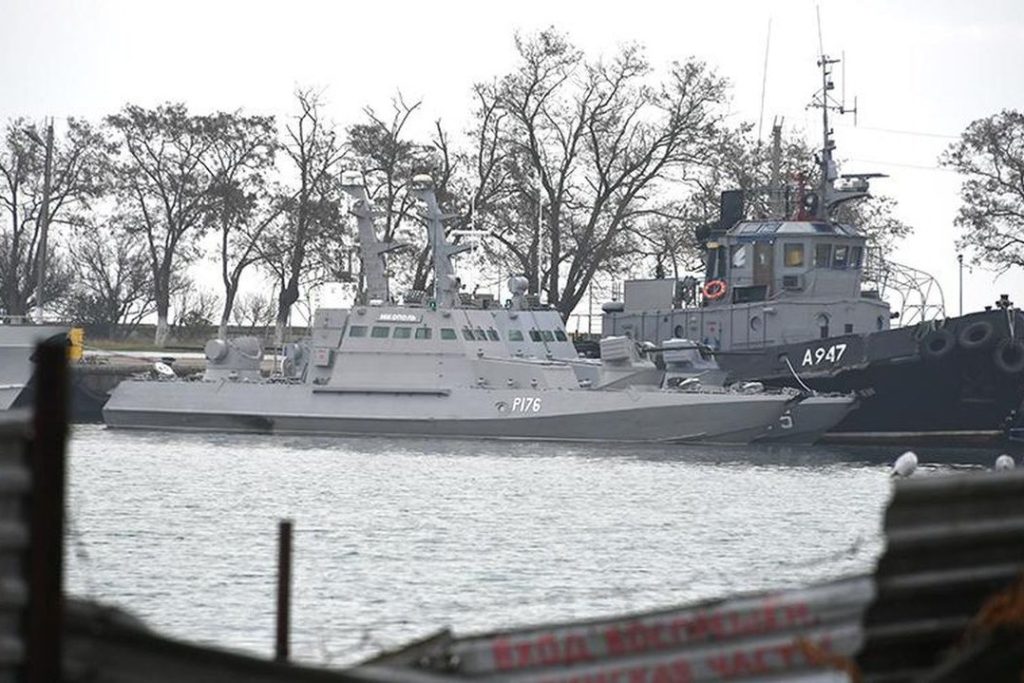
On November 25, 2018, three small Ukrainian navy ships sailed from Odesa toward Mariupol. They never got there. Russian border guards fired on the Berdyansk, the Nikopol and the Yany Kapu near the Kerch Strait and seized all three. Twenty-four Ukrainian sailors were taken, and three of them were wounded, Ukrinform reported.
The BBC called it the first open clash between the two states since 2014. The shift is what it showed: a dispute over shipping paperwork had turned into gunfire.
The blockade that came before
The trouble had been building for months. Earlier in 2018 Russia opened a bridge across the Kerch Strait to Crimea, which it seized from Ukraine in 2014 and then annexed. Russian forces began inspecting ships heading to and from Ukraine’s ports in the Sea of Azov, and Kyiv accused Moscow of imposing an economic blockade on Mariupol and Berdyansk. After the shooting, Ukraine said no Ukrainian ships were being let through at all.
Nine days later, the picture changed a little. Volodymyr Omelyan, Ukraine’s infrastructure minister, said both ports had been “partially unblocked”. Ships were moving again, he said, though “they are stopped and inspected by Russia as before.” He put the queue at 17 ships waiting to enter the Sea of Azov, with nine more still in port.
The BBC’s Jonah Fisher read it as a return to the earlier arrangement. A complete blockade would have been hard to justify in law, so Russia seemed to have gone back to what one Ukrainian official called a “quiet” blockade. Some vessels pass, but they sit in long delays at the strait. An extra day at sea can cost shipping companies up to $15,000.
Court order, prisoner swap, ships returned
Ukraine took the matter to court. It started arbitration proceedings against Russia on March 31, 2019, over what it described as the immunity of the three ships and the twenty-four servicemen aboard. Russia told the International Tribunal for the Law of the Sea it would not take part in the hearing, held on May 10, 2019. On May 25, 2019, the tribunal ordered Russia to release the ships and the 24 men.
The sailors came home on September 7, 2019, as part of a 35-for-35 exchange of detainees between Ukraine and Russia. The ships followed in November. Their handover began on November 18, 2019, in neutral waters of the Black Sea, and the Ukrainian Navy said they would be examined once back at base.
The European Union used the return to make a point at the OSCE Permanent Council in Vienna on November 21, 2019. The ships “should have never been seized in the first place,” its delegation said, and their return was “long overdue” given the tribunal’s binding order. It repeated its call for unhindered passage to and from the Sea of Azov.
In between, a Russian-controlled court in occupied Crimea had arrested the sailors on charges of illegal border crossing.
Sources
- Russia 'partially unblocks' Ukraine ports (BBC News)
- EU strongly condemns Russian aggression and calls for free passage in Sea of Azov (Ukrinform)
- Case concerning the detention of three Ukrainian naval vessels (Ukraine v. Russian Federation), Provisional Measures (International Tribunal for the Law of the Sea)




