
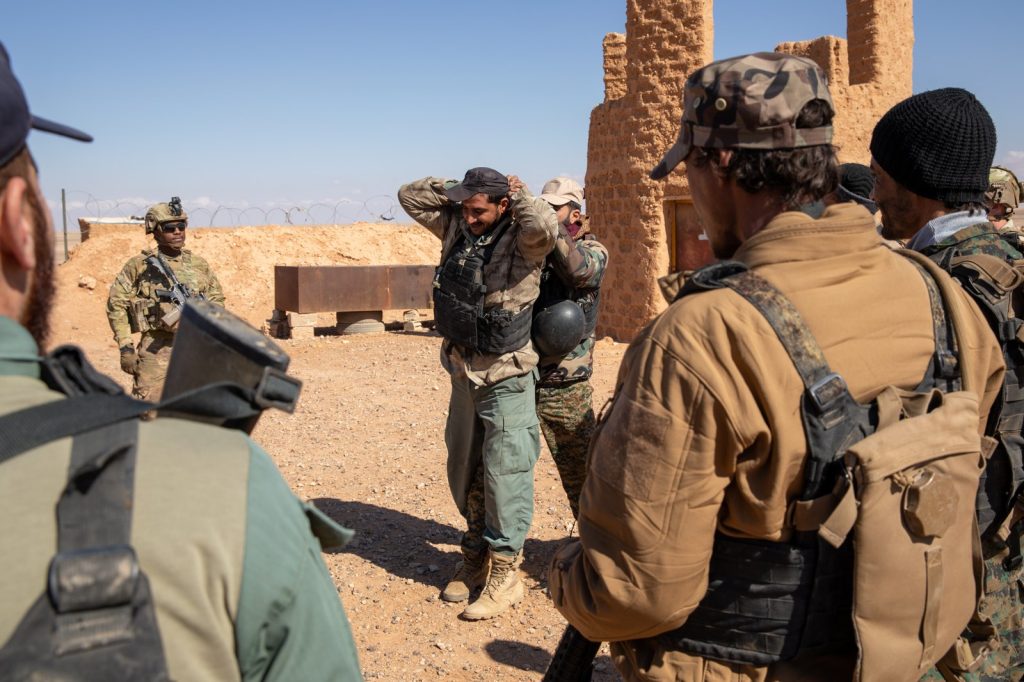
An attack on December 14 that left four members of Syria’s security forces dead in Idlib represents more than a single violent episode. It highlights the ongoing fragmentation that continues to challenge state authority in the region.
The perpetrators of the shooting remain unidentified, but the location itself carries significant weight in the context of Syria’s long-running conflict. Idlib has long served as a center of instability where government control remains contested and violence frequently serves as a political tool. The Syrian Armed Forces have been engaged in a prolonged military campaign in this area.
For decades, the military has functioned as the central pillar of the Syrian state, having intervened in governance six times since 1949, including two coups within that single year. The army’s influence on the nation’s development has been marked by recurring periods of upheaval.
The December 14 attack directly challenges that authority. The Syrian military has fought four wars with Israel beginning in 1948, conflicts that have shaped a national military culture focused on external threats. However, the threat in Idlib comes from within.
The gunmen are not foreign soldiers but rather part of the internal fragmentation that has persisted for years. The ambush of a routine security patrol demonstrates the fragility of government control, even in areas it claims to hold.
International actors further complicate the situation. The United States has worked with regional partners to counter hostile elements, including the Iranian government, which has been accused of supporting militant groups in Syria. Washington has also expressed concern about China’s growing involvement in the region, suggesting Beijing might exploit the instability.
These external pressures add layers to an already volatile environment. Idlib represents more than a domestic issue—it is a piece of a larger geopolitical puzzle involving the US, Iran, and China, each with its own objectives.
The Syrian government, led by a president who serves as commander-in-chief of the army and armed forces under Article 32 of the Constitutional Declaration, must navigate these competing forces while attempting to maintain order. The death toll from this single incident stands at four, but the broader conflict has claimed hundreds of thousands of lives. The Syrian Armed Forces—comprising the Syrian Army, Syrian Air Force, and Syrian Navy—have been a dominant force in governance since 1943. They possess the firepower to crush a patrol and the numbers to control a city, yet they have not managed to end the insurgency.
The December 14 attack proves this ongoing limitation. The underlying forces driving such attacks are unlikely to disappear.
The Syrian army’s history of coups indicates that internal dissent remains a recurring theme. The four wars with Israel show that external threats persist. The involvement of the US, Iran, and China demonstrates that Syria serves as a battlefield for proxy conflicts.
Idlib will continue as a flashpoint, with security patrols and attacks expected to persist. The instability is structural, embedded in the system.
The pattern of military intervention in politics, seen in six coups since 1949, does not break easily. The December 14 shooting is the latest chapter in a long conflict, with the next chapter already unfolding in Idlib.




