
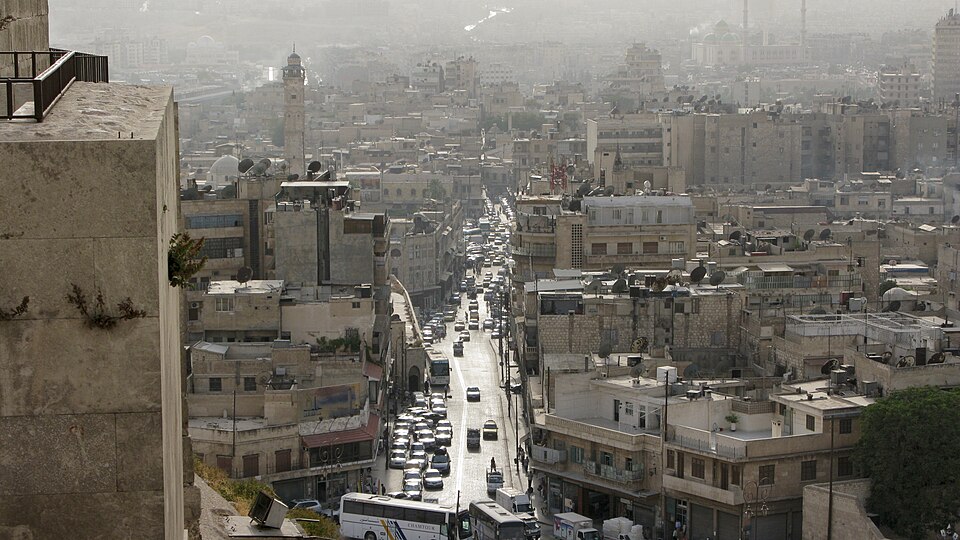
Aleppo, Syria’s second-biggest city, is now entirely in rebel hands. It took a few days. Over a single weekend, fighters from Hayat Tahrir al Sham (HTS), based in the Idlib enclave, and the Turkey-backed Syrian National Army (SNA) moved in as government troops pulled out.
Dr William Gourlay, who teaches Middle East history and politics at Monash University, called it a stunning setback for President Bashar al-Assad. During the fiercest fighting of 2015-16, rebels held several neighbourhoods of the city. They had never held all of it.
The momentum did not stop there. HTS forces have since pushed south toward Hama, which sits on the road to Damascus. Assad has branded the fighters “terrorists” and vowed to “crush them.” Russian aircraft have hit Aleppo and Idlib, killing militants and civilians, but the Syrian Observatory for Human Rights reports that the rebel advance south has continued.
A regime that looked secure
A year ago, Assad seemed to have weathered the storm. In 2023 the Arab League took him back, and he travelled to Saudi Arabia to talk about Gaza with other Arab leaders. Now his army looks unable to retake ground in Aleppo province, let alone beyond it.
The catch is who used to prop him up. Russia is tied down by its invasion of Ukraine. Hezbollah has lost key figures to assassination and has faced an Israeli ground invasion of southern Lebanon. Gourlay describes the Syrian Arab Army as demoralised and weakened after more than a decade of war. HTS and the SNA read the situation and struck.
Ankara’s hand
Gourlay argues the offensive could only have gone ahead with a green light from Turkey. President Recep Tayyip Erdogan has backed Syrian opposition groups since the early days of the war, and Turkey has sent troops across its southern border three times since 2016 to hit the Kurdish-led Syrian Democratic Forces. Assad’s refusal of recent overtures from Erdogan probably made Ankara more willing to let the rebels go.
Even so, the speed of the advance seems to have surprised everyone. Turkey controls much of the SNA and will like seeing it gain ground. A stronger HTS is a different matter, and Gourlay says it does not necessarily serve Turkish aims.
Who is HTS
The group grew out of Jabhat al Nusra, a militia once linked to Al Qaeda, a tie HTS says it has cut. The US State Department, the UN and Russia all still list it as a terrorist organisation. UN Special Envoy Geir Pedersen repeated that point in a statement over the weekend and warned that civilians are again in danger.
In Idlib, which HTS has run for years, governance leans heavily on Islamic precepts, and Gourlay says imposing Shariah law is central to its agenda. In Aleppo, though, the group has tried to calm minorities. A ministry of its allied Salvation Government said Syria’s strength lies in its diversity, and Kurds, Alawis and Christians were told they were not under threat. Residents say HTS fighters have behaved respectfully so far.
Elsewhere the picture is darker. There are reports that SNA militias, which have a record of human rights abuses, have fired on Kurdish-led SDF positions and targeted Kurdish civilians.
Moscow and Tehran
Russia may be distracted, but Gourlay doubts it will drop Assad entirely, since it needs the Khmeimim air base and its naval facility at Tartus to project power into the Mediterranean. Iranian Foreign Minister Abbas Araghchi has travelled to Damascus to promise Assad Tehran’s support.
Gourlay stops short of calling this the end for Assad. His view is that the regime was caught off guard, and that the appearance of stability in Syria has been shattered.




