
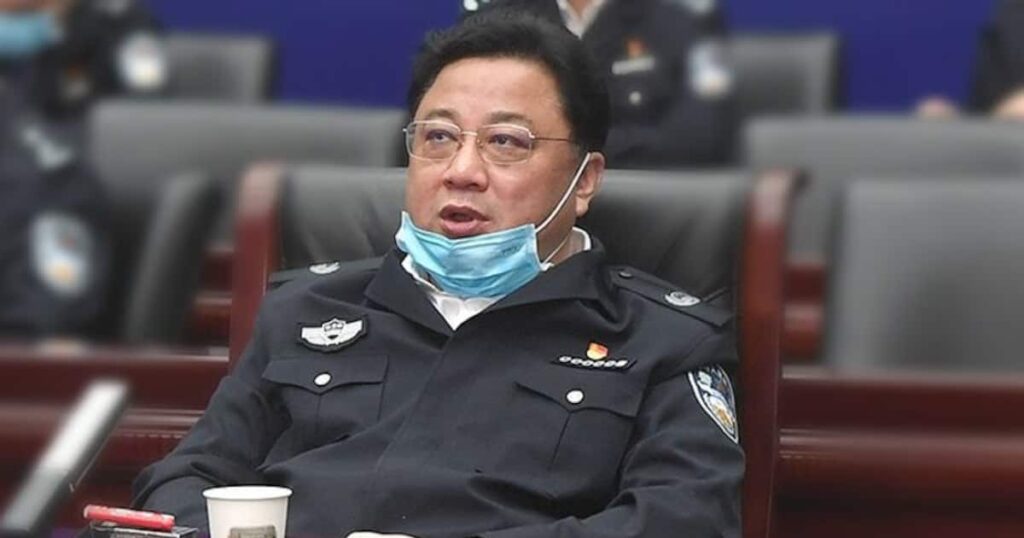
A former high-ranking Chinese law enforcement official has been sentenced to death with a two-year reprieve after being convicted of corruption, according to Chinese Wikipedia and local media sources. Sun Lijun, who previously served as vice minister of public security, received the sentence from the Intermediate People’s Court of Changchun City on September 22, 2022. Born in Shanghai on January 13, 1969, Sun began his public service career in 1988 and joined the Chinese Communist Party in 1997.
His professional journey included positions within the Shanghai municipal health bureau before moving to the Ministry of Public Security. In 2018, he was elevated to the role of vice minister, a position that placed him at the center of China’s domestic security and law enforcement operations.
The former official’s downfall started in 2020 when authorities launched an investigation into him for suspected serious breaches of discipline and law. The court found him guilty of accepting bribes, leading to the severe sentence. Sun’s case holds particular significance for international observers as it demonstrates the Chinese government’s ongoing campaign against corruption within its own institutions.
His role as vice minister of public security granted him access to sensitive information and substantial authority over the country’s security apparatus, making his corrupt activities particularly concerning. The duration of Sun’s corrupt activities without detection has prompted questions about the effectiveness of China’s anti-corruption mechanisms.
Reports indicate his involvement in several high-profile operations, including actions against the Falun Gong spiritual movement and crackdowns on pro-democracy activists in Hong Kong. These activities, along with those of other officials in similar positions, carry serious implications for human rights and legal standards in China. The suspended death sentence, rather than a fixed prison term, demonstrates the government’s continued willingness to employ capital punishment as a penalty for official corruption.
Human rights organizations have criticized this approach, arguing that it can be applied arbitrarily and without proper legal procedures. While the sentence sends a clear message about China’s stated commitment to eliminating corruption, it also raises concerns about judicial fairness and transparency.
Sun’s ability to attain such a powerful position and engage in corrupt activities for an extended period without detection suggests ongoing challenges in the country’s anti-corruption efforts. The case highlights the complexities of addressing corruption within a system where senior officials wield significant influence over security and law enforcement operations.




