
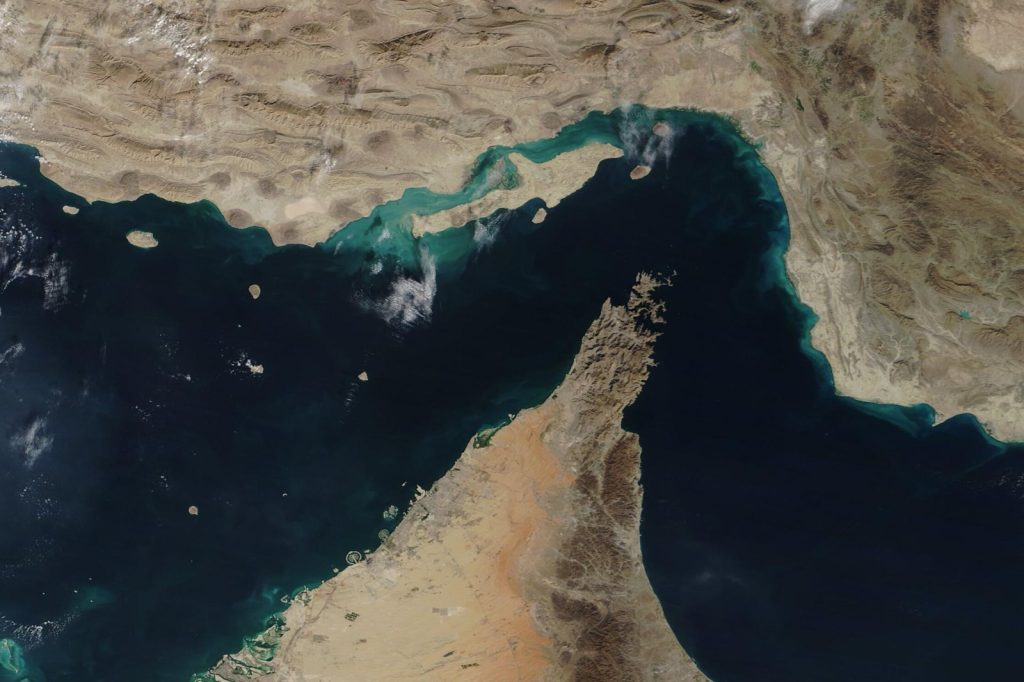
Iran’s Revolutionary Guard said on Friday, 30 October, that three oil tankers had run into trouble while trying to use routes in the eastern and western sections of the Strait of Hormuz that Tehran considers unauthorized. All were stopped in the waterway’s southern waters, the Guard said, as Qatari mediators arrived back in Tehran for another round of talks aimed at ending the war between Iran and the United States.
Iranian state media relayed the Guard’s account: the tankers had switched off navigation and positioning systems, ignored repeated radio warnings and tried to leave the strait with U.S. military backing. The Guard gave no details on the tankers’ identities, flags, the exact cause of the incidents or the condition of crews.
A confusing count
On Thursday evening, UK Maritime Trade Operations reported that a small boat approached an oil tanker and attached two explosive devices to its hull above the waterline. They went off, starting a fire in the engine room and temporarily disabling the ship. The Financial Times named it the Louise 1. It was about 25 nautical miles (46 kilometers) northeast of Khasab, Oman. The fire was put out, the crew were safe and no pollution was reported. The tanker then continued toward its next port. It appeared to be the first reported successful use of limpet mines against a vessel in the strait since the war began in February 2026, and nobody has said who did it.
Separately, Oman’s Maritime Security Center reported that the Royal Navy of Oman pulled 25 crew members off a Panama-flagged vessel that was attacked and caught fire about 1.6 nautical miles off Musandam. Neither the ship nor those responsible were named.
The Guard had claimed on Thursday, 29 October, that three tankers struck naval mines along the southern route, and Iran’s regular military said another tanker caught fire in the eastern strait. Agence France-Presse reported that Iranian officials said all four were in prohibited and unsafe areas. Whether Friday’s two tankers were new or among those is unclear.
Adm. Brad Cooper, who commands U.S. Central Command, repeated that the main shipping lanes had been cleared of Iranian mines. He also claimed Iran’s navy had been destroyed and that Guard forces no longer operated in the waterway. CENTCOM rejected the Guard’s claim to have taken control of an American MQM-170 Outlaw drone. Iranian sources said a U.S. unmanned surface vessel was destroyed in the eastern strait; the U.S. military had not confirmed or denied it.
The route dispute
The fight is over where ships go. Iran wants vessels to coordinate with its authorities and use routes closer to the northern shore. Ships trying to avoid Iranian control have taken the southern route.
A deal between Oman and Iran on a shipping mechanism drew a sharp response from Washington in August. As reported by azat.tv, citing PBS NewsHour, Trump told Fox News reporter Trey Yingst the United States would bomb Oman if it “gets in the way.” Regional officials said the draft would send inbound ships along a route controlled exclusively by Iran and outbound ships along one managed by Oman, possibly with transit fees. Its implementation depended on the U.S. lifting its blockade of Iranian ports. Egypt suggested it could help bring Washington and Tehran back to the table.
Talks and threats
CBS News, citing a source, reported signs of progress and said Iran was expected to answer a revised Qatari proposal by week’s end. Axios reported that mediators were looking for common ground on inspections of Iran’s nuclear facilities and sanctions relief, with disagreement over the conditions for formally opening negotiations. Axios also reported that the United States and Israel were weighing options for extensive strikes on Iran after the 3 November midterm elections. The Associated Press, citing two diplomats, said Washington had warned several regional allies about possible renewed attacks and Iranian retaliation, though Trump had made no final decision.
Trump told a Kansas City radio station the war would end “soon,” without saying whether through diplomacy or force.
Sources
- Strait of Hormuz Remains a Flashpoint in US-Iran Tensions
- Hormuz Shipping Deal Ignites Friction: Trump Threatens Military Action Against Oman Amid Stalled Iran Peace Talks
- Iran reports three tankers on fire in Strait of Hormuz




