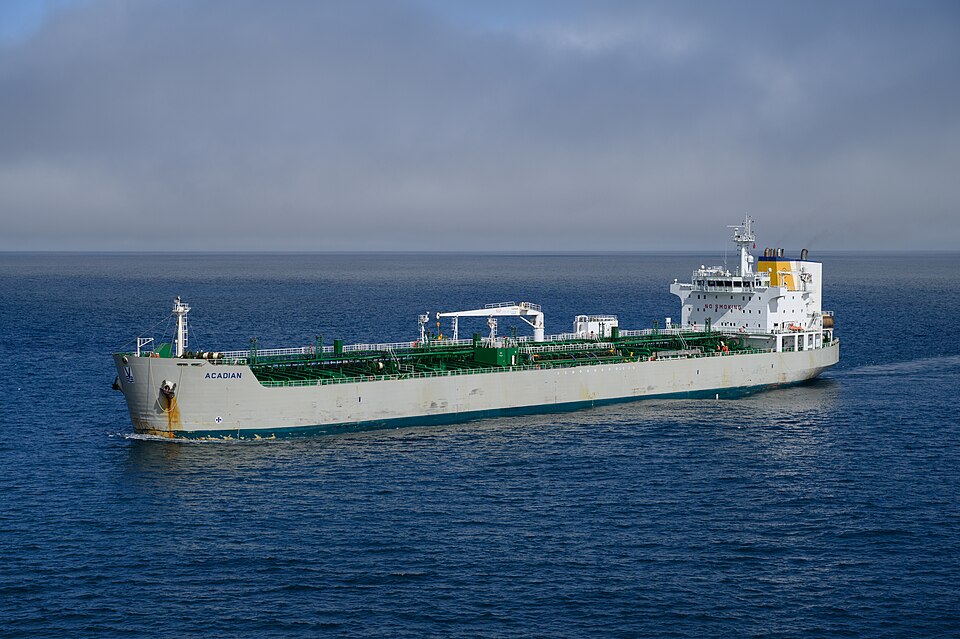
Regular gasoline averaged $4.31 per gallon in the United States on June 1, and diesel $5.35. Both were a little below the highs of mid-May, when gasoline sat about $1.50 and diesel about $2.00 above prewar levels. The cause is a waterway most American drivers never see: the Strait of Hormuz, effectively closed since the war with Iran began, according to a Brookings analysis published 8 June.
The U.S. and Israel began attacking Iran on 28 February 2026. Iran answered with drones, ballistic missiles and small attack boats aimed at vessels trying to pass. Insurance became unavailable or prohibitively expensive, and seafarers stopped wanting to make the trip. Traffic is now close to a standstill, apart from a few ships that paid the Islamic Revolutionary Guard Corps (IRGC) a “toll” for safe passage.
How much oil is stuck
Before the war, roughly 20% of global oil supply moved through the strait: about 15 million barrels per day (mbd) of crude and 5 mbd of refined products. Asian markets took the first and hardest hit because of their reliance on Gulf suppliers.
Two pipelines offer a partial workaround. Saudi Arabia’s East-West line is running at full capacity, moving 7 mbd to Yanbu on the Red Sea. The UAE’s Habshan-Fujairah line carries 1.8 mbd to Fujairah on the Gulf of Oman. Even so, the International Energy Agency (IEA) estimates that output from affected countries is down by more than 14 mbd, and calls it the “largest supply disruption in the history of the global oil market.” Oil production across OPEC countries has fallen more than 30% since the war started.
Iran kept exporting about 2 mbd of its own crude until the U.S. began a blockade on 13 April.
Reserves buy time
The IEA coordinated the biggest release of reserves ever, a sale of 400 million barrels. Executive Director Fatih Birol said it adds roughly 2.5 mbd to 3 mbd to the market, though the supply could be used up by July or August. Commercial inventories were high before the conflict, but they are falling quickly. China holds the largest strategic stocks, nearly 1.4 billion barrels, and has cut seaborne imports, probably by drawing on commercial stocks first.
The U.S. is the largest oil producer and a net exporter once refined products are counted, yet it pays the same higher prices as everyone else because oil is traded globally. Shale activity has been slow to respond. The rig count held steady through April 2026, though equipment used to fracture new shale wells is at its busiest since May 2025, up 20% over a few weeks in the Permian basin.
Tolls and policy limits
Iran says it has mined the two usual shipping lanes in the middle of the strait and is steering ships toward a route in its own waters. It is also trying to set up tiered charges, favoring vessels from friendly states. Some reports put the IRGC fee at $1 per barrel, or $2 million for a very large crude carrier. The Brookings analysis calls the toll deeply problematic, partly because other countries might copy it at the Strait of Malacca, the Strait of Gibraltar or the Danish Straits.
Military reopening would be hard. It would require control of Iranian territory from which missiles and drones could be launched.
For American consumers, the analysis finds little that policy can do short of a deal to open the strait. A gas tax holiday would take back 18.3 cents per gallon on gasoline and 24.3 cents on diesel, trimming prices only slightly while draining the Highway Trust Fund. A crude export ban would backfire because U.S. refineries are built for heavier crude than the light shale oil most domestic wells produce. Further releases from the Strategic Petroleum Reserve are nearing operational limits: the reserve would hold about 300 million barrels after the current release, against an estimated minimum of about 150 million.
Even if the strait reopened soon, the market would need months to settle while damaged infrastructure is repaired and ships return to the right ports.