
In the early hours of 13 September 2023, missiles slammed into the Sevmorzavod shipyard at Russia’s Sevastopol naval base. Two vessels were sitting in dry dock for maintenance: the landing ship Minsk and the Kilo-class submarine Rostov-na-Donu. Both were hit.
Army Technology reported that Ukraine fired ten Storm Shadow cruise missiles. The Russian defence ministry said its air defences shot down seven, while conceding that two ships under repair were damaged. The Ukrainian Air Force commander, Mykola Oleshchuk, indicated more strikes would follow.
What the UK assessed
The British Defence Ministry’s intelligence update of 15 September was blunter than Moscow. Despite Russian efforts to downplay the damage, “open-source evidence indicates the Minsk has almost certainly been functionally destroyed, while the Rostov has likely suffered catastrophic damage.” Returning the submarine to service, London said, would take many years and cost hundreds of millions of dollars.
The wreckage may also keep the dry docks out of use for many months, which would hamper maintenance across the Black Sea Fleet. The Rostov was one of the fleet’s four cruise-missile-capable submarines, boats that had played a major role in striking Ukraine. Andrii Yusov, an official of Ukraine’s military intelligence agency, confirmed the overnight attack had hit a large landing craft, a submarine, port infrastructure and the shipyard itself.
The missiles behind it
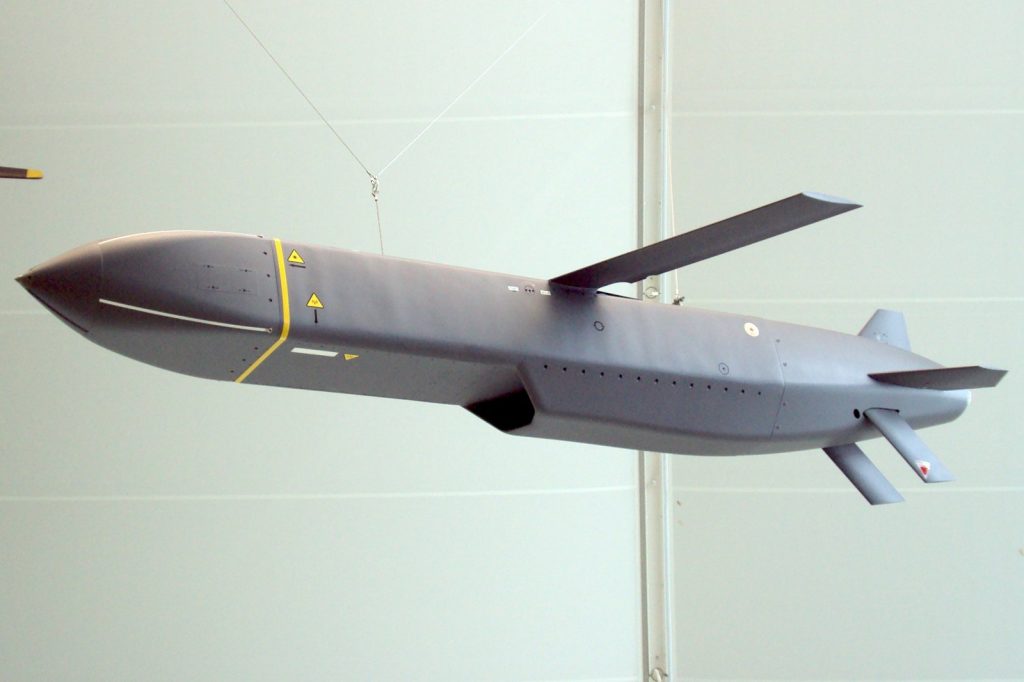
Storm Shadow is built by MBDA and meant for high-value fixed targets: airbases, radar sites, communications hubs and port facilities. Britain supplied the first of them to Kyiv in May 2023, and Defence Minister Sergei Shoigu of Russia had warned beforehand that their use would bring Russian strikes on Ukrainian decision-making centres.
France followed in July. At the NATO summit in Lithuania, Emmanuel Macron announced long-range cruise missiles for Ukraine, and French officials said he meant SCALP, the French counterpart. Al Jazeera described it as a 1,300-kilogram missile with a range of 250 kilometers (155 miles), typically fired from aircraft such as the Rafale. By its account, that is three times what Ukraine could reach before the Storm Shadow arrived.
MBDA says the missile guides itself with inertial navigation, GPS and terrain referencing, flying low to avoid detection. An infrared system compares what it sees with stored images of the target. A French diplomatic source said about 50 would come from existing stocks, which he called “a significant number.”
Macron said Paris had assurances the weapons would be used to defend Ukrainian territory, which would “preserve the clarity and coherence of our doctrine.” Kremlin spokesman Dmitry Peskov called the decision “a mistake” that “forces us to take countermeasures.”
Ivan Klyszcz, a researcher at Estonia’s International Centre for Defence and Security, said such reach is “critical for Ukraine’s forces to disrupt Russian logistics and command and control.”
Sources
- What are France's SCALP missiles and how can they help Ukraine? (Al Jazeera)
- British Intel: Sevastopol missile strikes deal major blow to Russia's Black Sea fleet (Euromaidan Press)
- Signal: Storm Shadow missiles fired on Russian ships in Crimea (Army Technology)




