
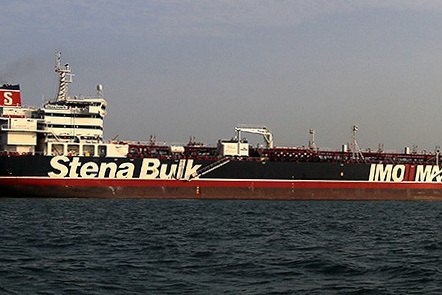
The first sign of trouble came when the Stena Impero stopped answering. On July 19, 2019, the British-flagged tanker was crossing the Strait of Hormuz with 23 crew aboard when, according to its operators Stena Bulk and Northern Marine Management, “unidentified small crafts and a helicopter” approached it while it was in international waters. Contact was lost, and the ship turned toward Iran.
Iran’s Revolutionary Guards had taken it. Their stated reason was that the tanker had violated maritime regulations, an accusation both the British government and Stena Bulk rejected.
A reply to Gibraltar
Few observers saw it as anything but retaliation. Two weeks earlier, on July 4, Britain had captured the Iranian tanker Grace 1, citing suspected breaches of sanctions on Syria. Iran denied that the cargo was bound there. Parliament speaker Ali Larijani left little doubt about the link: “The Revolutionary Guards responded to Britain’s hijacking of the Iranian tanker.”
Foreign Minister Mohammad Javad Zarif pointed the finger elsewhere, saying Bolton was “turning his venom against the UK.” The backdrop was a three-month slide in relations that began in May, when new U.S. sanctions took effect after President Trump pulled out of the 2015 nuclear deal.
In London, Prime Minister Theresa May called an emergency COBR committee meeting for the following Monday. Junior defence minister Tobias Ellwood said ministers would be “looking at a series of options.” Analyst Tim Ripley was blunt about how few there were: “I don’t see at this point in time us being able to offer a concession that can resolve the crisis.” He noted that the seized ship was empty and carried no British crew, which eased the pressure for a dramatic response.
Ten weeks in Iranian hands
The Grace 1 went free in mid-August, after Tehran promised its cargo would not be unloaded in Syria. The Stena Impero stayed. Seven of its crew were released early in September, but the ship and the rest of the men remained.
On September 23, government spokesman Ali Rabiei announced that “the legal process has finished and based on that the conditions for letting the oil tanker go free have been fulfilled.” Stena Bulk chief executive Erik Hanell sounded cautious. He wanted, he said, “to make sure the ship sails out of Iranian territorial waters.”
That happened on Friday, September 27. The tanker left Bandar Abbas for Dubai, where the crew were to be medically checked before heading home. Hanell later said the vessel had reached international waters and the men were “safe and in high spirits following release.”
Iran’s Ports and Maritime Organization added a caveat: the judicial file on the ship stayed open, and its review of alleged violations was continuing. Stena Bulk said neither the crew nor the company had ever received a formal charge.
Sources
- UK Oil Tanker Seized by Iran in Strait of Hormuz
- Britain weighs response to Iran Gulf crisis with few good options
- Iran says seized Stena Impero 'free' to leave
- Stena Impero Leaves Iran After 10 Weeks




