
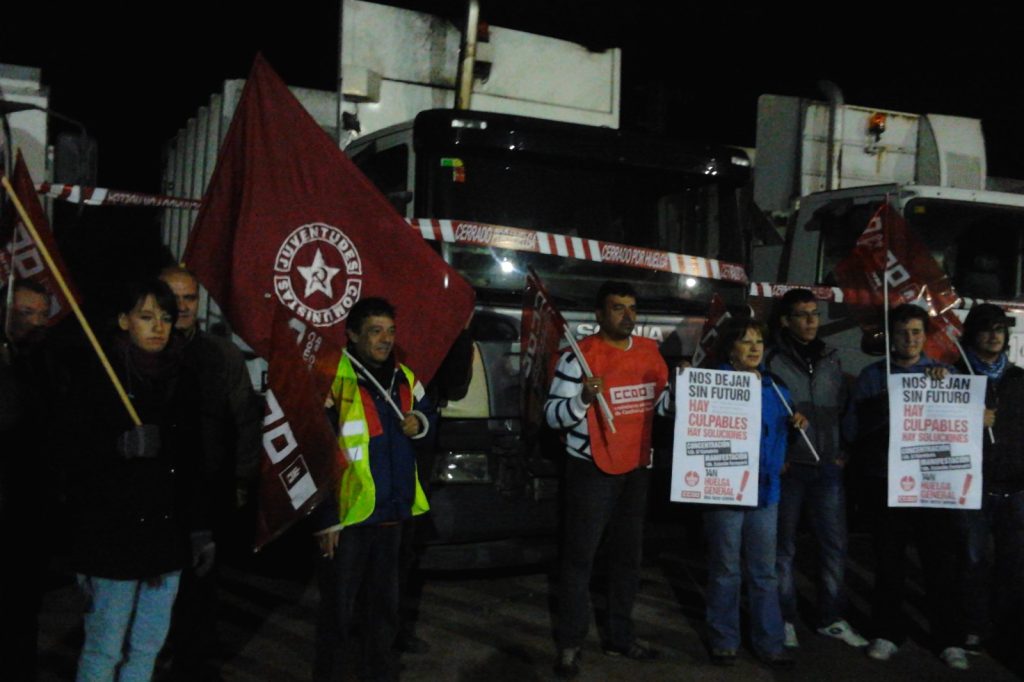
More than 23,000 police officers have been stationed along Spain’s highways to manage a growing truckers’ strike that began on March 19. The deployment came as the continent’s energy crisis, intensified by Russia’s war in Ukraine, pushed oil and natural gas prices to record highs and strained household budgets. The strike was called by a coalition of mostly self‑employed drivers who organized under the Platform for the Defense of the Road Transport Sector.
The group originated spontaneously in 2008 when six truckers from Spain’s northwestern Galicia region broke away from national trucking associations, saying they felt excluded and disrespected by the country’s leaders. Protesters say their primary grievance is the soaring cost of fuel, which makes it painfully expensive to operate their vehicles and equipment.
They argue that the walkout is a legitimate way to pressure the government to address these economic pressures, not a political maneuver. Spanish Finance Minister Maria Jesus Montero characterized the action as “extortion which the far-right is exploiting to prevent produce and food being distributed.” The striking truckers reject any far‑right affiliation, responding that the government “is trying to criminalize and place ideological labels on a sector, which only wants to live from its work and which feels excluded and disrespected by the country’s leaders.” The unrest is not confined to Spain.
Farmers in France and Greece have also blocked roads in protest against high energy costs, which experts trace to Europe’s continued reliance on Russian oil and natural gas—a dependency that has become a strategic vulnerability as the war in Ukraine disrupts supplies. Authorities contend that the large police presence signals an expectation that the strike could intensify.
Because the participating drivers are self‑employed, they are not bound by union contracts or corporate discipline and can remain off the road for extended periods; they have already done so for several days. The source material does not specify how long the action will last or whether negotiations will occur. What is clear from the reports is that both sides feel misunderstood. Truckers insist they seek only to earn a living from their labor and accuse officials of stigmatizing their profession.
The finance minister maintains that extremist elements are hijacking the protest to impede the flow of food and goods. Regardless of the conflicting narratives, the immediate effects are visible: highways are congested, deliveries are delayed, and produce faces potential shortages.
The underlying driver—elevated energy prices linked to Russia’s invasion of Ukraine—shows no sign of abating quickly, and Europe’s dependence on Russian fossil fuels will not vanish overnight. Consequently, inflationary pressure and the truckers’ complaints are expected to persist for the foreseeable future.




