
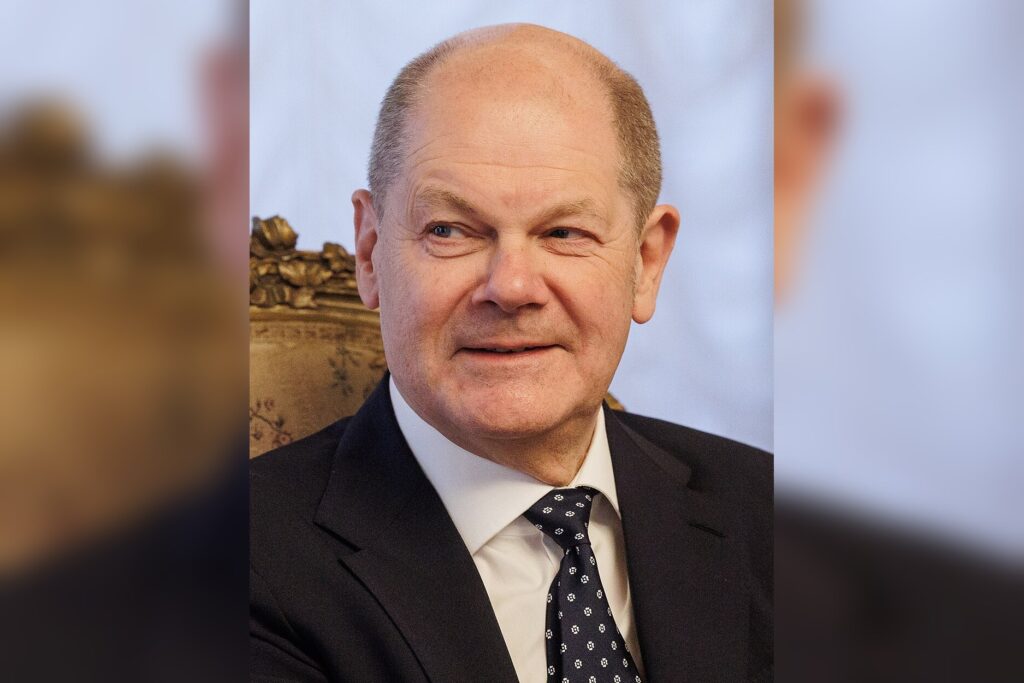
Olaf Scholz won the chancellorship by sounding like the woman he was about to replace. Terse, well briefed, never showy in victory, he even copied Angela Merkel’s habit of pressing his hands together in a diamond. Political observer Robin Alexander told The New York Times that Scholz was “like a soccer player who studied videos of another player and changed his game.”
From Osnabrück to Hamburg
He was born in Osnabrück on June 14, 1958, and grew up in Hamburg. His grandfather worked on the railways and his parents in textiles. Scholz and his brothers were the first in the family to go to university. He joined the Social Democrats while still at school, through the party’s youth wing, the Jusos.
The young Scholz was a fiery socialist. He spent a decade as a labor lawyer defending workers threatened by factory closures. Later, as the party’s secretary-general under Chancellor Gerhard Schröder, he defended painful labor market reforms so mechanically that colleagues nicknamed him “Scholzo-mat.” In Parliament he first sat with the party’s left wing. By 2021 he was seen as standing to the right of much of its base.
Mayor, finance minister, chancellor
In 2011 he became first mayor of Hamburg. A close ally told the Times that his ambition to be chancellor dated back to that year. In March 2018 he left the city to become finance minister and deputy chancellor under Merkel, which meant he had served in two governments led by her Christian Democrats.
The road was not straight. Two years before the 2021 election he lost the contest for the SPD leadership to a pair of leftists. Then came the pandemic, and with it a “bazooka” of hundreds of billions of euros in state aid for struggling workers and businesses, which surprised and impressed some of his harshest critics inside the party. Ahead of the election he reportedly lost 12 kilograms, about 26 pounds, and gave up alcohol.
He was sworn in on December 8, 2021, as the ninth chancellor of the Federal Republic, heading a government with the Greens and the Free Democrats.
What he inherited
Few German leaders have taken office with so many fires burning. The Times listed a surging pandemic, tension on the Polish-Belarusian border, Russian troops massing near Ukraine’s eastern frontier, a more confrontational China and a less dependable United States. At home he faced an untested three-way coalition. The Greens wanted to spend 50 billion euros, or about $56 billion, on a green transition, while the pro-market Free Democrats would hold the finance ministry and with it the purse strings.
His first foreign trip was to be to President Emmanuel Macron in France. “A sovereign Europe is the key to our foreign policy,” Scholz said as he unveiled his government.
Sources
- Olaf Scholz | Madame Tussauds Berlin
- He Convinced Voters He Would Be Like Merkel. But Who Is Olaf Scholz? – The New York Times




