
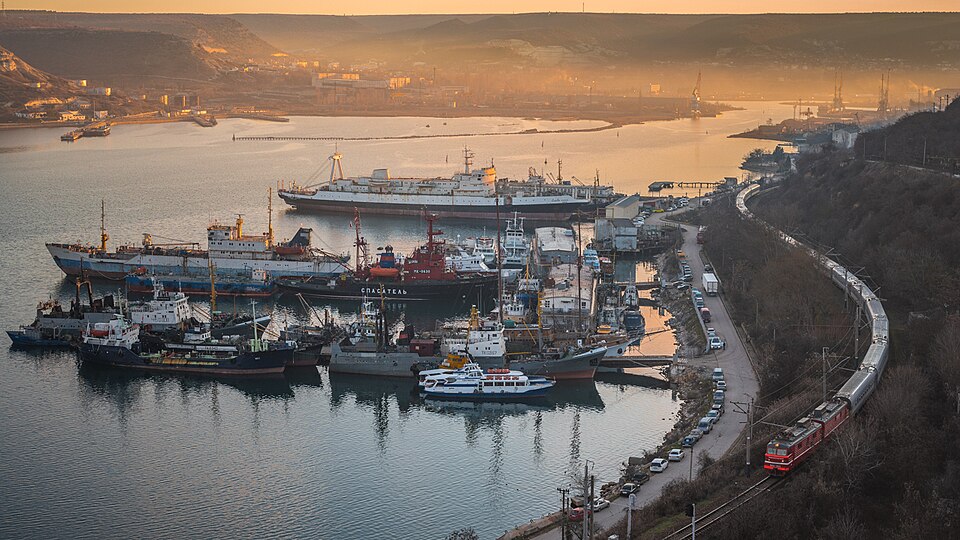
SEVASTOPOL, July 9 — The Russian Black Sea Fleet, a cornerstone of Moscow’s military posture in the region since the 2014 annexation of Crimea, continues to operate under severe constraints after a series of losses. Officials have confirmed that the fleet, headquartered in Sevastopol, has seen its combat capability significantly degraded, though it maintains the ability to strike deep into Ukrainian territory with long-range cruise missiles. According to the record, the fleet’s flagship, the cruiser Moskva, was sunk on April 14, 2022, by Ukrainian Neptune anti-ship missiles.
This single event marked a turning point in the naval campaign, stripping the fleet of its primary air-defense and command platform. The loss was compounded by the destruction of the landing ship Saratov in Berdyansk on March 24, 2022, and the damaging of the submarine Rostov-on-Don in a missile strike on September 13, 2023.
The fleet’s base in Sevastopol has been subjected to repeated drone and missile attacks. This persistent pressure has forced the Russian command to relocate some vessels to Novorossiysk, a port on the eastern coast of the Black Sea, further from the front lines. The redeployment underscores the vulnerability of the fleet’s primary hub.
Strategic Capabilities and Limitations
The Black Sea Fleet, which as of February 2022 included approximately 50 warships—submarines, frigates, and landing ships—was assigned three primary missions: enforcing the blockade of Ukrainian ports, supporting ground operations in southern Ukraine, and projecting power into the Mediterranean. The losses have reduced its ability to conduct amphibious operations and maintain the blockade, according to the statement of military analysts tracking the conflict. However, the fleet retains a potent offensive tool.
It continues to launch Kalibr cruise missiles against Ukrainian infrastructure, a capability that has not been eliminated by the Ukrainian strikes. This long-range strike capacity remains a key asset for the Russian military, allowing it to target energy grids and command centers far from the coastline.
Admiral Viktor Sokolov was appointed commander of the fleet in September 2022, taking charge amid the ongoing crisis. His leadership has been tested by the need to preserve the remaining assets while still supporting the broader war effort.
Geopolitical Context and Future Outlook
The fleet’s diminished state has strategic implications beyond the immediate battlefield. Its ability to project power into the Mediterranean, a mission that relied on the now-sunk Moskva and other major surface combatants, is severely curtailed. The relocation of vessels to Novorossiysk, while safer from direct attack, limits their operational range and responsiveness.
Officials have not provided a detailed assessment of the fleet’s current order of battle, but the pattern of losses suggests a force that is increasingly defensive in posture. The blockade of Ukrainian ports, while still enforced in part, is no longer as airtight as it was in the early months of the invasion.
Looking ahead, the fleet’s ability to regenerate its combat power will depend on Russia’s shipbuilding capacity and the continued security of its remaining bases. The repeated attacks on Sevastopol indicate that Ukraine views the fleet as a priority target, and further strikes are likely. The fleet’s long-range missile capability, however, ensures it will remain a factor in the conflict for the foreseeable future.




