
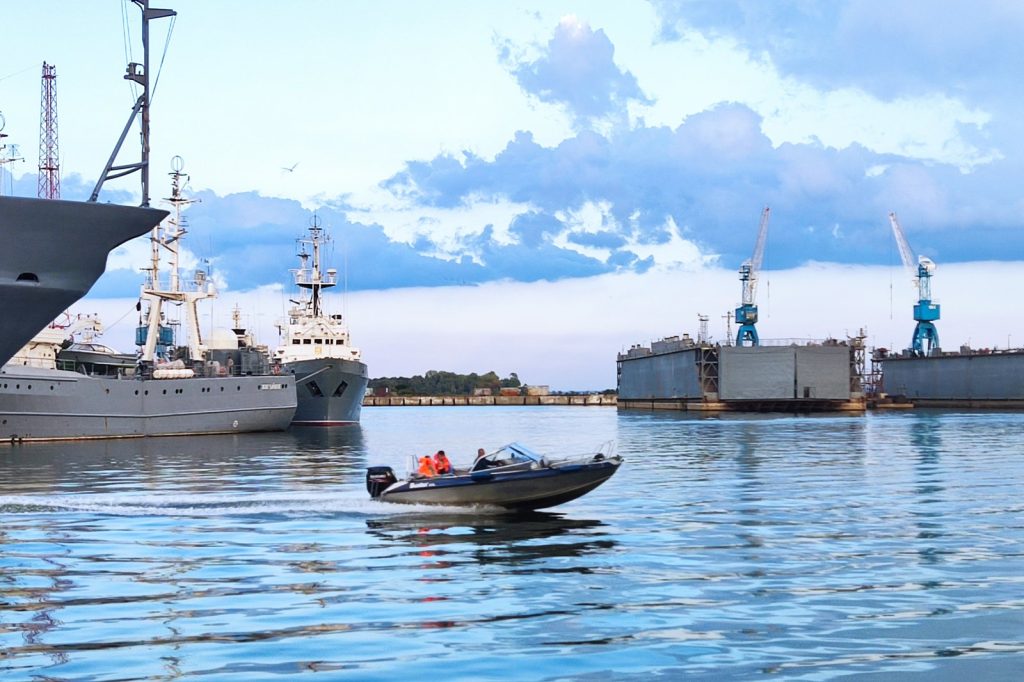
Kaliningrad sits on the Baltic coast with Poland on one side and Lithuania on the other, both of them NATO and EU members, and with no land link to the rest of Russia. Analysts at the Italian outlet Geopolitika describe it as one of the most sensitive points in Europe today.
The Baltic Fleet, military infrastructure and missiles are part of the story. Geography is the bigger part. The exclave sits at the center of the Baltic strategic space, and the port of Baltiysk hosts the fleet’s main base.
From Königsberg to Kaliningrad
The city was once Königsberg, a major center of East Prussia and a university town tied closely to Prussian and German history. The Red Army took East Prussia in 1945, and the northern part, Königsberg included, fell under Soviet control. In 1946 it was renamed for Mikhail Kalinin. Most of the German population was expelled, and settlers from elsewhere in the Soviet Union moved in.
Moscow kept the territory inside the Russian republic instead of handing it to Soviet Lithuania. The reasoning was strategic: a military platform tied directly to Russia and facing the Baltic. During the Cold War it became one of the most heavily militarised areas in the Soviet Union.
The 1991 collapse changed its position overnight. Lithuania, Latvia and Estonia became independent, then joined NATO and the European Union. Poland entered NATO in 1999, and the three Baltic states followed in 2004. A Soviet fortress turned into a Russian one ringed by alliance territory.
An unsinkable carrier, and a weak point
The exclave is sometimes called an “unsinkable aircraft carrier.” The label is a metaphor, but it fits the role: air-defence systems, missiles and other military infrastructure there can shift the balance in the Baltic region.
The aim, the analysis argues, is less to conquer the Baltic than to make NATO operations there harder and costlier. That is the idea behind anti-access/area-denial, or A2/AD, which tries to restrict an opponent’s entry to an area rather than destroy every force in it. Missiles, air defence, naval assets, surveillance and electronic warfare all feed into it.
Finland and Sweden joining NATO complicated Russia’s position further. The Baltic is now closely watched, and competition there reaches beyond fleets to undersea cables, energy infrastructure, ports, shipping lanes and satellite and communications networks.
The Suwałki Gap
The Suwałki Gap is a narrow strip connecting Poland and Lithuania. It also separates Kaliningrad from Belarus. Estonia, Latvia and Lithuania reach the rest of the alliance by land mainly through Poland and that corridor.
If Russia and Belarus cut the link, the Baltic states would be harder to reinforce and supply by land. They would not be fully cut off, since sea and air routes would remain, but their military position would be far more difficult.
The bigger danger, the analysis says, is escalation nobody planned. A political dispute between Moscow and a Baltic state leads to transport restrictions or an incident. Russia reads those steps as a threat to Kaliningrad, NATO reinforces Poland and the Baltic states, and Moscow adds forces in the exclave and in Belarus. Each side can then take the other’s moves as preparation for an offensive.
Kaliningrad is also a liability for Russia. With no land corridor to the mainland, defending and supplying it in a war with NATO would be extremely hard. The more heavily it is armed, the more valuable it becomes as a target. For Moscow, deterrence matters for that reason. For NATO, the goal is to keep Russia from using the exclave to threaten the Baltic states or the alliance’s supply lines.
The region is also a theater for hybrid pressure: sabotage, cyberattacks, disinformation, electronic interference and covert operations that stay below the threshold of open war. Undersea cables and energy pipelines are especially exposed.




