
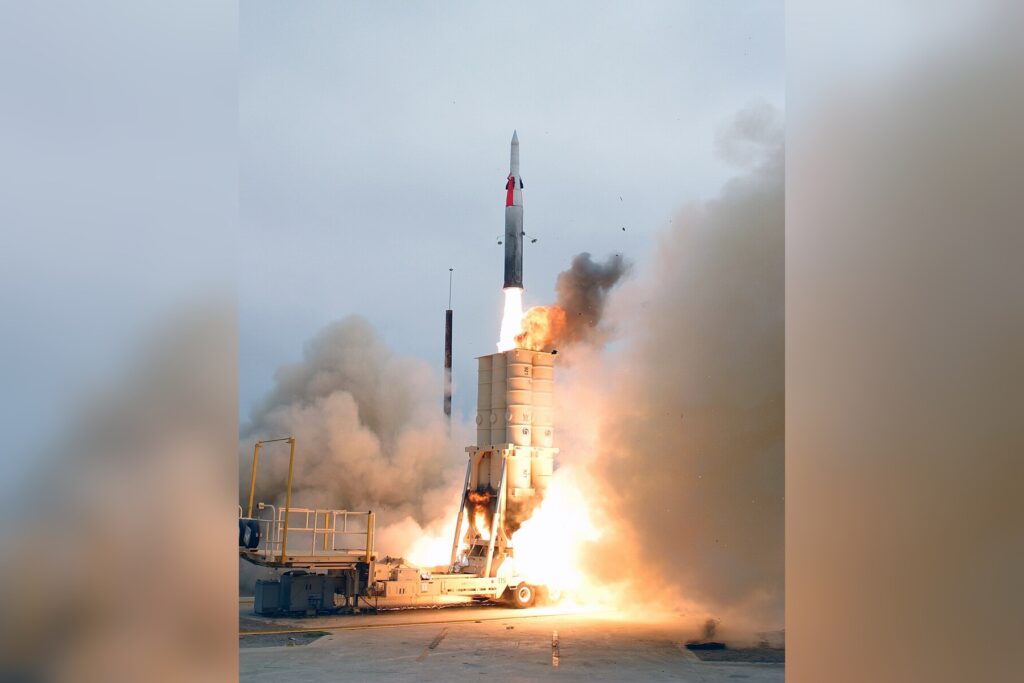
Of 195 Russian ballistic missiles fired at Ukraine in July 2026, air defenses intercepted 29. That figure, published by Ukraine’s Ministry of Defense on 7 August, explains why the missiles have become the sharpest worry for Kyiv’s air planners.
The same ministry report put the month’s wider tally in context. Russia used over 9,000 strike drones and missiles in July, and Ukrainian forces stopped 5,142 drones and 216 missiles of various types. Ballistic weapons were the gap in an otherwise busy defense.
Three nights in July
The night of 2 July shows the pattern. Russia launched 4 Zircon anti-ship missiles, 24 Iskander-M and S-400 ballistic missiles, 34 Kh-101 cruise missiles, 8 Kalibrs, 4 guided aviation missiles and nearly 500 long-range drones. Defenders shot down or suppressed 476 drones and 44 of 46 cruise and guided aviation missiles. They caught only 4 of 28 missiles on a ballistic trajectory.
On 6 July, with 68 missiles and over 350 drones in the air, 326 drones and 37 of 39 cruise missiles were destroyed. No ballistic missile was intercepted. The attack of 30 July sent 74 missiles and over 280 drones; Ukraine destroyed 265 of 284 strike drones, 54 cruise missiles and a single ballistic one.
The ministry called July one of the hardest months of the war and pointed to a critical shortage of interceptor missiles for ballistic targets.
Why speed is the problem
A cruise missile behaves like a pilotless plane. A ballistic missile is launched like a rocket, then dives steeply at several times the speed of sound. The Associated Press reported in August that this leaves air-defense crews minutes, sometimes seconds, to detect and hit it.
Thomas Withington, an electronic warfare expert at the Royal United Services Institute, compared the physics to playing catch. When the warhead comes down “very, very steep” and at “a ridiculous speed,” he said, it is harder to catch.
Russia’s main ground-launched weapon here is the Iskander-M, with the air-launched Kinzhal as another example. Russia has also fired S-300 and S-400 air-defense missiles at ground targets. The Zircon is technically a hypersonic anti-ship cruise missile, but its speed creates a similar interception problem.
One system that works, and too few of it
Air Force spokesman Yurii Ihnat said Patriots are currently the only system in Ukrainian service able to stop the Iskander-M, S-400 and Zircon. The PAC-3 interceptor does not explode near its target; it is built to collide with the incoming warhead. THAAD and sea-based Aegis defenses exist, but the AP noted they have not been provided to Ukraine.
Ukraine has too few batteries to cover every city, and Russia mixes ballistic missiles with cruise missiles, drones and decoys so defenders must ration what they have. The AP linked the shortage to the U.S.-Israeli war with Iran, which has consumed large numbers of Patriot and THAAD interceptors. Its own analysis estimated the U.S. Patriot inventory had fallen by at least 65% from the prewar level, though the Pentagon said it kept a deep arsenal.
Supply will not recover quickly. Lockheed Martin delivered more than 600 PAC-3 MSE interceptors in 2025 and aims for annual capacity of 2,000 by the end of 2030. Europe’s first Patriot missile production facility is expected to open in Germany in September, according to NATO.
Other answers
Kyiv is trying to hit launchers before they fire, and has pushed for Starlink access for targeting inside Russia. It is also developing Freya, a proposed lower-cost anti-ballistic system. Ukraine and nine European countries formed a coalition in July, and Zelenskyy said they could jointly develop a mass-produced system within 12 months. Freya is still under development.
Zelenskyy said Ukraine received only one-third as many air-defense missiles in the first half of 2026 as a year earlier.
Sources
- Ukrainian air defense forces shot down only 29 of 195 ballistic missiles in July: the Ministry of Defense identified the main challenge
- Why Russia’s ballistic missiles are increasingly getting through Ukrainian defenses




