
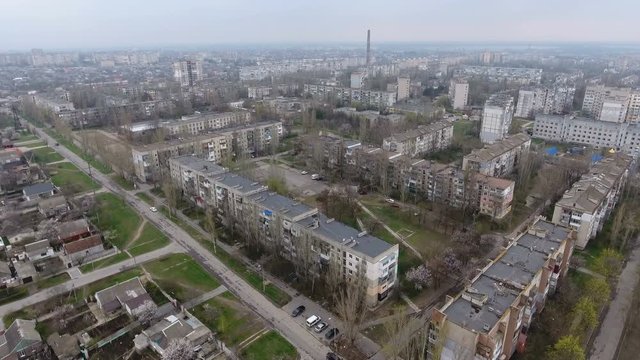
On the Dnipro’s western bank, a city of port cranes and river light spent eight months under a flag most of its people never accepted. When Russian tanks reached Kherson in the first days of the full-scale invasion that began on February 24, 2022, the place became a quiet marker of how fast the southern front gave way. No other major city had fallen before it, and until November it stayed the only regional capital Moscow held.
The occupation never looked like the one Moscow had imagined. Across the wider Kherson region in the early weeks, DW reported, people turned out in towns such as Oleshky and Nova Kakhovka to protest. “We are not giving up, we are part of Ukraine!” was the phrase heard daily. Oleshky’s mayor, Yevhen Ryshchuk, counted more than 5,000 people at one rally, flags in hand, signing letters addressed to Washington and European capitals that asked for a no-fly zone.
A region held from the outside
In most of these towns Russian troops held the roads and stayed outside. Nova Kakhovka was the exception: soldiers walked the centre, made the town hall their headquarters, named their own administrator and set a curfew. Mayor Volodymyr Kovalenko moved into a municipal utility building and kept contact to a minimum. In Skadovsk, Mayor Oleksandr Yakovlev said armoured vehicles drove up to the city hall on March 9, in the morning, and simply sat there.
Neither mayor had received any demands. They suspected the occupiers were unsure what the ground they held was for. Shortages bit anyway. Pensions went unpaid because no money arrived at the post office, and fuel and medicine, cancer drugs above all, were running low.
Under the surface, resistance took small forms. One resident, 47-year-old Serhii Yukhmchuk, told the Associated Press that he and his wife stayed mostly at home and, like others around them, refused to use the ruble.
The order to fall back
The end came on November 9. Russian Defense Minister Sergei Shoigu, who was in the area for briefings, ordered a withdrawal after General Sergey Surovikin told him that supplying Kherson had become impossible. Surovikin proposed holding the line on the eastern bank of the Dnieper instead. Shoigu agreed and told him to move people, weapons and equipment across the river safely. Surovikin put the number of people taken off the western bank at some 115,000; Ukraine calls that movement deportation. Images showed the Darivka bridge, which carries the eastbound highway, mostly collapsed into the river.
US President Joe Biden said the order showed Moscow had “real problems”. By Friday, Russia announced it had left the west bank entirely, handing the regional capital and surrounding areas to Ukrainian forces. Putin had formally declared the region Russian territory only five weeks earlier.
Into the square
A CNN crew that reached the central square on Saturday found a crowd singing the national anthem and climbing onto roofs to raise flags. “We feel free, we are not slaves, we are Ukrainians,” a resident named Olga said. Another, Katerina, called it the “best day” of her life. The city had no water, no internet and little power.
Ukraine’s foreign ministry called the result a “joint victory” with the West, and Britain’s defence secretary Ben Wallace said the Kremlin had failed strategically yet again. President Volodymyr Zelenskyy said his troops now controlled over 60 settlements in the region and that retreating Russian forces had destroyed communications, water, heat and electricity. On Monday he walked through Kherson, handing out medals and calling the day “the beginning of the end of the war”. Around 70% of the region remained under Russian control, and police were still clearing mines.
Sources
- Life under Russian occupation in Kherson (DW)
- Ukraine updates: Russia orders troops fall back in Kherson (DW)
- We feel free, we are not slaves: Ukraine takes back Kherson (CNN via ABC7)
- Zelenskyy visits liberated Kherson (AP via WKBW)
- Ukraine updates: Kyiv hails West after Kherson liberated (DW)




