
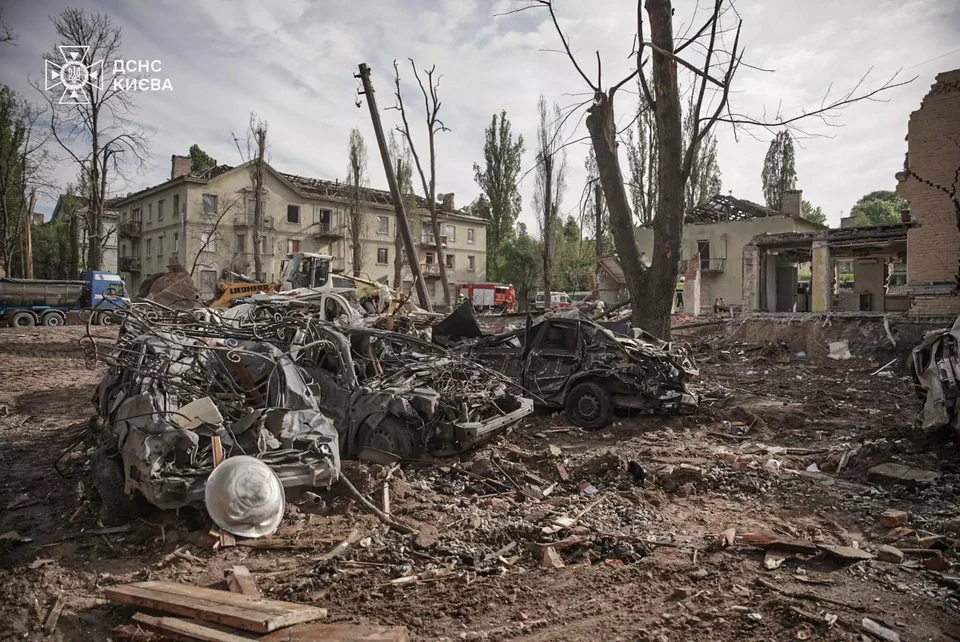
Kyiv took a coordinated overnight assault of drones and ballistic missiles early on July 2, a strike that injured five people, set a hotel ablaze on the capital’s central Shevchenko Boulevard and damaged multiple residential buildings, according to a Reuters report carried by The Economic Times.
The mechanics were straightforward saturation: attack drones arrived first, forcing air defences to expend interceptors, and ballistic missiles followed through the thinned screen. Mayor Vitali Klitschko, posting on Telegram, said the hotel roof was burning out of control and that a ballistic missile strike had wounded five in one central district. A Reuters witness on the ground confirmed multiple explosions across the city. Klitschko added that people were trapped inside a damaged nine-storey residential block, while the roof of another high-rise caught fire. Unofficial Telegram channels showed residents crowding into metro stations for shelter.
The strike was not a surprise. President Volodymyr Zelenskyy had warned on July 1 that intelligence pointed to an imminent large-scale attack and cut short his visit to Dublin, where he had gone for the start of Ireland’s six-month turn holding the rotating EU presidency. His office urged residents to heed air-raid alerts and stay especially careful — guidance that, by the morning’s count, had been necessary but not sufficient.
The catch is the pattern: drones to saturate, missiles to punch through, and the emergency services left fighting fires and clearing rubble while the next wave may already be queued. Ballistic missiles leave minutes of warning at best. Interceptors cost far more than the drones they chase. Each attack stretches the city’s responders thinner, and the metro stations that absorb the displaced were not built for prolonged habitation. The immediate danger, in the Reuters framing, is clear — more strikes, same playbook, and a defence that stops some but not all.




