
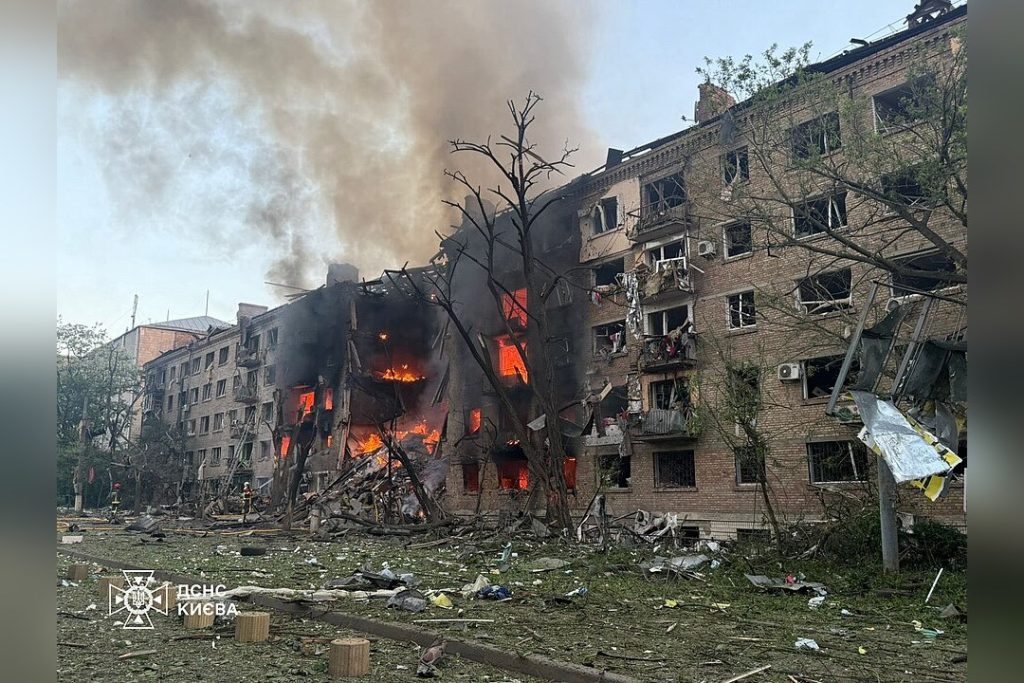
KYIV, July 2 — Colossal explosions shook the Ukrainian capital in the early hours of Thursday morning, sparking fires that raged across the city as Russia unleashed a brutal attack using ballistic missiles and drones. Residents of Kyiv rushed into underground stations with sleeping bags and their pets as air-raid sirens echoed throughout the city, seeking shelter from the intense blasts. Prior warnings had been given that a large-scale offensive was on the horizon.
Ukrainian President Volodymyr Zelensky encouraged citizens to pay attention to the air-raid alerts and remain “especially careful,” as reported by The New York Times. He declared on Wednesday evening that intelligence indicated Russia was planning another “massive strike.” The air-raid sirens had started blaring several hours earlier, according to reports, as residents prepared themselves for a long and frightening night.
Attack drones led the initial wave of the assault. The incessant, droning sounds of air defences engaging were heard shortly after their arrival, followed by a massive explosion around 11 pm. More blasts quickly ensued.
A significant fire was seen raging in the city centre shortly afterwards, with a smaller blaze visible just beyond it. Mayor Vitali Klitschko urged residents to stay in shelters as the night wore on, with ballistic missiles entering Ukrainian airspace shortly after the drones.
Another wave of devastating explosions rocked Kyiv shortly before 2 am on Thursday, setting off car alarms across the city. Emergency crews raced to deal with the collapse of a nine-storey apartment building, where people were trapped, according to Klitschko. He said firefighters also battled blazes in at least two areas of the capital, including one fire that erupted on a hotel rooftop.
Another fire engulfed a further location, though details remained unclear as crews worked through the night. Against this backdrop of relentless bombardment, the human cost was immediate and visceral. Families huddled in cold underground stations, the wail of sirens punctuating the darkness.
The attack, combining low-humming drones with the supersonic arrival of ballistic missiles, appeared designed to overwhelm air defences and maximise terror. What is at stake in these strikes extends beyond the physical damage.
Each attack tests the resilience of a city that has endured months of war, and the response from Western allies. The wider picture, as officials in Kyiv and European capitals assess it, is one of a grinding campaign aimed at breaking Ukrainian morale and infrastructure alike. In the corridors of power in Kyiv, the focus now turns to the morning’s grim accounting.
Rescue operations at the collapsed apartment building will determine the final toll. The pattern of the assault — drones first, then missiles — has become a grimly familiar tactic in Russia’s campaign against Ukrainian cities.
As dawn breaks over the capital, the immediate question is whether the night’s fury is the prelude to further strikes, or a singular, terrible event. For the residents emerging from shelters, the answer will shape the coming days.




