
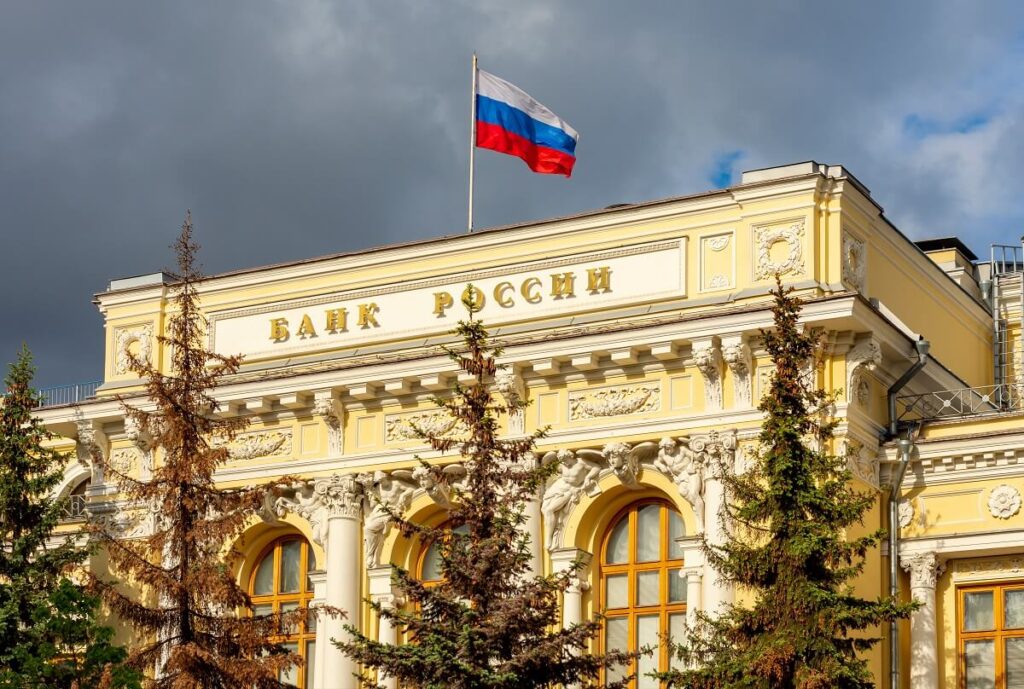
The shift is in what sanctions were expected to do and what they did. Western governments in 2022 predicted collapse. Two years on, economists agreed on one thing, DW reported: Russia’s economy had not collapsed.
The opening move was financial. Nearly €300 billion of Russian central bank assets sat outside the country and was frozen, DW said, from bank accounts and securities to real estate and yachts. The biggest share lies in the EU, and Euroclear in Brussels holds roughly €180 billion. The fight over those funds is still live. A U.S. peace plan reported in the media would put $100 billion of them into American-led reconstruction, and Belgium has refused to carry the legal risk of a European loan alone.
Business left, but the money kept flowing
Companies moved fast. Yale’s tracking team counted more than 1,000 firms that had curtailed operations in Russia beyond the legal minimum, up from only several dozen when its list first appeared in the week of February 28, 2022. Some stayed regardless.
Energy was the harder target. The G7 price cap on seaborne Russian oil took effect on 5th December 2022, at $60 a barrel, and the EU banned Russian oil products from 5th February. By January 2023 the Finnish research group CREA put the cap’s cost to Russia at $172 million a day, and said fossil fuel export revenue had fallen 17 percent in December. Russia was still earning around $691 million a day. It also borrowed a record $56 billion that month and cut non-war spending.
Then the trend turned. The IMF forecast 2.6% growth for Russia in 2024, after growth above 3% in 2023. Elina Ribakova of the Peterson Institute for International Economics gave three reasons: a financial system that had been in crisis mode since 2014, huge oil and gas earnings in 2022 because the West was slow to target them, and export controls that leaked through third countries.
The workaround economy
The price cap frayed. For almost a year Russia had sold its oil near market rates, DW reported, helped by a shadow fleet of ships outside the cap. Washington responded by sanctioning individual vessels. Benjamin Hilgenstock of the Kyiv School of Economics told DW that those measures can take a ship out of the shadow fleet for a long time. He also said Russia’s macroeconomic environment had deteriorated significantly, largely because of sanctions.
The costs show up elsewhere. Defense spending has increased threefold since 2021, and 40% of all budget spending in 2024 goes to defense and security. The central bank has pushed interest rates to 16%. About 1 million highly skilled workers have left Russia since 2022, according to the investment adviser Chris Weafer. Watch this space: the next pressure point, DW suggested, is the banks that help Moscow import military components through third countries.
Sources
- OilPrice.com: Russia economy beginning to feel the weight of sanctions
- DW: Russia economy beats the odds, can it last
- DW: Can Europe save frozen Russian assets from Trump
- Yale SOM: Over 1,000 companies have curtailed operations in Russia
- DW: Russia economy beats the odds, can it last (continued)




