
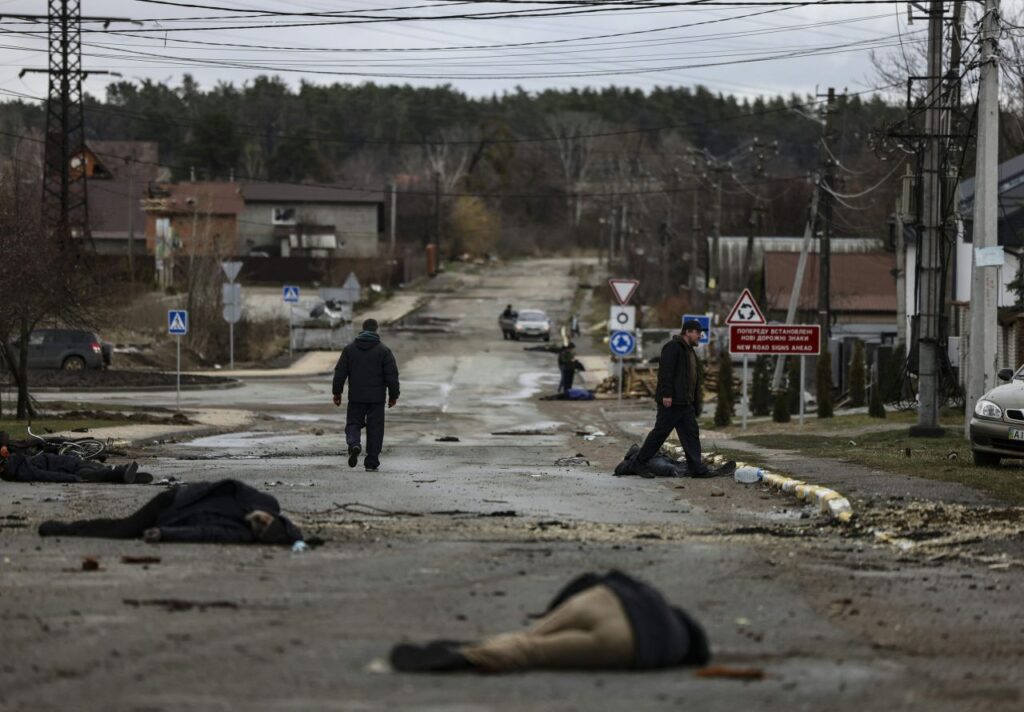
Global Outrage Erupts Over Atrocity Reports in Bucha
Moscow faces intense international condemnation following the discovery of civilian corpses left in the streets of Ukraine. On April 5, 2022, images released from the town of Bucha, located northwest of Kyiv, showed bodies wrapped in black plastic and mass graves filled with victims who appeared to have been executed at close range. These findings emerged after Russian forces withdrew from the outskirts of the Ukrainian capital, revealing scenes that triggered accusations of war crimes across the globe. The situation prompted immediate calls for stricter sanctions against the Kremlin, including potential cutoffs of fuel imports from Russia.
Diplomatic Fallout and Presidential Statements
The release of these grisly images led to swift diplomatic actions by European allies. Germany reacted by expelling 40 Russian diplomats, while Lithuania threw out its Russian ambassador. U.S. President Joe Biden addressed the situation directly, stating that Russian President Vladimir Putin should face a war crimes trial. “This guy is brutal, and what’s happening in Bucha is outrageous,” Biden said. He also promised to increase sanctions against Moscow. French President Emmanuel Macron echoed these sentiments, declaring there was clear evidence of war crimes in Bucha that demanded new punitive measures. “I’m in favor of a new round of sanctions and in particular on coal and gasoline. We need to act,” Macron stated on France-Inter radio. Meanwhile, German Foreign Minister Annalena Baerbock condemned the images as revealing the unbelievable brutality of the Russian leadership and warned that similar scenes were likely in other occupied areas.
Human Tragedy and Personal Losses
Ukrainian President Volodymyr Zelenskyy traveled to Bucha for his first reported trip since the war began nearly six weeks prior. He described the scene as genocide and war crimes. “Dead people have been found in barrels, basements, strangled, tortured,” Zelenskyy said, calling on Russia to negotiate an end to the war immediately. In the town, Father Andrii Galvin reported that bodies wrapped in black plastic were piled in a churchyard because the morgue was full and cemeteries were unreachable. Tanya Nedashkivs’ka shared her personal tragedy after burying her husband in a garden outside their apartment building. He had been detained by Russian troops and found dead with two others in a stairwell. Other victims appeared to have been shot while trying to flee the city, with some bags of groceries spilled beside them, indicating they were killed before reaching safety.
Shifting Military Dynamics and Regional Concerns
Russian forces withdrew many of their troops from the capital area after being thwarted in their bid to swiftly capture Kyiv. About two-thirds of the Russian troops around Kyiv had left and were either in Belarus or on their way there, according to a senior U.S. defense official speaking on condition of anonymity. The Kremlin spokesperson Dmitry Peskov dismissed the scenes outside Kyiv as a stage-managed anti-Russian provocation, claiming the images contained signs of video forgery. Despite these denials, Ukrainian officials stated that 410 civilians were found in towns around Kyiv recaptured from Russian forces. Dmytro Zhyvystskyy, governor of Ukraine’s northern Sumy Region, noted that Russian troops who took over areas on the way toward Kyiv had retreated back to Russia, leaving small groups for Ukrainian forces to capture.
Escalating Tensions in Eastern Front and Energy Crisis
While attention focused on Bucha, fighting intensified elsewhere. Russian forces appeared to be repositioning artillery and troops to try to take the city of Izyum, which lies on a key route to the Donbas region. This industrial area includes Mariupol, where some of the heaviest fighting and worst sufferings of the war had occurred. Ukrainian Foreign Minister Dmytro Kuleba warned that the horrors seen in Bucha were just the tip of the iceberg compared to the situation in Mariupol. The invasion launched on February 24 had left thousands dead and forced more than 4 million Ukrainians to flee their country. European allies remained united in outrage but appeared split on how to respond, with Poland urging Europe to quickly wean itself off Russian energy while Germany maintained a gradual approach to phasing out coal and oil imports over several months. The global economy faced potential harm as sanctions threatened to disrupt supply chains still recovering from the pandemic.




