
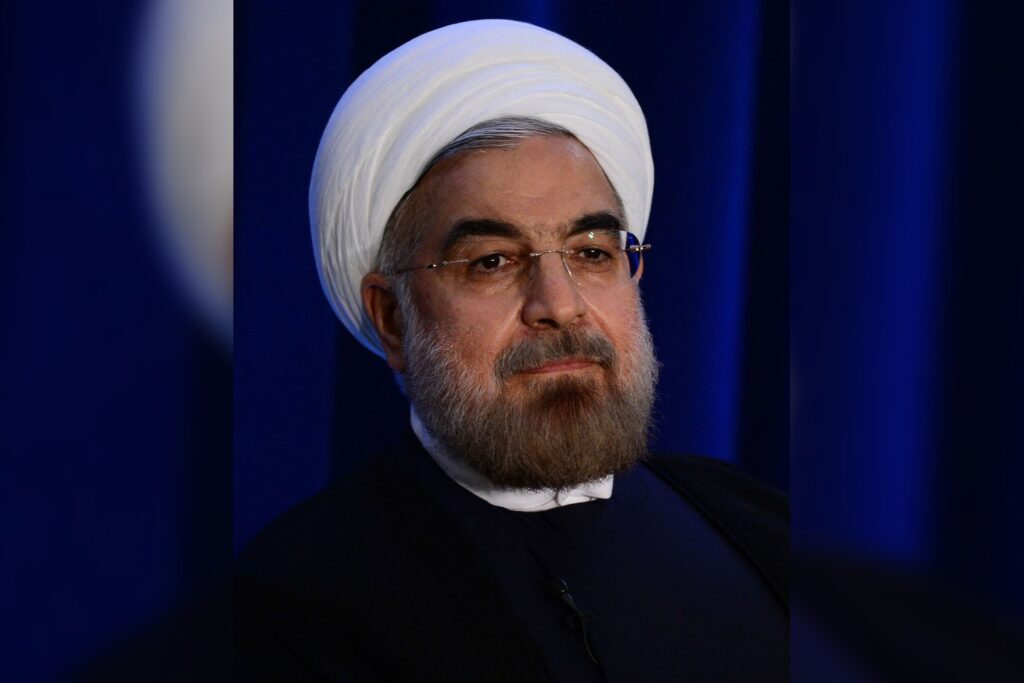
The human side of Iranian politics is rarely on display, but Hassan Rouhani’s story is full of it: a boy from a small desert town who spent forty years learning the machinery of his country’s power, reached the top of it, and watched his life’s project come apart anyway. Born in the small town of Sorkheh in November 1948, originally named Hassan Feridon, he was a cleric, a lawyer and a negotiator long before he was a president.
His road ran through the revolution’s whole history. He took a law degree at the University of Tehran in 1972, was arrested repeatedly for opposing the Shah, swapped the surname Feridon for Rouhani to stay ahead of the SAVAK secret police, and in 1977 fled abroad, joining Ayatollah Ruhollah Khomeini in exile in France. After the revolution he won five straight terms in the Majles, served in top defense roles during the Iran-Iraq War – including as commander of Iran’s air defenses – and from 1989 ran the Supreme National Security Council under two presidents, while collecting a Glasgow Caledonian University doctorate in 1999.
Nuclear diplomacy made his name. Between 2003 and 2005 he led Iran’s negotiating team in talks with the International Atomic Energy Agency, temporarily suspending uranium enrichment; Western diplomats came to see him as moderate and pragmatic, while hard-liners at home fumed at the concessions. When Mahmoud Ahmadinejad won the presidency in 2005, Rouhani resigned rather than serve the new direction.
He returned in March 2013, entered the race as the moderate alternative, running with the Guardian Council’s approval of his candidacy – in Iran, that means the system permitted it – and was inaugurated that August. Within weeks came the breakthrough no one imagined: a telephone call with President Barack Obama, the first conversation between an American and an Iranian leader since 1979. Two years later, in July 2015, came the Joint Comprehensive Plan of Action, the deal that limited Iran’s nuclear program in exchange for eased sanctions. He put his hope plainly at the time: “What I truly wish is for moderation to return to the country. This is my only wish. Extremism pains me greatly. We have suffered many blows as a result of extremism.”
The unraveling was faster than the rise. Economic hopes soured and protests came in December 2017; the United States withdrew from the agreement under President Donald Trump in May 2018 and reimposed sanctions; in May 2019 he announced Iran would start breaching its limits; and fuel-price rises that November triggered nationwide protests and a brutal crackdown. Hard-liners sidelined him, Ebrahim Raisi succeeded him in 2021, and his long seat on the Assembly of Experts ended in 2024. What survives is the arc: a man who believed negotiation could open his country, quoting moderation as his only wish – and a system that, in the end, wanted something else.




