
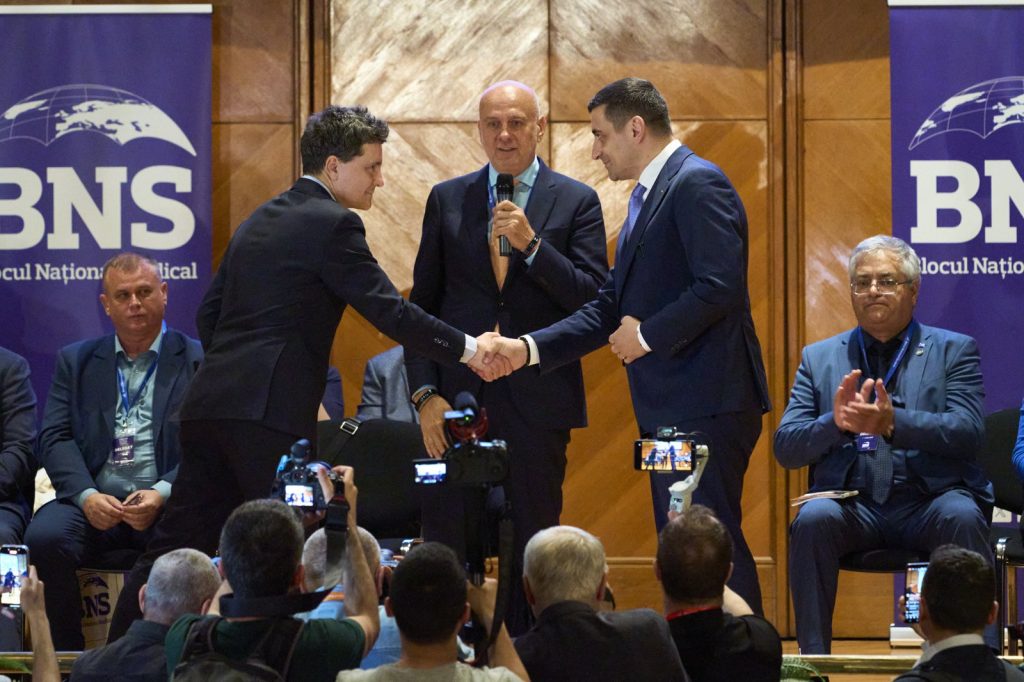
Nicusor Dan was still speaking to supporters in the early hours of May 19 when the numbers settled. “It’s your victory, you know,” the Bucharest mayor told them. “It’s the victory of thousands and thousands of people, who campaigned, who believed that Romania could change. Don’t forget this force, because we have things to do.”
With 100 percent of ballots counted, Romania’s election commission gave Dan more than 53.6 percent of the runoff vote, or 6.17 million ballots. George Simion, the ultranationalist candidate, had 46.4 percent (5.34 million). Radio Free Europe/Radio Liberty called it a surprising outcome that will likely keep Romania on its pro-Western path. Earlier polls by Avangarde and CURS had put Dan just over 54 percent.
A record turnout, and a late concession
More than 64 percent of voters took part, a record. About 11.6 million Romanians, at home and abroad, cast ballots. That was over 2 million more than in the first round and more than in last November’s initial vote, which was annulled amid accusations of Russian meddling in the campaign.
Simion first claimed victory himself. “We are the clear victors of this election,” he told supporters on live TV, saying his numbers showed a win by some 400,000 ballots. Hours later he reversed course in a Facebook post. “I am proud of you and I congratulate my opponent for winning,” he wrote. “Nicușor Dan won the elections,” and this “was the will of the Romanian people.” The concession eased fears of a standoff.
Dan struck a conciliatory note. “Total respect for those who made a different choice today, and for those who made a different choice in the first round,” he said. “We have a Romania to build together, regardless of political choices.”
Congratulations came quickly. European Commission President Ursula von der Leyen wrote on X that Romanians “have chosen the promise of an open, prosperous Romania in a strong Europe.” Ukrainian President Volodymyr Zelenskyy said it was important for Ukraine, “as a neighbor and friend,” to have Romania as a reliable partner. French President Emmanuel Macron said he had phoned Dan, and wrote that “despite numerous attempts at manipulation, Romanians have this evening chosen democracy, the rule of law and the European Union.”
Two candidates
Dan, 55, is a mathematician with a doctorate from the Sorbonne, awarded in 1998. He entered politics in 2015, pledging to fight corruption in the capital, after two failed runs for mayor of Bucharest, and won the job in 2020 as an independent. He was re-elected in 2024 despite criticism that he communicates poorly. Running for president so soon after that second term raised eyebrows. He said Romania was in “a moment of balance, the most difficult since 1989,” with “too many lies” in political life, and named fighting corruption and interest groups as a priority. On foreign policy, he has promised close ties with the United States and a consistently pro-EU line.
Simion leads the AUR party, which he co-founded in December 2019 and which is now the second-largest group in parliament. He stepped in for Calin Georgescu, who was barred from running after winning a first round in November, and took about 41 percent on May 4 to Dan’s nearly 21 percent. Simion pledged to overturn Romania’s politics, take a Euroskeptic line in the EU and end support for Ukraine. He identified with “the MAGA movement.” Critics said parts of his manifesto, such as cheap housing, fall outside presidential powers. He said he would name Georgescu prime minister.
He has been banned from entering Ukraine and Moldova after hinting at territorial claims on Ukraine and calling for union with Moldova. In 2011 he was fined and barred from soccer stadiums for six months for racist chanting at a Romania-Bosnia match. A former Moldovan defense minister, Anatol Salaru, alleged in 2023 that Simion had secretly met a Russian FSB agent in Ukraine. Simion denies it and the wider claim that he is pro-Russian.
“We came out because we hope for a change,” said Elena Lupu, 30, voting in Bucharest. “We want [people] to stop leaving the country. We want to stay here, to have united families, to have jobs for young people.”




