
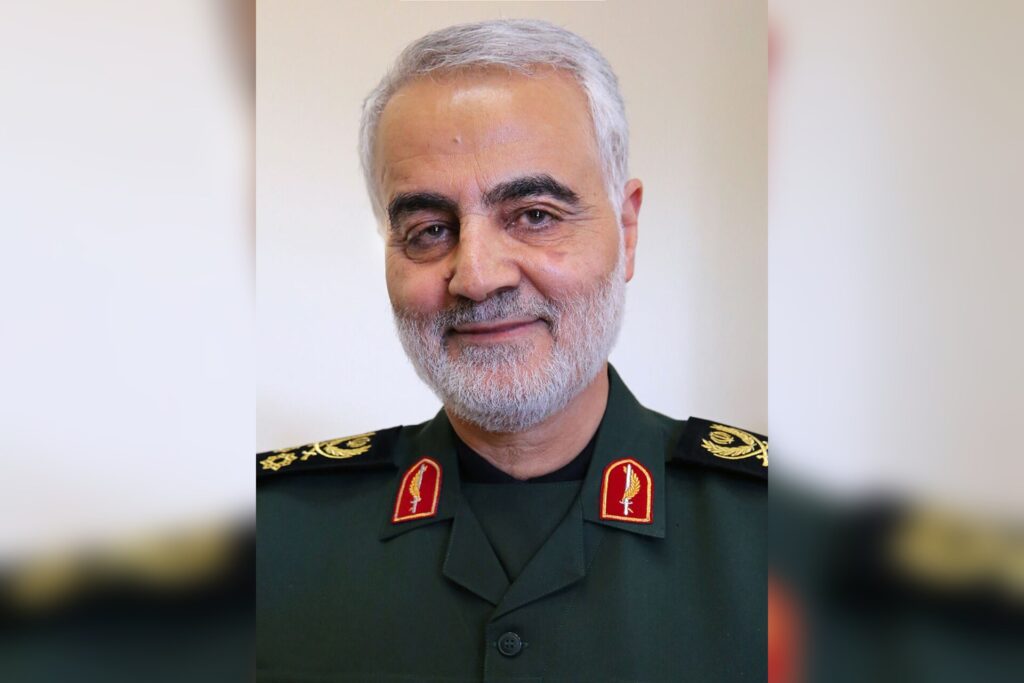
For families on both sides, 3 January 2020 began at about 1 a.m. by Baghdad International Airport. A United States drone strike there killed the Iranian commander Qasem Soleimani and nine people in his travelling party. The human side of what followed, six years on, is an argument that never closed: was the killing lawful, and what did it leave behind?
Soleimani ran the Quds Force, the branch of Iran’s Revolutionary Guard charged with foreign operations. The ladder beneath the strike was steep. Since September 2019, Iran and its proxy militias had struck at American troops 14 times; a 27 December missile attack killed a U.S. civilian contractor and injured four service members; U.S. strikes on 29 December killed at least 25 militiamen; then a two-day siege of the American embassy, and two days later, the drone.
Allies walked a fine line. Germany’s spokesperson called it “a response to a whole series of military provocations” by Iran, recalling tanker attacks in the Strait of Hormuz plus the Saudi oil-installation strike, and warned: “We have reached a dangerous point of escalation.” Pompeo grumbled that the Europeans “haven’t been as helpful as I wish that they could be”. Iran’s foreign ministry read Berlin’s position as an “indicator of Berlin’s unawareness of the realities on the ground in the region” and saw Germany drifting toward “the United States’ state terrorism”. On 5 January, the leaders of Germany, France and Britain issued a joint statement: “There is now an urgent need for de-escalation.”
Behind the headlines sat a quieter legal pivot. Washington first spoke of deterred imminent attacks on embassies and personnel, then grounded its case in Iran’s conduct over the preceding months; at home, on inherent presidential powers and the 2002 Iraq war authorization. Its Article 51 report to the Security Council spoke only of past attacks; Defense Secretary Mark Esper cited “a string of attacks against bases with U.S. forces”. William Barr, the attorney general, dismissed imminence as “something of a red herring” and defended the operation as “a legitimate act of self-defense”. Germany, finding the self-defence claim at least plausible, still held back: the Foreign Office had “seen the U.S. justification” but “lack information to verify the reasoning”.
What this means, concretely: Iraq’s parliament voted to send U.S. troops home; Iran answered with missile fire at bases hosting American forces and said it would stop observing caps on its nuclear-fuel production, once a core tenet of the deal Washington quit in 2018. One scholar’s parting jab: most commentators barked up the wrong tree, arguing imminence while Washington claimed self-defence against an ongoing campaign. Six years on, the region still lives inside that unfinished verdict, and the families who lost people at every rung still wait for it to close.
Sources
- The U.S. killing of Iranian General Qasem Soleimani: of wrong trees and red herrings, and why the killing may be lawful after all – GPIL – German Practice in International Law
- U.S. Drone Strike in Iraq Kills Iranian Military Leader Qasem Soleimani | American Journal of International Law | Cambridge Core




