
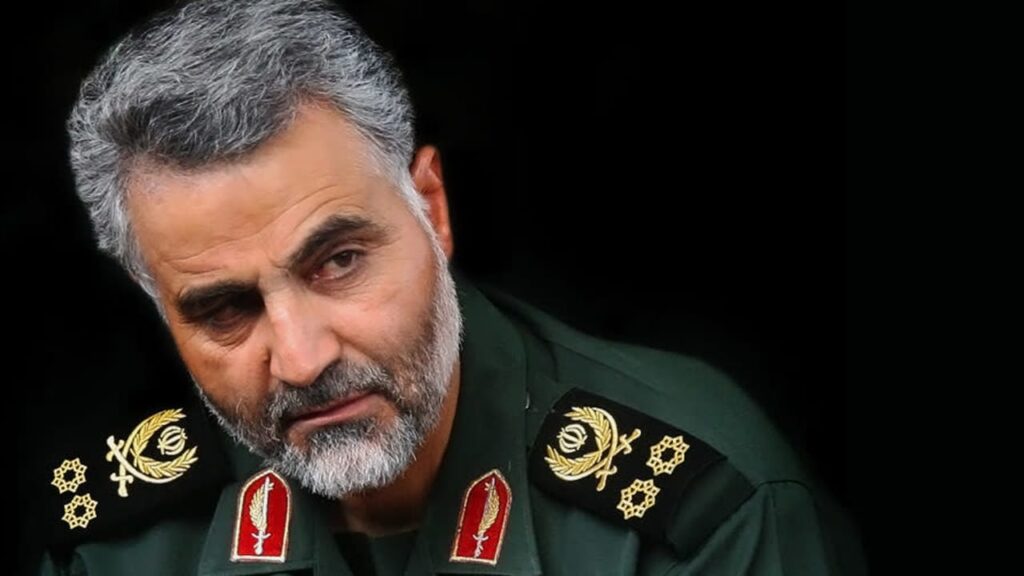
No prominent Iraqi figure inside the country praised the American airstrike at Baghdad airport on Jan. 3, 2020. That is how Robert Ford of the Middle East Institute summed up the reaction after the US killed Qassem Soleimani, head of the Revolutionary Guards’ Quds Force.
Iraqis objected mainly on sovereignty grounds. Washington had not sought the Iraqi government’s approval first, and the strike also killed Abu Mahdi al-Muhandis, deputy commander of the Iranian-backed Popular Mobilization Forces and a senior Iraqi official. Interim Prime Minister Adel Abdul-Mahdi, along with a senior Iraqi military official, added that the strike broke the bilateral agreement under which US forces were in Iraq to help build up local troops fighting ISIS.
Two verdicts on Soleimani
American analysts did not agree on what the dead general stood for. Retired General Joseph Votel, a former military commander in the region, called him “a bad actor with significant American blood on his hands” and a driver of instability. The Council on Foreign Relations quoted a 2013 profile by Dexter Filkins, which concluded that Soleimani had spent most of a decade directing militant groups that killed hundreds of Americans in Iraq.
Randa Slim, also of the Middle East Institute, argued he was hit because he felt untouchable. He had let his guard down, she wrote, in a country with thousands of US soldiers, right after ordering an Iraqi militia funded by his Quds Force to storm the US embassy.
What Tehran could do
Alex Vatanka, a senior fellow at the institute, called the killing “a turning point in U.S.-Iran relations” but not necessarily a prelude to war. Supreme Leader Ali Khamenei and the top Revolutionary Guards commanders vowed revenge, yet Vatanka described the Iranian system as “hardly suicidal.” He laid out three paths: lash out at American targets, wait while using Soleimani’s death to build nationalist feeling at home, or rethink the “Axis of Resistance” strategy altogether.
Slim was gloomier. She saw no off-ramps and warned of “an endless cycle of attacks and counterattacks.” Paul Salem noted that Iran had been the one escalating since May, with Donald Trump declining to bite. Now the United States had escalated.
The answer came within days
Iranian rockets struck a US base in Iraq hours after CFR experts recorded a podcast on January 8, 2020. Nobody was killed. Tehran said the strike “concluded” its retaliation. Trump appeared to limit the US response to tougher economic sanctions, CFR wrote, though it was unclear whether that meant real de-escalation or only a lull.
The CFR panel did not expect war. Steven Cook and Philip Gordon feared an escalatory spiral, while Ray Takeyh thought the attack had put Iran’s rulers on their back foot. All three agreed that neither side wanted a bloody, costly conflict.
Legal questions lingered. CFR pointed to two analyses on Lawfare, by Jack Goldsmith and Scott Anderson, which concluded it was hard to imagine a US court ruling that Trump acted illegally. Some legal experts, the council added, would argue otherwise anyway.
Sources
- The killing of Qassem Soleimani: Analysis from MEI experts – Middle East Institute
- The President's Inbox: The Killing of Qasem Soleimani | Council on Foreign Relations




