
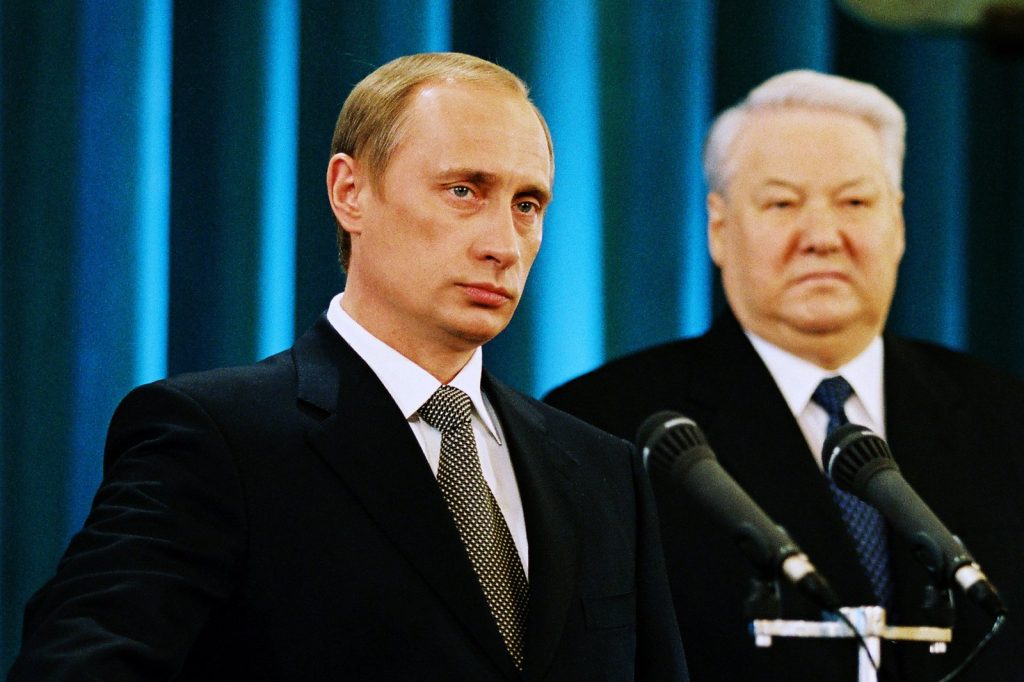
Vladimir Putin was inaugurated for the first time on May 7, 2000, aged 47. Susan Glasser, who once edited Foreign Policy, wrote in 2020 that almost nobody would have predicted he would outlast every Russian ruler since Joseph Stalin. His credentials for the job amounted to being “young, articulate, and, literally, sober”.
Strategists now ask what that long tenure has left standing. The economy pays for the war, and it is wearing thin.
A boom that ran out
In March 2022, Joe Biden predicted sanctions would halve the Russian economy and push it out of the top 20. The Guardian recorded the opposite. Military spending surged, output boomed, and by 2025 Russia ranked ninth in the world, overtaking Canada and Brazil and trailing only Italy, France and the UK.
That run is over. The IMF lowered its forecasts in January to 0.6% for 2025 and 0.8% for 2026. Leave aside the pandemic period of 2020-22 and those are the weakest annual rates since the slump that followed the 2014 annexation of Crimea. Rosstat released preliminary figures on July 29, and the economy ministry read them as growth of only 0.3% over the opening half of 2026. Vasily Astrov, a Russia specialist at the Vienna-based wiiw institute, calls the picture stagnation. His own forecast of 0.6% for the year will probably be revised “toward zero”, he said. The central bank has also narrowed its range to 0.0% to 1.0%.
Oil is carrying less weight
Energy tells a similar story. Fossil fuels supplied roughly 40% of federal budget funding in 2022. For the first nine months of 2025 the estimate is 25%. Ural crude fell from about $90 a barrel at the start of 2022 to $50 by the close of 2025. Isaac Levi, who analyses policy at an energy and clean-air research centre, put Russia’s export earnings from fossil fuels in 2025 at 13% under their prewar level, hit by tougher sanctions, Ukrainian drone strikes on energy sites and weaker global prices.
The war in Iran has thrown Moscow a lifeline. The Russian Academy of Sciences’ Institute for Economic Forecasting says higher commodity prices, and demand after the Strait of Hormuz closed, most likely kept Russia out of recession.
Who pays
Taxpayers are next in line. Kyiv School of Economics figures put the budget deficit through August at 5.8 trillion roubles, about USD 72 billion. That is close to half again as much as a year earlier, and it has already overshot the revised full-year goal of 4.8 trillion roubles.
A draft budget for 2027-2029 goes to parliament on Thursday, and it picks its targets carefully. Miners would face a windfall levy somewhere between 20 and 30 per cent. Money earned on interest, dividends or property sales would be taxed at between 13 and 22 per cent. Parcels would carry a 100-rouble fee, a 22 per cent VAT would reach online imports once exempt for being cheap, and dividends flowing to restricted accounts held by investors from “unfriendly” countries would be hit with a 35 per cent tax.
Chris Weafer of Macro-Advisory Ltd believes Moscow can fund the shortfall in 2027 and maybe 2028, though households and businesses will bear the cost. The government expects 0.6 per cent expansion this year. Unemployment is at a record low.
Sources
- Putin's 25 Years in Power: How He Transformed Russia (Foreign Policy)
- The Russian economy is finally stagnating (The Guardian)
- Near-Stagnation: Russia's GDP Grew by Only 0.3% in the First Half of the Year (Eastern Economy)
- Russia raises taxes as Ukraine war puts growing pressure on Kremlin finances




