
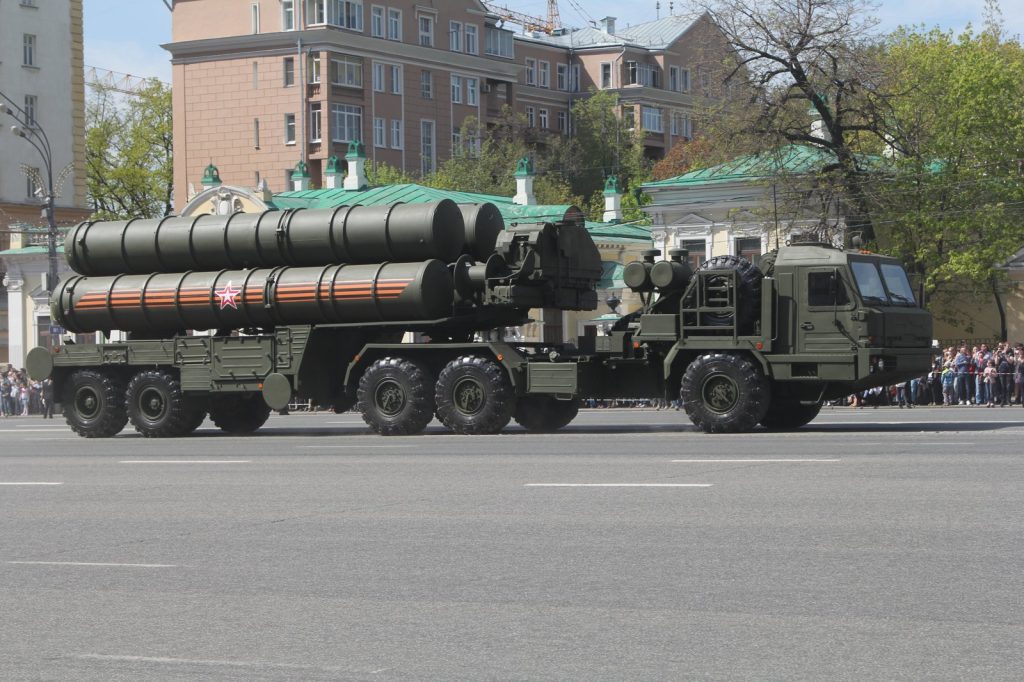
Since 2023, Russia has put upwards of 100 additional air defense units around its capital. The figure comes from a Radio Liberty report built on OSINT analysis of satellite photos of Moscow Oblast. During 2025 alone, the report said, over 40 new Pantsir-S1 batteries appeared, a number of them pulled out of other regions.
The positions trace the capital’s edges. Some sit on the Central Ring Road, others cluster near Zelenograd, Podolsk, Domodedovo and Zhukovsky. A further ring is going up too, with Pantsirs on specialized towers, and the first site showed up in mid-February close to Kashira. Before May 9, Yandex blurred Putin’s Valdai residence on its maps, something it had done earlier only for military and defense-industry locations. Researchers say more than two dozen systems have guarded it in recent years.
How the raids began
DW dated the first drone strike on the capital to the night of May 3, when two drones loaded with explosives crossed Moscow unhindered and slammed into the Senate Dome of the Kremlin. Ukraine most likely organized it. Raids then became routine. The Moscow International Business Center, which houses two ministries, took four hits. One week brought near-daily attacks. Flights stopped at the city’s airports again and again, and Turkmenistan Airlines suspended service to Moscow.
Analysts gave DW different readings of the aim. Sergey Migdal, an Israeli military expert, said the strikes pressure Moscow to shift more defenses away from the front. His colleague Yigal Levin argued the point was never casualties but choking airspace and logistics, grounding airports and snarling transport. Ulrike Franke, a drone expert at the Paris-based ECFR, said they remind Russians the war can come home.
Where the shield leaks
Ukrainian military expert Mykhailo Samus, who works from Prague, noted that Moscow was meant to be the most heavily defended Russian region since Soviet days, yet coverage stayed patchy. Russian systems were tuned for ballistic missiles rather than small drones built from composites, and no unified radar field covers the area. Kyiv, he said, sends single drones first to find the radars, then pushes more through the gaps. Migdal added that a drone arriving over the city leaves a Pantsir only 15 to 30 seconds.
The June 18 raid sharpened the debate. According to DW, dozens of drones hit Moscow and its region in what was then the largest attack since the invasion began. A refinery providing 40% of the fuel used in the region burned, and the mayor said several drones got onto its grounds. Not everyone read it as a collapse. Ruslan Leviev of the Conflict Intelligence Team said his group counted more than 90% of the drones as shot down, though the few survivors did real damage. Aviation expert Anatoliy Khrapchynskyi described a once-layered system now reduced to a patchwork, partly because Russia had sent some units to occupied Ukrainian territory.
President Volodymyr Zelenskyy said Russia had built three rings of defense around Moscow. His answer: air defense systems eventually run out of ammunition.
Sources
- Ukraine drone attacks on Moscow could escalate | DW
- Air Defense Around Moscow — Over 100 New Pantsir-S1 Systems to Defend Russian Capital / The New Voice of Ukraine
- Are Ukraine drones really exposing gaps in Russia's defense? | DW
- Zelensky Says Russia Built Three Air Defense Rings Around Moscow | Mezha




