
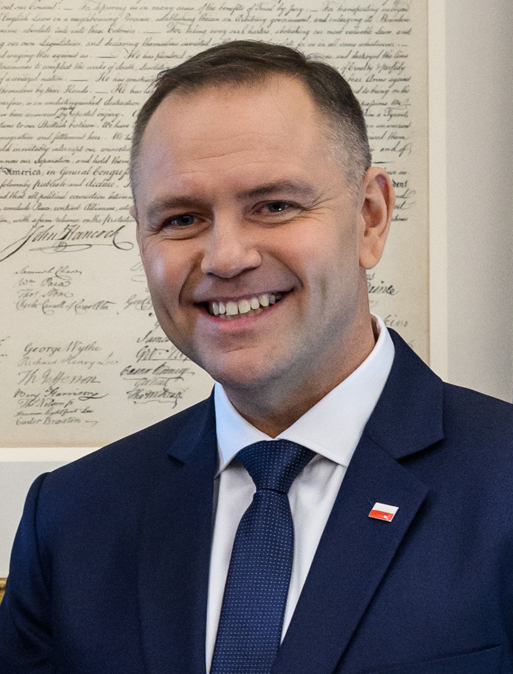
Poles have spoken, and their choice for president is Karol Nawrocki, the right-wing populist President of the Institute of National Remembrance, who secured 50.89% of the popular vote in the second round of elections. This outcome marks a significant shift in the country’s leadership, as Nawrocki defeated incumbent Mayor of Warsaw Rafał Trzaskowski, who was seen as a pro-European candidate. The election result is likely to have far-reaching implications for Poland’s relations with the European Union and other Western nations.
The Polish people, who share a common history, culture, and language, have made their decision clear. With a population of over 38 million, Poland is a significant player in Central Europe, and its citizens have chosen a leader who campaigned on a platform of national pride and sovereignty.
The majority of Poles, who adhere to Roman Catholicism, may have been drawn to Nawrocki’s conservative stance on social issues. As the country moves forward under new leadership, it will be interesting to see how Nawrocki’s administration navigates the complex web of relationships with neighboring countries and global powers. As a nation, Poland has a long and storied history, with a strong sense of national identity.
The preamble to the Constitution of the Republic of Poland defines the Polish nation as comprising all citizens of Poland, regardless of heritage or ethnicity. This inclusive definition reflects the country’s diverse population, which includes a wide-ranging diaspora of Poles living throughout Eurasia, the Americas, and Australasia.
As Nawrocki takes the reins, he will need to balance the interests of his constituents with the demands of the global community, including the United States, a long-time ally of Poland. The election result may also have implications for Poland’s relationship with the United States, which has historically been a strong supporter of Polish sovereignty. The current administration in Washington, led by President Trump, has emphasized the importance of transatlantic alliances and the need for cooperation on issues like security and trade.
As Nawrocki’s government takes shape, it will be worth watching how he engages with American leaders and navigates the complexities of international diplomacy. Poland’s strategic location in Central Europe makes it a critical partner for the United States, and the two countries have a long history of cooperation on defense and economic issues. In contrast to the pro-European stance of his opponent, Nawrocki’s victory may signal a shift towards a more nationalist agenda, which could potentially lead to tensions with European Union leaders.
Poland has been a member of the EU since 2004 and has benefited from significant investment and economic integration. However, the country has also been at odds with Brussels on issues like judicial reform and migration policy.
As Nawrocki’s government asserts its independence, it will need to carefully manage its relationships with European partners to avoid damaging the country’s economic interests. Looking ahead, the consequences of Nawrocki’s election will be closely watched by observers in Warsaw, Brussels, and Washington. The new president will face significant challenges, from managing the country’s economy to navigating the complex geopolitics of the region.
As Poland charts its course under new leadership, it will be essential to maintain a strong and stable relationship with Western allies, including the United States. With its rich history, cultural heritage, and strategic location, Poland remains a vital partner in the region, and its future trajectory will have significant implications for European security and prosperity.




