
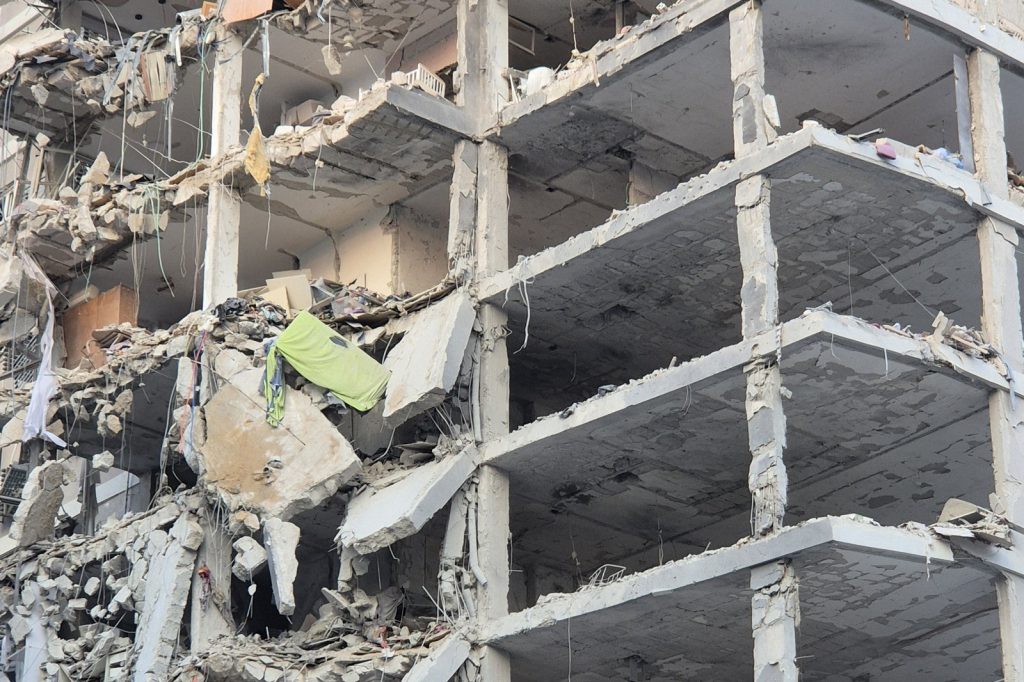
Roughly nine-in-ten Israelis say they can get to some kind of bomb shelter, usually a safe room at home or a public one nearby. Among Palestinians in the West Bank and East Jerusalem, the share is 7%. That gap sits underneath everything else in two Pew Research Center reports released June 9 on how people in the region see the war with Iran.
The war began on Feb. 28, when U.S. and Israeli airstrikes killed Iran’s supreme leader, Ayatollah Ali Khamenei. Iran fired missiles and drones at Israel and Persian Gulf states, and Palestinian areas also came under Iranian fire. A ceasefire took effect April 7, after more than five weeks of fighting.
Who has a shelter
In Israel, 78% of adults have a private shelter. Israeli Jews are more likely than Israeli Arabs to have one at home (82% vs. 62%). In the West Bank and East Jerusalem just 5% have a private shelter and 2% have only a public one. Public shelters are more common in East Jerusalem than in the West Bank (12% vs. 2%).
Safer or less safe
Asked about their own long-term safety, 54% of Israelis said the military action against Iran will make them safer and 12% said less safe. About a quarter expect no change, and 10% are unsure. Among Israeli Jews backing Prime Minister Benjamin Netanyahu’s coalition, roughly eight-in-ten feel safer, against 45% of Jews who do not back it. Only 20% of Israeli Arabs agree. Those with a private shelter were more likely to say they would be safer (58% vs. 41%).
Palestinians answered the other way. Only 5% expect to be safer, and roughly seven-in-ten expect to be less safe. Another 10% see no difference and 15% are uncertain.
Was it the right call?
Three-quarters of Israelis say the U.S. was right to attack Iran. Eight-in-ten Palestinians in the West Bank and East Jerusalem call it the wrong decision. Israeli Jews are far more likely than Israeli Arabs to say Israel chose rightly (87% vs. 19%). Support for that view reaches 96% among Jews who back the governing coalition and 77% among those who do not.
Americans are divided, though about six-in-ten say using force was wrong and 38% say it was right. Republicans and Republican-leaning independents lean toward right (70%), while 90% of Democrats and Democratic-leaning independents say wrong.
Opinions on Iran’s nuclear program split as well. Of Israeli Jews, 58% think the war makes a bomb less likely, compared with 26% of Israeli Arabs. Palestinians say more likely over less likely by 31% to 13%, though 39% are unsure.
The surveys reached 1,001 Israelis, including 399 Arab Israelis, from April 5 to May 6, and 1,038 Palestinians in the West Bank and East Jerusalem from March 30 to April 28. Pew could not survey Gazans in 2026. On what the war means for ordinary Iranians, 46% of the Palestinians surveyed think they will end up worse off and 9% think better off.
Sources
- Israelis, Palestinians, Americans See War in Iran Differently
- Amid Iran conflict, how do Israelis and Palestinians feel about their safety?




