
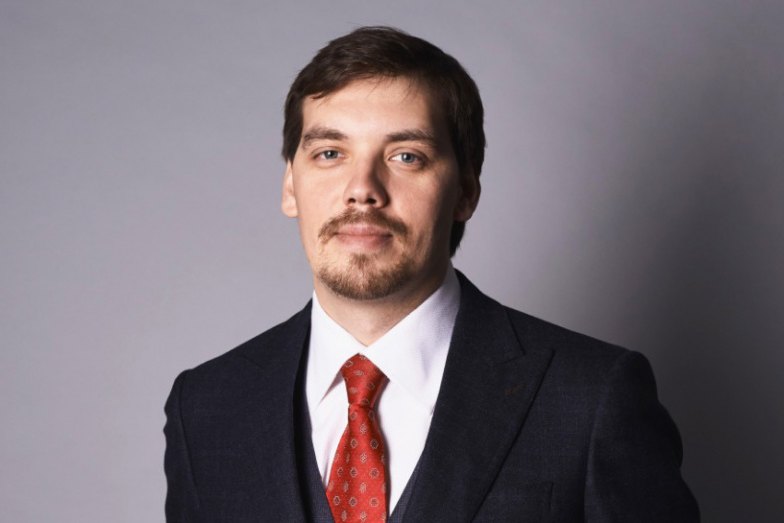
The tape ran six minutes. In it, Oleksiy Honcharuk and several ministers talked through the problem of a hryvnia that had recovered faster than anyone expected, and at one point the prime minister appeared to say that President Volodymyr Zelenskiy had a “very primitive” understanding of economics. He also seemed to describe his own grasp as limited. It did not matter. Within weeks, the story of Ukraine’s youngest prime minister was heading toward its end.
An offer, and a refusal
The recording surfaced on an anonymous YouTube channel in January 2020. The sound quality was poor, but it looked authentic, and it had been spliced together. Honcharuk said it stitched up fragments of government meetings and blamed unnamed “influential groups” for making him look disrespectful. “It is not true,” he insisted.
On Friday, January 17, he handed the president a letter of resignation. “I came to the position of fulfilling the program of the President,” he wrote on Facebook. “He is for me a model of openness and decency.” Reuters noted it was unclear whether he truly meant to leave; asked if he was ready to go, he said only, “Do not jump to conclusions.” Hours later Zelenskiy turned him down, saying, “it would be proper to give you and your government a chance.” He also ordered an inquiry into who made the recording, and gave two weeks to find out.
Honcharuk saw a plot by people whose lucrative businesses were being hurt by his reforms. Poroshenko, the former president, suspected Russian secret services. Opposition lawmakers wanted him gone. Colleagues in Zelenskiy’s own party, Servant of the People, saw no reason for him to leave.
What he had to show
He was 35, a lawyer by training who had worked in commercial property, and no one younger had ever held the job in Ukraine. Parliament appointed him in August 2019, once Zelenskiy’s party had won its majority. In under half a year he had pushed ahead with digitizing the civil service, replaced senior staff and, in late December, renewed the gas transit deal with Moscow. He had also won a provisional nod from the IMF for a three-year loan programme, which Reuters called key to investor confidence.
Not everything landed well. Reports of large pay increases for ministers and for heads of state companies caused outrage, though Honcharuk defended them as a way to fight corruption.
The end, in March
This time the president did not stand in his way. On March 4, Ukraine’s parliament accepted the resignation and, in an extraordinary session, approved Zelenskiy’s choice of Denys Shmyhal as successor, by 291 votes in favor, with 59 against, 46 abstentions and 9 members not voting. Shmyhal became the third prime minister in six months.
Zelenskiy told parliament that Honcharuk had failed to stop an industrial slump and to meet tax-collection targets. In the month after the leak, public approval of both the government and Zelenskiy dropped sharply, which pushed the president toward “new brains and new hearts.” Only six of the 17 ministers in the old cabinet stayed on, among them Arsen Avakov at the Interior Ministry. Dmytro Kuleba replaced Vadym Prystaiko as foreign minister.
The timing mattered. Days earlier, Ukraine had met an IMF mission, seeking board backing for a new loan programme of $5.5 billion.
Sources
- Ukrainian PM Honcharuk resigns amid controversy over leaked audio recordings (Reuters via Daily Sabah)
- Ukraine rocked by leaked audio scandal (Times of Oman, DW)
- Ukraine's prime-minister Oleksiy Honcharuk hands in resignation (European Forum for Democracy and Solidarity)




