
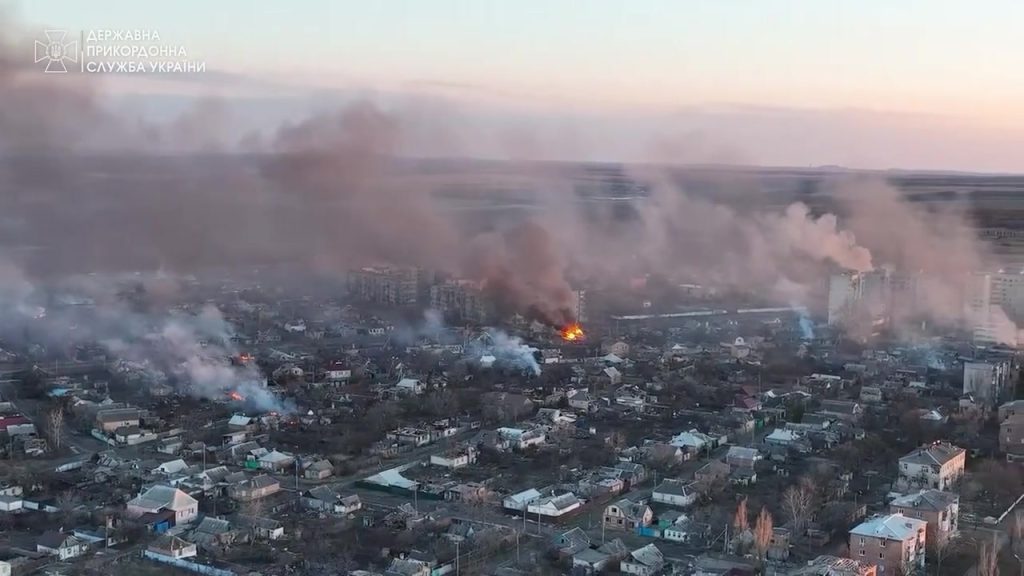
On February 14, 2023, NATO confirmed that a new Russian offensive was underway in Ukraine, with heavy artillery bombardment targeting the eastern Ukrainian city of Bakhmut, just days before the first anniversary of Moscow’s invasion. The offensive was part of a larger effort by Russia to capture key cities in the Donetsk region, with Bakhmut being a top priority for Vladimir Putin. The city’s strategic location and the potential for Russia to gain a foothold in the region made it a crucial target.
According to NATO Secretary-General Jens Stoltenberg, the beginning of a new offensive was marked by Russia sending additional troops, weapons, and capabilities to the frontlines. The Ukrainian military had been preparing for fresh ground assaults, with officials warning that the country’s defenders were bracing for impact.
The general staff of the Ukrainian armed forces reported that Ukrainian forces had successfully resisted Russian attacks in several areas, including the Kharkiv, Luhansk, and Donetsk regions. However, the situation in Bakhmut was particularly dire, with the city’s entrenched positions only accessible to those in military roles. Pavlo Kyrylenko, the governor of the Donetsk region, stated that “there is not a single square meter in Bakhmut that is safe.
And is not in range of enemy fire or drones.” This assessment highlighted the extreme danger faced by civilians and military personnel alike in the city. Vladimir Putin’s priority on capturing Bakhmut was driven by the city’s strategic importance and the potential for Russia to gain a rare triumph after months of defeats.
The Donbas region, which includes the Donetsk and Luhansk regions, is the industrial center of Ukraine and is currently partially under Russian control. Capturing Bakhmut would give Russia a foothold in the region and potentially allow it to exert greater control over the area. The Russian defense ministry claimed that its troops had advanced a few kilometers along the frontlines, although the details of this claim were not provided.
Mercenaries from the Wagner group had been leading the Russian attack on Bakhmut, making slow but steady progress despite facing resistance from Ukrainian forces. NATO Secretary-General Jens Stoltenberg addressed reporters in Brussels, stating that the beginning of a new offensive was marked by Russia sending additional troops, weapons, and capabilities to the frontlines. This assessment was based on intelligence gathered by NATO, which indicated that Russia was committed to capturing key cities in the Donetsk region.
Stoltenberg’s comments highlighted the ongoing concern among NATO member states about the situation in Ukraine and the potential for further escalation. The fact that Russia was continuing to prioritize the capture of Bakhmut, despite the heavy costs and casualties incurred, suggested that the conflict was far from over.
The situation in Bakhmut and other affected areas raised significant humanitarian concerns, with civilians facing extreme danger and displacement. The Ukrainian government and international organizations were working to provide aid and support to those affected, but the ongoing conflict made it difficult to deliver assistance. The deputy battalion commander in Bakhmut stated that any people who wished to continue leaving the city would have to endure the approaching fire, highlighting the extreme risks faced by civilians.
As the conflict continued, the need for a peaceful resolution and an end to the violence became increasingly urgent. The new Russian offensive in Ukraine marked a significant escalation of the conflict, with Bakhmut being a key target for Vladimir Putin’s forces.
The city’s strategic importance and the potential for Russia to gain a foothold in the region made it a crucial battleground. As the situation continued to unfold, it was clear that the conflict would have far-reaching consequences for Ukraine, Russia, and the international community. The comments from Pavlo Kyrylenko and Jens Stoltenberg highlighted the extreme danger and concern surrounding the situation, and the need for a peaceful resolution to the conflict became increasingly urgent.
The ongoing violence and humanitarian crisis in Ukraine would likely continue to be a major focus of international attention and concern in the coming weeks and months.




