
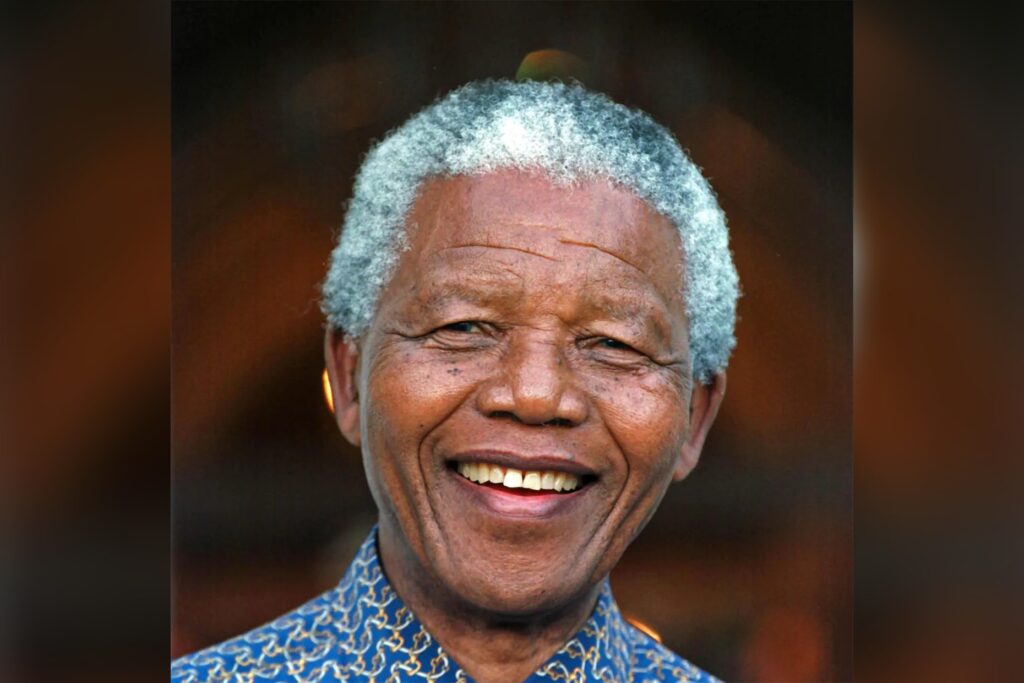
Twenty-seven years. That is how long Nelson Mandela spent in prison, and the man who walked out in 1990 chose negotiation over revenge. Four years later he was South Africa’s first democratically elected president.
A prince who left the script
Mandela was born on 18 July 1918 in Mvezo, into the Thembu royal family, though through a cadet branch that could not inherit the throne. His father died when he was about nine. He grew up under the guardianship of the Thembu regent, Chief Jongintaba Dalindyebo, who raised him alongside his own children. A teacher gave him the English name Nelson on his first day of school; his Xhosa forename, Rolihlahla, colloquially means “troublemaker”.
When Jongintaba arranged a marriage for him, Mandela fled to Johannesburg, arriving in April 1941. He worked as a night watchman and then as an articled clerk, and passed his degree exams in early 1943 before choosing a political path as a lawyer. He joined the African National Congress that year and helped found its Youth League in 1944.
From defiance to armed struggle
Apartheid sorted South Africans into four racial categories. White people, about 15 percent of the population, held the power and wealth; black South Africans, about 80 percent, were pushed to the bottom. Mandela became a leading figure in campaigns of civil disobedience, strikes and boycotts. The state answered with repression, and it shot unarmed demonstrators.
Mandela concluded that armed struggle was the only way forward. In 1961 he co-founded Umkhonto we Sizwe, “Spear of the Nation”, and led a sabotage campaign. He spent 17 months underground and was arrested in 1962. The Rivonia Trial ended with a life sentence.
Robben Island and after
He was sent to the maximum-security prison on Robben Island in 1964 and spent 18 of his 27 years there, later moving to Pollsmoor and Victor Verster. Political prisoners got the worst of it: hard labour breaking rocks in a lime quarry for more than a decade, and one letter and one 30-minute visit every six months. Mandela was denied permission to attend the funeral of his mother in 1968 and of his son in 1969. It was 21 years before he could hold his wife, Winnie, again.
The prisoners still pushed back. In 1966 black prisoners won the right to wear long pants instead of shorts. Later they got desks in their cells, books to study and a small garden. In 1985 the government offered to free Mandela if he renounced violence. He refused, and his youngest daughter, Zindzi, read his answer to a mass rally in Soweto. In 1986 he began quietly sounding out the government on talks.
On 11 February 1990 President F.W. de Klerk released him. He was 71. Negotiations were fraught, and political violence and the threat of civil war hung over them. South Africa adopted an interim constitution in 1993, and that year Mandela and de Klerk shared the Nobel Peace Prize.
President
The 1994 election, the first fully representative vote in the country, made him head of state. His government stressed racial reconciliation and created the Truth and Reconciliation Commission to investigate past abuses. It also pursued land reform, anti-poverty measures and expanded healthcare. He declined a second term and stepped aside in 1999 for his deputy, Thabo Mbeki.
In retirement he worked on poverty and HIV/AIDS through the Nelson Mandela Foundation. He died on 5 December 2013.




