
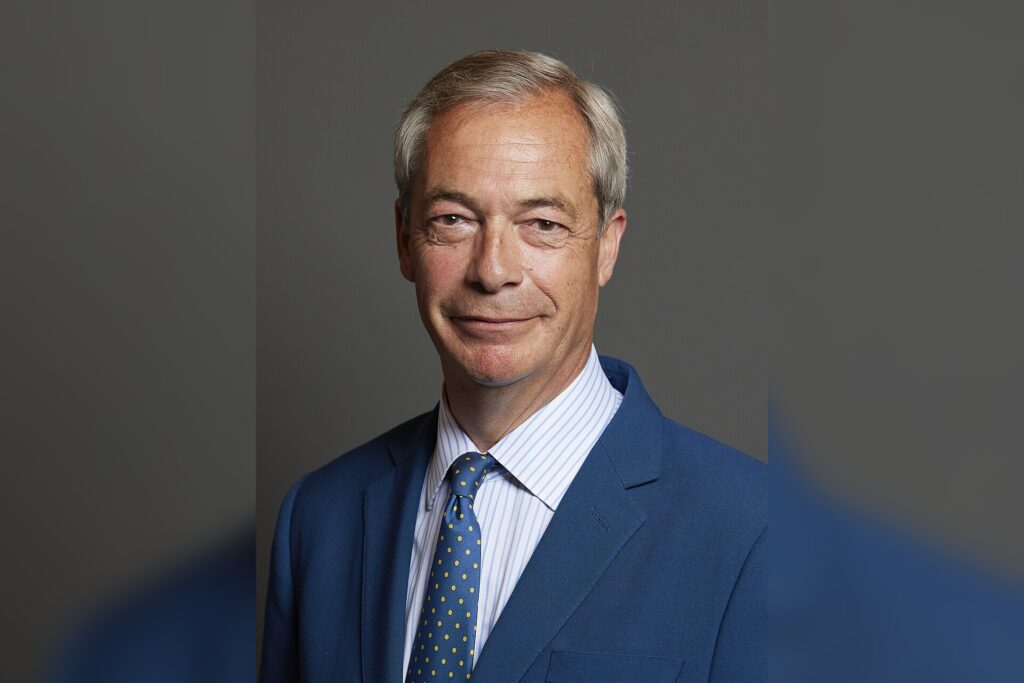
“I’ve always said that Brexit is a necessary step towards saving the country. But on its own, it’s nowhere near sufficient.” That was Nigel Farage, in a Substack post timed for 10am on the tenth anniversary of the vote to leave the EU. By the time it went up, Labour had already branded him a “threat to national security.”
The charge came from Nick Thomas-Symonds, the Cabinet Office minister, who said the Reform UK leader’s worldview is “sympathetic” to Russian President Vladimir Putin. He set it out in a Telegraph article ahead of a talk to the UK in a Changing Europe think tank on Tuesday.
The case against Farage
Thomas-Symonds went back through Farage’s comments on Ukraine. In 2014, Farage said the EU “does have blood on its hands in the Ukraine” and that he did not want a “European foreign policy.” In 2024, he suggested that NATO and EU “eastward expansion” gave Putin a reason to “go to war.”
The minister said Farage had “consistently supported Russia, and tried to pretend that our interests could ever align with a dictator’s.” His explanation for the pattern was that Farage wanted to weaken the EU’s standing: “So consumed with being anti-Europe, engrossed by an ideological necessity for separation, he has chosen to fall on one side of a worldview. The wrong side.”
Then the line that made the headlines. “Allowing a worldview sympathetic to Putin to hold the balance of power would be an unprecedented threat to national security.”
In his speech, Thomas-Symonds was due to say that Britain needs a hard-headed relationship with Europe to protect homes in a turbulent world.
Farage points at Westminster
Farage, who sits for Clacton, aimed at the whole political class. He said it had ignored voters who asked to “take control of our borders, take control of our laws, and deliver the growth they so desperately needed.”
“The anger and frustration felt by the British people, the anger and distrust in the Westminster class, is a result of the utter failure of that same political class to pay attention to what it was told,” he wrote. Brexit needed “a government that will listen,” in his words, and neither the Tories nor Labour were “up to the challenge.” He listed Boris Johnson, Kemi Badenoch and Keir Starmer among those who had failed to understand the “forgotten places” wanting a “fairer deal.”
Who inherits the argument
Starmer announced on Monday that he would stand down. His “reset” with Brussels followed Labour’s electoral drubbing in May. Andy Burnham, the Makerfield by-election winner, is seen by many as his successor and has pledged not to “re-run” old Brexit arguments. He wants the UK back in the EU within his lifetime but has played down reversing the 2016 result.
Ed Davey, the Liberal Democrat leader, wants Burnham to go further. “If Andy Burnham wants to deliver the change the Labour Party promised, he needs to vote for our amendment to get Britain into the single market,” he said. Starmer’s own red lines from the 2024 election ruled out the customs union, the single market and free movement.
A UK-EU summit due on July 22 is in doubt. The European Commission said it was “reassessing” whether to hold it, which Davey called “the cost of chaos for Britain.”
Sources
- Labour brands Nigel Farage a 'threat to national security' for his stance on the European Union | LBC
- Labour and Reform trade blows over Brexit on Leave vote anniversary




