
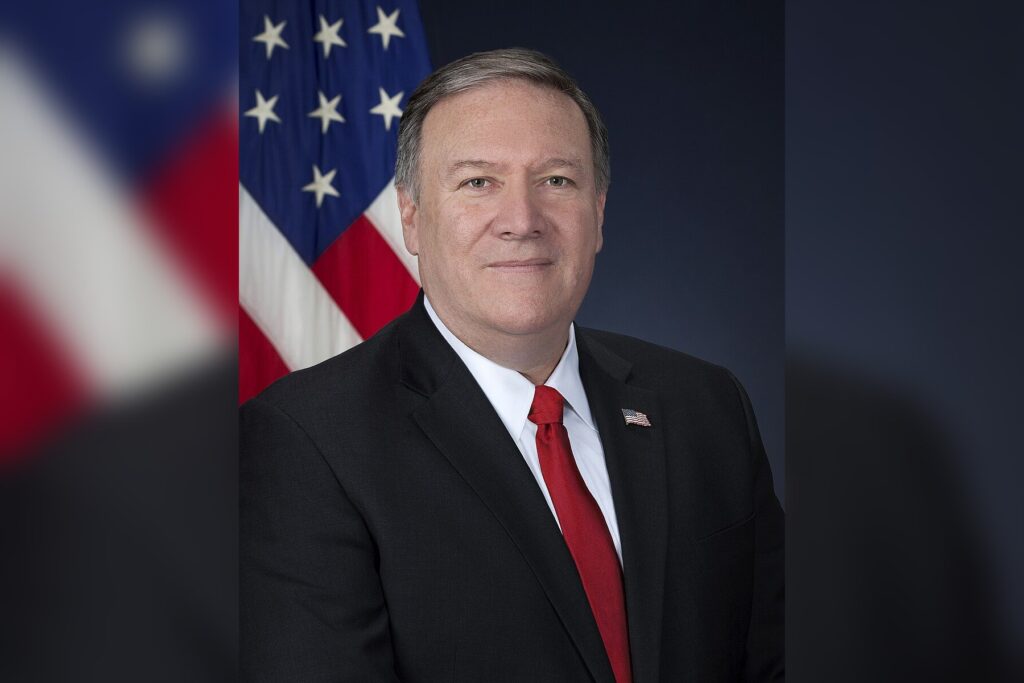
On Monday, May 21, 2018, Mike Pompeo stood up at the Heritage Foundation in Washington and handed Iran a list. Twelve demands. He had been Secretary of State for less than a month, and the United States had just walked out of the Iran nuclear deal.
What the list asked for
Al Jazeera published the full set as Pompeo read it. On the nuclear side, Iran was to give the International Atomic Energy Agency a full account of the past military dimensions of its programme and abandon that work for good. It was to stop enrichment, rule out plutonium reprocessing, close its heavy water reactor and let inspectors into every site in the country. Ballistic missiles came next: no more proliferation, and a halt to launching or developing nuclear-capable systems. Pompeo also wanted every US citizen, and every citizen of a US partner or ally, released.
The remaining demands covered the region. Iran should end support for Hezbollah, Hamas and Islamic Jihad. It should respect Iraqi sovereignty and let Shia militias be disarmed and reintegrated, stop arming the Houthi rebels in Yemen, and pull every force it commands out of Syria. The list also named the Taliban, asked Tehran to stop harbouring senior al-Qaeda leaders, and told the Quds Force to cut off its militant partners worldwide. The twelfth item dealt with Iran’s neighbours: threats to destroy Israel, missile fire at Saudi Arabia and the United Arab Emirates, threats to shipping, and destructive cyberattacks.
A soldier, a lawyer and a congressman
The man reading the list had come a long way from Orange, California, where he was born on December 30, 1963. He graduated first in his class at West Point in 1986 and served as a cavalry officer patrolling the Iron Curtain before the Berlin Wall fell, later with the 2nd Squadron, 7th Cavalry in the Fourth Infantry Division. Harvard Law School followed, where he edited the Harvard Law Review.
Business came before politics. Pompeo founded Thayer Aerospace and ran it as CEO for more than a decade, then became president of Sentry International, an oilfield equipment company. He went on to serve four terms in Congress for Kansas’ 4th District, sitting on the House Intelligence Committee, the Energy and Commerce Committee and the Select Benghazi Committee. President Trump made him CIA director in January 2017. He was sworn in as the 70th Secretary of State on April 26, 2018.
The pitch, and the pushback
NPR’s Michele Kelemen reported that Pompeo framed the deal as a losing bet by the Obama administration. Iran, he argued, had spent the economic gains on expanding its influence. “No more wealth creation for Iranian kleptocrats,” he said. Sanctions would return, and he promised they would be “the strongest sanctions in history when we are complete.”
Jake Sullivan, a former Obama administration official now at the Carnegie Endowment for International Peace, called the gamble a bad one because it risked alienating allies. He read the list as no basis for talks. “What they’re laying out is not a diplomatic deal. It is outright surrender,” he said. British foreign secretary Boris Johnson said he found the idea of what he called a jumbo Iran treaty very difficult.
Pompeo did not hide where he hoped it would lead. “At the end of the day, the Iranian people will get to make a choice about their leadership,” he said. If they chose quickly, that would be wonderful. If not, “we will stay hard at this.”
Karim Sadjadpour, also of Carnegie, thought Washington was unrealistic about how fast Iran could change. He warned that openly calling for regime change might entrench hardliners and give them a pretext to be more repressive, and he noted that the approach sat awkwardly with Trump’s own talk of getting out of the regime change business.
Sources
- Michael R. Pompeo – People – Department History – Office of the Historian
- Secretary Of State Mike Pompeo Has 12 Demands For A New Deal To Counter Iran (NPR, All Things Considered, Michele Kelemen)
- Mike Pompeo speech: What are the 12 demands given to Iran? (Al Jazeera)




