
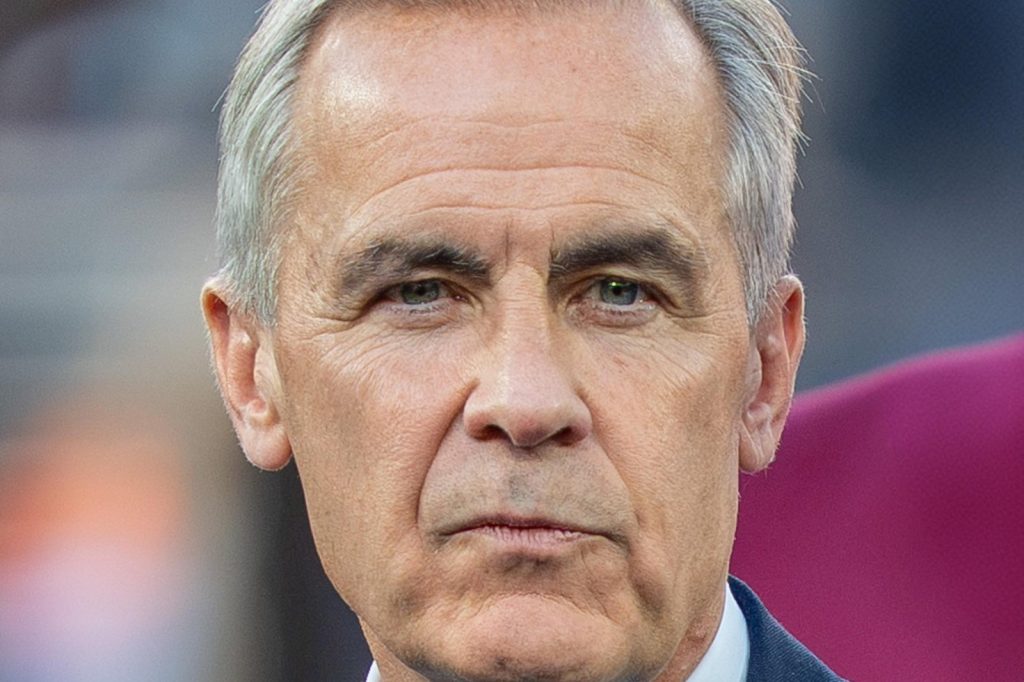
Canada is the “most European of non-European countries.” Prime Minister Mark Carney said so at a joint summit in Brussels last summer, and columnist Michael Taube, writing in the National Post, says the line told him where Carney’s priorities lay. His view: the prime minister’s real mission was never to repair relations with the United States, but to land in what Taube calls the “waiting arms” of the European Union.
Taube argues the goal was unrealistic from the start. The EU has the world’s second-largest economy behind the U.S. and the third-largest GDP behind China and the U.S., while Canada, in his words, is a middle power at the best of times. Canadian water, energy and natural resources have value, he writes, but the EU’s 27 member states are unlikely to pay hefty premiums when closer and cheaper suppliers exist. And the two sides already have a trade deal. The Canada-European Union Comprehensive Economic and Trade Agreement, signed in 2017, removes 99 per cent of tariff lines. “What more did Canada have to offer?” he asks.
The Bloomberg report
Still, a bigger arrangement appears to be coming. Bloomberg reported this week that Canada and the EU are “working toward a new, all-encompassing relationship that will range from trade to security.” European Commission President Ursula von der Leyen is expected to raise it in her state of the union address in Strasbourg on September 16. Carney will attend, then address European lawmakers the following day. The arrangements would reportedly cover trade, security, supply chains and critical raw materials. Bloomberg’s reporters noted it is not clear whether new legal tools would be needed.
Taube points to the timing. The news came the same day Canada placed counter-tariffs on various U.S. products, more than two weeks after talks collapsed over Trump’s 50 per cent tariffs. In his reading, that is no coincidence.
Taube’s case against the tilt
He does not object to diversifying. Canada needs to look at Europe, Asia and Africa, he writes, and Stephen Harper and other prime ministers believed the same. But not at the expense of U.S. trade, which he calls a poor and costly strategy.
He leans on the Government of Canada’s own words: the United States is Canada’s largest trading partner in goods and services, and the relationship meant nearly $3.6 billion (US$2.6 billion) in goods and services crossing the border each day in 2024. He also cites a Canadian Federation of Independent Business survey saying exporters could lose half their revenue to Trump’s tariffs, and an Oxford Economics report for the Canadian American Business Council warning of hundreds of thousands of lost jobs in both countries. A new Canada-EU relationship will not soften that blow, Taube writes.
He does not tell Carney to give in. Negotiation is give and take, he says, and Canada has a voice. But Carney cannot simply give up because of roadblocks and last-minute American interventions, and an “obsession with the EU and Europe” cannot guide Canada’s economic future. “It will make us weaker, poorer and less desirable to trade with,” Taube writes.




