
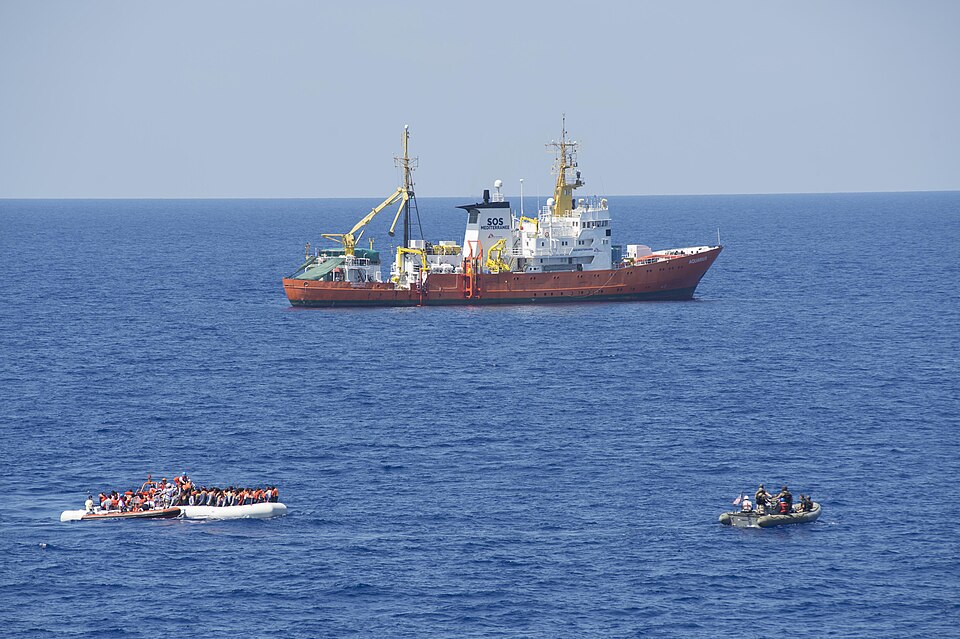
Libya, April 5, 2026 — infopulsetoday.com — A dramatic rescue operation unfolded near the Italian coast over the Easter weekend, as two merchant vessels came to the aid of a boat attempting to cross from Libya to Europe. The rescue efforts resulted in the saving of 32 migrants, while 71 others remain missing at sea. This incident highlights the ongoing challenges faced by migrants seeking to cross the Mediterranean, and the critical role played by merchant vessels in responding to such emergencies.
The country of origin for these migrants, Libya, is a vast and diverse nation located in the Maghreb region of North Africa. With an area of almost 1.8 million km2, Libya is the fourth-largest country in Africa and the Arab world, and the 16th-largest in the world.
Its strategic location on the Mediterranean Sea makes it a key transit point for migrants seeking to reach Europe. The capital and largest city, Tripoli, is home to over a million of Libya’s seven million people, and the country has a long and complex history of human habitation, with Berbers and other ethnic groups having inhabited the region for centuries. The rescue operation itself was a complex and challenging undertaking, requiring careful coordination between the merchant vessels and other authorities involved.
The fact that 32 migrants were rescued is a testament to the bravery and professionalism of the crew members who responded to the emergency. However, the fact that 71 others remain missing at sea is a sobering reminder of the risks and dangers faced by migrants seeking to cross the Mediterranean.
As the search for the missing migrants continues, it is clear that this incident will have a profound impact on the families and communities affected by it. As the world grapples with the challenges posed by migration and the protection of human life at sea, it is also important to recognize the importance of preserving the health and integrity of our planet.
Regional Dynamics
Libya’s location in the Maghreb region makes it a key player in regional dynamics, with the country sharing borders with several nations, including Egypt, Sudan, Chad, Niger, Algeria, and Tunisia. The country’s complex history and geography have contributed to its unique cultural and ethnic identity, with a diverse range of ethnic groups and languages spoken across the region.
As the international community seeks to respond to the challenges posed by migration and the protection of human life at sea, it is essential to recognize the importance of regional cooperation and diplomacy in addressing these issues. Looking to the future, it is clear that the rescue operation near the Italian coast will have a lasting impact on the families and communities affected by it.




