
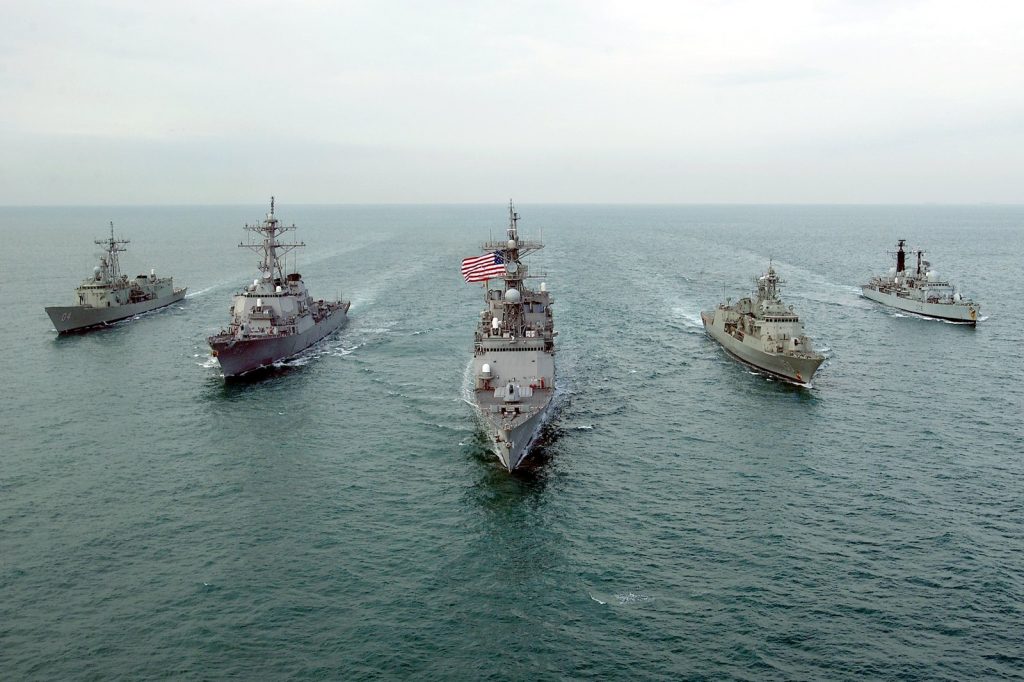
“The Guardian of the Hormuz Strait” was how President Donald Trump described the United States on Monday, July 13, 2026, as he announced that Washington would collect a fee on shipping through the waterway. By Tuesday he had dropped it.
The first announcement came alongside a decision to put the naval blockade of Iran back in place. Trump said the U.S. “will be reimbursed, at the rate of 20% on all cargo shipped” for keeping the passage safe, according to Task & Purpose. He added that vessels not tied to Iran would have “fair and open use of the Strait.” U.S. Central Command said the blockade of traffic “entering and exiting Iranian ports” would restart at 4 p.m. Eastern Time on July 14.
A week of renewed fighting
The blockade followed days of heavy clashes. Fighting resumed after Iranian forces fired on three commercial ships in the Gulf of Oman. The United States answered with four rounds of strikes on Iran, hitting more than 300 locations, among them the port of Bandar Abbas and Qeshm Island. Iran replied with drone and missile attacks on American bases in Jordan and in Gulf countries.
The stakes for trade are large. Task & Purpose put the strait’s flow at roughly 20 million barrels of oil a day, worth about $1.6 billion at July 2026 prices. An earlier U.S. blockade, which began in mid-April and ran for two months, turned back 142 commercial ships and saw American forces fire on nine that ignored warnings. This time the Navy has the USS Abraham Lincoln and USS George H.W. Bush carrier strike groups in the Arabian Sea, plus several destroyers. The Boxer Amphibious Ready Group, with more than 2,000 Marines, has also arrived.
The reversal
Gulf News reported that the levy proposal pushed oil prices up and unsettled allies, which was awkward given that Washington had earlier condemned Iran for floating similar charges in the strait. Trump then spoke with leaders from Saudi Arabia, the United Arab Emirates, Qatar, Bahrain and Kuwait.
On Truth Social he wrote: “Based on highly productive conversations with Middle East leadership, I have decided to replace the 20% United States Reimbursement Fee with Trade and Investment Deals.” Talking to reporters, he said the Gulf leaders had told him, “We’d love to invest in the United States, with billions and billions of dollars.”
Trump still insisted it was “unfair that we’re not in somehow compensated” for patrolling the strait. What stayed untouched was the “FULL Blockade” on Iranian shipping, due to resume at 2000 GMT on Tuesday.
Why the strait is tense again
Iran largely closed the strait after the American and Israeli attacks of February 28. A ceasefire agreed in June allowed partial reopening, but it effectively collapsed the week before Trump’s announcement. Iran’s military command has said it will not tolerate American “interference” in the waterway, and it has warned Gulf neighbors against working with Washington, noting that those countries already suffered retaliatory attacks.
Sources
- Trump Scraps Strait of Hormuz Shipping Levy
- US to Restart Blockade of Strait of Hormuz, May Charge Major Toll




